The Seabrook financial presentation was made to the Board of Selectmen in February of 2022. This report is given to the Board annually so that the prior year can be examined, and we can identify future issues that are facing the community in the finance area. Below I have attached the presentation slides I utilized to make the presentation to the Board, as well as the report, the executive summary, and the video of the presentation.
The Seabrook Board of Selectmen have finalized the 2023 Town Warrant, which is posted below. Town Meeting (election day) is March 14. Please get out and vote. I have posted below a tax impact analysis of the warrant as well.
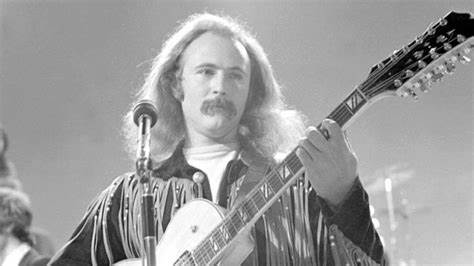
For folks that are long time music fans it has been a pretty difficult few months, with so many true giants of music passing away. The latest is David Crosby, the enfant terrible of the music industry. Crosby was one of the founding members of The Byrds, who produced some groundbreaking music as the rock music scene was just beginning to form. Crosby was fired by Roger McGuinn from that group, but not before making some major contributions to the group.
Crosby did not miss a beat, getting acquainted with Steve Stills of Buffalo Springfield, and eventually enticing Graham Nash from the Hollies to form Crosby, Stills, and Nash. Their first album as a group is simply one of the greatest of any era, with harmonies that were beautiful. When they added Neil Young to that lineup CSNY really was a supergroup, and they made some groundbreaking music with that lineup as well.
Crosby had some really difficult patches. In hearing Crosby respond to a question about some difficulties with bandmates in years past he simply said “I was an asshole back then.” But a very talented asshole indeed.
Crosby, until the very end, just wanted to make music. When he could not persuade former bandmates to reunite (they were all angry with him) he went out and made some truly impressive albums with his son, and some other great collaborators. It was truly some great work that you should check out if you are a fan.
Croz had an active twitter account which got him into trouble every now and then, but for me it was very entertaining. Croz was unfiltered to the very end.
Despite his reputation Croz got along with, and truly respected, so many other musicians. He was a part of the west coast music scene that produced new and cutting edge music. He loved Jerry Garcia, and spoke of him often in adoring terms. Same for Grace Slick, and so many others. That feeling of love and admiration was reciprocated. His first solo album, “If I Could Only Remember My Name” has become recognized as a terrific piece of work. The massive cast of supporting players included Jorma and Jack, Grace Slick, David Freiburg and Paul Katner from the Airplane, Jerry Garcia, Mickey Hart, Phil Lesh, and Bill Kreutzmann from the Grateful Dead, and of course Graham Nash and Neil Young. West coast rock royalty. I was very happy to see Stills, Nash, and even Young put out kind and generous statements about Crosby upon his passing. RIP David Crosby!
One of the most important books of 2022, and most certainly one of the best. Author Chris Miller has produced a history of the semiconductor industry that brings us to the present, and helps to frame some of the most critical national security issues facing the U.S. (and China) in a crisp, readable book.
The development of the semiconductor industry occurred in the United States, with some true giants of business with loads of brainpower leading a wave of technological innovation that changed the world. How that industry has developed over the years, and most importantly, where it is today is the journey the author takes us on. How has so much of the actual production of chips been moved away from the U.S. to Korea and Taiwan? This book provides that roadmap.
The story of the early development of the industry was fascinating. Those business and technology giants include Gordon Moore, Andy Grove, Bob Joyce, William Shockley (later infamous for his racial theories) and maybe most importantly Morris Chang. The companies developed? Fairchild Semiconductor, Intel, Texas Instruments, Sony, Samsung, and maybe most importantly the Taiwan Semiconductor Manufacturing Company. That early development was seeded, in part, by the U.S. military, who came to understand from their Vietnam experience, that “dumb” bombs frequently missed their target. (See the failure of bombing interdiction of the Ho Chi Minh trail) As the military started to seek “smart weapons” they started funding some of the research that brought us chip technology. As part of this development Gordon Moore, a true visionary, ultimately came to theorize that the number of components that could fit on a silicon chip would double every year. (Eventually he modified this, in 1975, to a doubling every two years) This theory became known as “Moore’s Law” and has driven chip development ever since, and in its way has brought us to the manufacturing conundrum facing the U.S. today.
With the U.S. military having some success in creating precision guided munitions the Soviet Union saw the potential and understood that it needed to get into the technology race. But they were hopelessly behind, and Soviet Marshall Nikolai Ogarkov knew it.
“By traditional metrics like numbers of tanks or troops, the Soviet Union had a clear advantage in the 1980’s. Ogarkov saw things differently: quality was overtaking quantity. He was fixated on the threat posed by America’s precision weapons. Combined with better surveillance and communication tools, the ability to strike targets accurately hundreds or even thousands of miles away was producing a ‘military-technical revolution,’ Ogarkov argued to anyone who’d listen. The days of vacuum tune-guided Sparrow missiles missing 90 percent of their targets in the skies over Vietnam were long gone. The Soviet Union had many more tanks than the United States, but Ogarkov realized his tanks would soon be many times more vulnerable in a fight with the U.S.”
Chip War by Chris Miller pg. 146
The Soviets deployed the usual tactics, looking to simply “copy” U.S. chip technology through industrial espionage. The Soviets, like many to come, simply tripped over Moore’s Law. As they stole and created chip technology the U.S. was moving to newer, better technology. Loading ever more transistors onto silicon in accordance with the forecast by Gordon Moore the U.S. simply outran the Soviets. Marshall Ogarkov’s fears were confirmed by the U.S. invasion of Iraq, a Soviet military client. Some Soviet experts expected a longer drawn out war, but U.S. weapons systems made short work of the Iraqi defenses.
“‘It is the triumph of silicon over steel’ declared a New York Times headline. ‘War Hero Status Possible for the Computer Chip,’ read another.”
Chip War by Chris Miller pg. 154
The overwhelming superiority of U.S. technology made Soviet conventional advantage much less intimidating, creating a dynamic that required ever escalating investment by the Soviets to keep (catch) up. They simply could not do so.
While military applications were a major factor in the start of the U.S. semiconductor industry the companies at the forefront of that development realized that civilian use was the future. Carver Mead, a Caltech professor, was prescient in 1972.
“‘In the next ten years,’ Mead predicted in 1972, ‘every facet of our society will be automated to some degree.’ He envisioned a ‘tiny computer deep down inside of our telephone, or our washing machine, or our car,’ as these silicon chips became pervasive and inexpensive.”
Chip War by Chris Miller pg. 71
The mass market drove the economics, and with that market developing the major companies moved from military to civilian use, seeing the ability to generate huge revenues.
Miller gives us a very understandable view of the development of the industry, with a critically important view of how chip manufacturing developed, and why “fabs” are located where they are. This brings us to the present day, and the challenges facing the two superpowers as they compete for semiconductor supremacy. This history shows us some tremendous innovation in the U.S. along with some major missteps that drove some key manufacturing out of the U.S. Former Texas Instruments executive Morris Chang had the idea to fabricate chips based on the design of others. That key idea was rejected by key folks in the U.S. industry, with even Gordon Moore telling Chang that:
“Morris, you’ve had a lot of good ideas in your time. … This isn’t one of them.”
Chip War by Chris Miller pg. 167
The government of Taiwan, looking to create a chip industry, brought Morris Chang in to help create that industry. Chang has succeeded beyond any reasonable expectations at the time of his creation of TSMC (Taiwan Semiconductor Manufacturing Company) in Taiwan, and the idea of separating chip design from chip manufacturing took off, making TSMC a chip giant, and creating a worldwide system of chip supply that exists today. That system brings us to the main battle lines between China and the U.S. today, which is where the real value of this book comes in.
Morris Chang’s idea of separating chip design from chip manufacturing enabled TSMC to begin manufacturing chips for many companies. For some, like myself, not familiar with the how and why of chip manufacturing, adopting an industrial policy in the U.S. that drove such manufacturing back to the U.S. should be an achievable goal for the government. This book shows us why simple solutions are not so simple.
Chang’s concept, and the eventual dominant role for TSMC in chip manufacturing, started with Chang’s insight, but has really been driven by massive government support and the complexity of chip manufacturing. Moore’s law, and how that has made chip manufacturing ever more expensive and complex, has made the creation of “chip fabs” ever more difficult due to that expense. Reliance on TSMC became natural, and has led to a real dominance for that company in creating chips designed by others, including Apple. Miller gives us a view of that complexity through the difficulty of lithography necessary for chip manufacturing.
With Taiwan dominating chip manufacturing, and with China facing the same issues of cost and complexity as the U.S. in trying to create chip manufacturing onshore, the competition between the countries is heating up. The Chinese saber-rattling on Taiwan is not simply a territorial issue, but one with significant geopolitical and economic ramifications for the world. Those issues are explored expertly by Chris Miller in this book, and constitute possibly the greatest national security issue facing the United States. The chip shortage recently experienced by the U.S. is a small indication of how impactful on our economy these advanced chips are. A couple of important facts. China imported, by dollar volume, more chips than oil in 2020. TSMC has over 50% share of the worldwide chip market.
When President Biden indicated that the U.S. would militarily intervene in the event of a Chinese invasion of Taiwan, although walked back, we got to understand the importance of Taiwan to the U.S. and the world economy.
What is the future? This book gives a look at what has become the major national security issue of our day. As China becomes more aggressive in the neighborhood the changes are profound, including accelerated military spending by Japan. If you read one book this year this should be high on the list.
Former Australian Prime Minister Kevin Rudd has written a book on the relationship between the U.S. and China, and the potential for that relationship to rupture so badly that war is the result. It is an important book that brings some great insight to the diplomatic relationship so critical to the world in the years to come.
Rudd is not just a former Australian Prime Minister. He has a long history of interaction with top Chinese officials in his various governmental roles, speaks fluent Mandarin, and continues to be a key figure through his presidency of the Asia Society Political Institute. This book is reflective of that knowledge, and brings his ideas on the best way forward for both countries. The book importantly brings his ideas on what the Chinese perspective is, with the advantage of having spoken directly with Xi on many occasions, and before Xi ascended to his current position.
I would not describe the book as a text, but it is a policy book that looks at specifics, and on that basis is not for everyone. But I believe it is important to actually examine what policy goals are driving Chinese actions, and what might be prudent U.S. responses.
Rudd does not look at the CCP as some have in the past, seeing hope for adoption of western style democracy. The error made by those who held such views, confusing a drive towards economic modernization with a move to political pluralism in China, is laid to rest fairly quickly. The misunderstanding of Deng Xiaoping and his sweeping economic reforms is explained:
“While not an orthodox Marxist, Deng remained a fully committed Leninist. Unsurprisingly, he was determined not to cede the party’s political powerful the sake of American economic engagement or common strategic endeavor against the Soviet Union. Even as he began his his reform and opening campaign in 1979, he vowed from the outset adherence to the Four Cardinal Principles and that China would forever ‘uphold the dictatorship of the proletariat’ and ‘the leadership of the Communist Party.’ In Deng’s words, while it was important for China to ‘open the windows wide to breathe the fresh air,’ the party’s responsibility was to continue to ‘swat away the flies and insects that came with it.’”
Rudd, Kevin “The Avoidable War” pg 35
Rudd’s book does not sugarcoat Chinese views. He gives us his view of Chinese priorities (Xi priorities) as ten concentric circles that he believes are core Chinese principles. His listing, and explanations, take up a large section of the book. It is an interesting approach, and covers some critical areas of the U.S.-China relationship, including “the view from Washington” on these China goals and principles.
Rudd ends up advocating what he calls “managed strategic competition” between the U.S. and China, with the goal of containing misunderstandings or miscalculations that could lead to the outbreak of war. Rudd’s view is that such a competition would importantly contain guardrails that would manage the relationship in a way that would allow for each nation to pursue its national interests within an agreed upon space that would prevent the outbreak of catastrophe.
Rudd’s prescriptions most certainly sound reasonable, and he challenges critics to offer alternatives. I do believe that his ideas on “managed strategic competition” are sound, and the idea of managing strategic competition without war have precedent in the U.S.-Soviet relationship. Of course such a “managed relationship” requires both parties to be willing to do the diplomatic heavy work required to achieve that sort of consensus. It also requires that some issues that are fairly intractable, like Taiwan, be put off, effectively kicking the can down the road. From the U.S. perspective I am quite sure that such a short term forestalling of the Taiwan issue would be quite satisfactory. I am not so sure it would be satisfactory to China. Since the Shanghai Communique both sides have finessed the issue of Taiwan, but the entire point of the newly ambitious program of Xi is to do away with some of the finesse. The principle of Chines foreign policy put forward by Deng, “hide your strength, bide your time” has effectively been replaced by a much more assertive posture undertaken by XI. Relative to Taiwan Rudd believes the issue can still be dealt with diplomatically, but he candidly deals with the military situation in the event of Chinese military action.
…”What it would require is for the United States to restore the wider military balance of power with China across the East Asian theater by redressing gaps and vulnerabilities in its current force structure and capabilities. It would also require the Taiwanese to take seriously their military deficiencies, which have accumulated over several decades and which neither side of Taiwanese politics has so far demonstrated sufficient determination to resolve.”
Rudd, Kevin “The Avoidable War” pg 379-380
He talks, in this context, of joint economic action by the U.S., Taiwan and Japan to fortify Taiwan economically in the event of a Chinese economic blockade of the island. It is also necessary, in my view, that Japanese military spending be increased dramatically to meet the challenges posed by China in the neighborhood. Current war-gaming has not shown good results for the U.S. military in a showdown over Taiwan, and those “gaps and vulnerabilities’ referenced diplomatically by Rudd need to be addressed if a military showdown were to be successfully prosecuted by the U.S.
Rudd homes in on the technological war between the countries, and the so vital access to chip technology driving the world economy today. It is a vital part of this strategic competition, especially with Taiwan being such a vital cog in that supply chain. A transfer of Taiwan today to Chinese control would have major, and very negative ramifications for the U.S. in that area.
It is not a unipolar world any longer. Understanding the other side of the key strategic relationship facing the U.S. today is vital if we are to get to solutions and policies that serve the nation’s interests while preventing war. Kevin Rudd has given us a book that will help to promote that necessary understanding. Even if you do not agree with all of his policy ideas the book brings the conversation where it needs to go.
I had this book on my list for a bit, and a Kindle deal got me to finally sit down with it. I am glad that I did.
I have done a lot of reading on World War II, but I suspect that I am likely in the larger (American) group that concentrated on the European theatre. I just did not have an understanding of the war in the Pacific, especially the naval war. This book, the first of a trilogy, concentrates on the naval war between the Japanese Empire and the United States. It does not pay much attention to land, but despite that manages to stick in a few shots at Douglas MacArthur. But I digress. This first book covers the period from Pearl Harbor to Midway.
Why do I rate the book so highly? Toll does not just jump into battle but rather gives us a real good overview of the political situation well before FDR even assumed office. This overview provides a short primer on some of the underlying tensions between the U.S. and Japan going back to the presidency of Teddy Roosevelt. We get a great look at how influential Teddy was on the U.S. Navy, and how when FDR was appointed as the Assistant Secretary of the Navy by Woodrow Wilson TR sent him some “unsolicited advice.”
“In May 1913, TR wrote to congratulate the younger man on his appointment, and also to offer unsolicited guidance. Never permit the fleet to be divided between the Pacific and the Atlantic, he warned, and added: “I do not anticipate trouble with Japan, but it may come, and if it does it will come suddenly.”
Pacific Crucible: War at Sea in the Pacific, 1941-1942 (Vol. 1) (The Pacific War Trilogy) . W. W. Norton & Company. Kindle Edition.
The book “The Influence of Sea Power Upon History” by Alfred Mahan is highlighted as a bible for naval strategists, read by all, including FDR. Toll comes back to it continually.
One of the strengths of the book, in my view, is the great look at the Japanese perspective that Toll brings. I was not at all acquainted with Japanese Admiral Yamamoto, but Toll brings us a some great insight here. The Admiral, despite being the architect of the attack on Pearl Harbor, was a war opponent before the fighting started. Yamamoto was opposed to the treaty of alliance with Germany and Italy, and correctly sized up Japanese prospects before the war started.
“… Yamamoto told Nagano bluntly that the pending war would be a catastrophe. He saw the entire picture clearly, and laid it out with devastating clarity. “It is obvious that a Japanese-American war will become a protracted one,” he said: As long as tides of war are in our favor, the United States will never stop fighting. As a consequence, the war will continue for several years, during which materiel will be exhausted, vessels and arms will be damaged, and they can be replaced only with great difficulties. Ultimately we will not be able to contend with [the United States]. As the result of war the people’s livelihood will become indigent . . . and it is not hard to imagine [that] the situation will become out of control. We must not start a war with so little a chance of success.”
Pacific Crucible: War at Sea in the Pacific, 1941-1942 (Vol. 1) (The Pacific War Trilogy) (p. 118-119). W. W. Norton & Company. Kindle Edition.
Before Toll gets to the fighting, in addition to the look at some of the naval figures of Japan, he gives us a great look at the true dysfunction within the government of Japan. Yes, it came to be dominated by the militarists, but Yamamoto was not the only one to discern the calamitous course Japan was on.
“Vice Admiral Yorio Sawamoto reflected on the reasons why the navy allowed itself to be pressured into a war that it was not really prepared to fight. The reasons had to do with “a competition of mediocrities; there was no outstanding leader of outstanding ability. Pressure from subordinates was the order of the day. Younger officers would not respect their seniors and this made the matter even more difficult. . . . Everybody wanted to evade responsibility and no one had the grit to sacrifice himself to do his duty . . . The atmosphere was such that it put a premium on parochial and selfish concerns for either the army or the navy; considerations of the nation and the world were secondary.”
Pacific Crucible: War at Sea in the Pacific, 1941-1942 (Vol. 1) (The Pacific War Trilogy) (pp. 116-117). W. W. Norton & Company. Kindle Edition.
A competition of “mediocrities” driving the Japanese public with propaganda ended up overwhelming common sense in Japan.
Toll also gives us a great view of the American naval group. Nimitz and Halsey are there, as well as someone who does not get a lot of historical coverage, Admiral Raymond Spruance, who played a major role, replacing an ailing Halsey before the Battle of Midway. The role of the code-breakers, and the horrible treatment afforded to Captain Joseph Rochefort by the Navy, is also a big part of this story. Rochefort and his team provided key intel by breaking the Japanese naval code, giving Nimitz a look at the Japanese battle plan before the assault on Midway was launched. His reward was eventual banishment to nondescript positions in the Navy, as he had proven his critics, who were mediocrities with strong political strength, wrong.
The book goes into some of the military hardware, but in terms that laymen can understand. We see the initial shock on the American side as they come to understand the superior hardware, and skill set, of the Japanese Navy. American ideas of a quick sweep to victory after an initial mobilization were put to rest fairly quickly, as the Japanese rolled to one victory after another in the initial stages of the war. Japanese Admiral Yamamoto had foreseen early success for the Japanese, but as prior discussed felt that the industrial might of the United States would eventually overcome Japan. The only hope for Japan, by Yamamoto’s way of thinking, was to leverage that early success into a diplomatic solution that would entail Japan giving back some of its early war gains, as they had in the Russo-Japanese War of 1905.
“That Japan had scored so many easy victories in the war’s early stages came as no surprise to Yamamoto. In a typical passage in one of his prewar letters, the C-in-C had predicted: “For a while we’ll have everything our own way, stretching out in every direction like an octopus spreading its tentacles. But it’ll last for a year and a half at the most.” The war could only end with an armistice, followed by negotiations and concessions. The fall of Singapore, an event he had expected to occur about six months into the war, would present the ideal moment to open truce talks. Britain, he believed, would cut a deal to keep India, a colony it would hate to lose as much as an “old man” would hate “being deprived of his foot warmer.” The United States would also have to be appeased, probably through a restoration of conquered territories. Perhaps the Western powers would acknowledge Japan’s preeminence in China, as they had once acknowledged Japan’s preeminence in Korea. Fight, conquer, bargain, concede—Yamamoto had repeatedly urged that formula upon the Tojo-led cabinet, but his ideas had been ignored.”
Pacific Crucible: War at Sea in the Pacific, 1941-1942 (Vol. 1) (The Pacific War Trilogy) (pp. 273-274). W. W. Norton & Company. Kindle Edition.
Toll is not afraid to get at some military controversies that are still discussed today (the failure of the Japanese to win a more complete victory at Pearl Harbor, the decision by the Americans not to pursue what remained of the Japanese fleet after Midway)and in so doing gives a balanced treatment to all points of view. The change in naval doctrine that finally recognized the primacy of aircraft carriers is covered, with some relevance for today.
Toll lightly covers some of the WWII “what ifs” relative to Japanese decisions on where to strike militarily. The most obvious one was the Japanese decision not to attack Soviet Russia, which allowed Stalin to send troops west to stem the German attack. The military cohesion between Japan and Germany was simply not there, especially when compared with the British-American effort, which involved joint commands and a high level of strategic planning. The pressure on FDR on the “Europe first” strategy was immense, and maybe only he could have balanced it out. A loss at Midway by the U.S. may have made that balancing untenable, forcing additional U.S. resources into the Pacific. Good fortune for the U.S. and FDR, and very bad fortune for Germany and Hitler.
Despite some of the technical coverage I found Toll’s writing to be outstanding. We all know the results but this book, in my view, became a page turner. I read it quickly because it was so fascinating, especially for one without a lot of prior naval or Pacific war reading. Great writing, great history. Highly recommended!
Another book on Lincoln? There has been so much written on the life of Abraham Lincoln that I was a bit skeptical about a new book, but with Jon Meacham writing I had to invest the time to find out for myself. I am glad I did.
Meacham has taken a different road to examining Lincoln. There is biographical material, but that is not the point of the effort. Meacham wants to understand Lincoln, not just as a political person, but as a moral one. Meacham takes on some of the Lincoln criticism, and his evolution as a politician, and as a man. The acknowledgement of Lincoln as “flawed” is stipulated to up front. But those flaws, including the “colonization” idea, and some references in early speeches on race that do not comport with Lincoln’s reputation, are part of his evolution. In that sense Meacham focuses heavily on the religious evolution of Lincoln, and the book is heavy on religious influences of the day, especially the ones that impacted Lincoln.
Meacham does not avoid the practical, political part of the Lincoln persona. He acknowledges that Lincoln was constrained from advocacy of what may have been his true goal, emancipation, from day one by the underlying racism that existed at that time. Meacham gives us a fine evaluation of the “reformer” vs the “politician” put forward by Wendell Phillips:
“The reformer is careless of numbers, disregards popularity, and deals only with ideas, conscience, and common sense. Wendell Phillips remarked. He feels, with Copernicus, that as God waited long for an interpreter, so he can wait for his followers. He neither expects nor is overanxious for immediate success. The politician dwells in an everlasting NOW. His motto is ‘Success-his aim, votes.’ His object is not absolute right, but… as much right as the people will sanction. His office is not to instruct public opinion, but to represent it.”
Meacham, Jon. And There Was Light Abraham Lincoln and the American Struggle. Pg 321-322
Lincoln, while representing public opinion, but nudging it towards his views, was just too slow for many in the Republican Party. Talk of dumping Lincoln for re-election in 1864 did not materialize, but pointed to the enormous pressure that Lincoln felt, from both ends of the political spectrum. I was amused by the observation from Jesse Fell on Lincoln’s “speed” in getting to the right position.
“While Lincoln ‘Don’t go forward as fast as some of us like, he never goes backward.’”
Meacham, Jon. “And There Was Light Abraham Lincoln and the American Struggle. “Pg 321
That was not a flip comment, as Lincoln faced enormous pressure to modify some of his actions, including the Emancipation Proclamation, as well as the ultimate war objectives. But as Meacham points out repeatedly once Lincoln staked out a position he simply could not be moved, even where the perception existed that these positions were politically problematic. To Meacham this is evidence of Lincoln’s growth on the moral side. Yes, Lincoln was an astute politician, but not everything he did was driven by political considerations.
Meacham does not always have to connect the dots on lessons that may be derived for today. He tells us of some of the charges lobbed by the pro-slavery forces at those who favored abolition.
“‘The parties in this conflict are not merely abolitionists and slaveholders- they are atheists, socialists, communists…on the one side, and friends of order and regulated freedom on the other,’ the Presbyterian clergyman James Henley Thornwell, a defender of slavery from South Carolina, said in a representative sermon.”
Meacham, Jon. “And There Was Light Abraham Lincoln and the American Struggle.” Pg 180
The playbook is indeed very old.
In the epilogue Meacham quotes abolitionist Elizabeth Cody Stanton, who had opposed Lincoln’s re-election in 1864, on Lincoln:
“I see now the wisdom of his course, leading public opinion slowly but surely up to the final blow for freedom.”
Meacham, Jon. “And There Was Light Abraham Lincoln and the American Struggle.” Pg 419
Lincoln was indeed “flawed” but his actions, and the results of those actions, not only saved the Union, but destroyed the institution of slavery.
Meacham sums it up beautifully:
“In life, Lincoln’s motives were moral as well as political- a reminder that our finest presidents are those committed to bringing a flawed nation closer to the light, a mission that requires an understanding that politics divorced from conscience is fatal to the American experiment in liberty under law. In years of peril he pointed the country toward a future that was superior to the past and to the present; in years of strife he held steady. Lincoln’s life shows us that progress can be made by fallible and fallen presidents and peoples- which in a fallible and fallen world, should give us hope.”
Meacham, Jon. “And There Was Light Abraham Lincoln and the American Struggle.” Pg 420
I am a Meacham fan so I have a bias towards his work, but I do believe that this new work does bring a perspective on Lincoln that is worthwhile, and definitely worth a read.
The recent passing of Christine McVie was a major loss for the music world. We have lost many great talents over the past few years but this was a really big one. I know that Fleetwood Mac really took off when Lindsey Buckingham and Stevie Nicks joined the group, and Christine was a big part of that success. But that success, for both Christine and the group, was not an initial success, but rather a different type of success. Fleetwood Mac has had many iterations, and much great music before the Buckingham/Nicks era. Much of that great music was created by Christine McVie, which was also true of the band music after the entry of Buckingham/Nicks.
Some of the first albums I listened to were from this earlier era, and I never lost my love for her voice and music. Fleetwood Mac’s Mystery to Me remains, to me, one of the greatest of the band’s works. She was a major reason for the success of the band, and from my perspective the musical glue that held them together.
The final thing I would say about her is that as great of a singer/songwriter as she was she could make great contributions without being the lead singer. When Bob Welch left Fleetwood Mac he struck gold with the solo album “French Kiss.” (I loved that album as well) Welch had Christine McVie providing beautiful harmonies on three cuts from that album. Her voice just added to any project she was involved in, and that talent will be sorely missed.
The Seabrook Board of Selectmen have announced the FY 2022 Tax Rate. The rate is a big decrease, from $13.73 in FY 2021, to this years $13.25. In this cycle the average homeowner will see a tax decrease. Those details are below in the announcement.
The history of Europe, and the obviously outsized role that the nation of Germany has played in that history, has been the subject of much historical writing. Historian Katja Hoyer has written a short book that covers the development of the German nation through the First World War. While the title references 1871-1918 the period covers 1815-1918.
I was a bit apprehensive about the book, doubting that so much history could be packed into 240 pages. That apprehension was misguided. Hoyer takes us through the end of the Napoleonic wars to the Congress of Vienna, to the rise of the Prussian State as a major European power. She manages to give us a good look at the master strokes of Bismarck, who created the German nation and made the Prussian King the German Kaiser. Bismarck essentially baited the French into attacking Prussia, and used this war, a relatively easy win for Prussia, to stoke enough German nationalism to overcome resistance to consolidation of the German states as the German Empire.
Hoyer gives us a look at the governing style of Bismarck, greatly abetted by the non-interest of the Kaiser in day to day governmental affairs. There has been plenty written about Bismarck and this overview gives us a good look at his domestic politics as well as his foreign policy. He is acknowledged as a true master of statecraft, both for his role in the creation of the German nation as well as his ability to keep that German nation out of conflict in Europe.
“In the famous Kissingen Dictation of 1877, in which Otto Von Bismarck laid out the principles of his foreign policy, he tellingly spoke of a ‘cauchemar des coalitions’ -a nightmare of coalitions-the fear of which underpinned everything. Right from the outset, the creation of a German Empire in the heart of continental Europe bore the risk of uniting the surrounding powers into an opposing coalition that would at best limit the scope of Germany’s ability to act and at worst destroy it.”
Blood and Iron The Rise and Fall of the German Empire 1871-1918 Hoya, Katja pg 111-112
Bismarck never lost site of that fact, and built a foreign policy that kept potential adversaries off balance through an intricate set of alliances, counter-alliances, and treaties that made a grouping of nations against Germany difficult. But Bismarck’s success was not just due to sleight of hand. He recognized the deep distrust of German motivations, including the French hostility over the loss in 1870. Accordingly he was willing to subordinate German territorial ambition, including a desire for colonies, to the larger diplomatic effort to avoid encirclement and potential destruction. Many have said that only Bismarck could have kept the complexity of this effort going, but I believe that it was not the complexity of Bismarck’s diplomacy that became the issue after his retirement but rather the change in attitude over German ambitions that occurred with the death of Kaiser Wilhem I and the ascension of Wilhelm II, after the short tenure of Friedrich III.
With Wilhelm II the relationship between the Iron Chancellor and his King changed dramatically. The young Kaiser had a different vision for the German Empire, one with a strong desire for Germany to be recognized as a major nation, and to take its place as an imperial power, regardless of the fears that such a posture might engender. Bismarck was dismissed in 1890, and the slow slide to disaster began right there.
Some concise military history, including the pre-war German plans for a two-front war against France and Russia, are detailed. But before the advent of World War I Hoyer shows us the clumsy, and counter-productive “diplomacy” of Kaiser Wilhelm II. The Kaiser managed to create enemies through diplomatic efforts that could generously be described as obtuse. While Wilhelm II has not been treated well by history it is my view that his treatment has not been harsh enough. His vanity, his arrogance, and his third rate mind brought the German nation to the disaster of World War I, which led us to the even greater disaster of the Second World War. French General Ferdinand Foch said of the Treaty of Versailles ending the first World War: “This is not a peace. It is an armistice for twenty years.” Hoyer’s characterization of the actions of Kaiser Wilhem II is not kind, nor should it be. For those wanting to understand how the German nation was created, and the immediate strains on the European balance of power that flowed as a result this book is an excellent place to start. Highly recommended.