Video History of Methuen

The very old video history of Methuen put together for the celebration of Methuen’s 250th Anniversary. The listed chairs of the effort were James Smith and John Rimas, with assistance from Town Historian Ernest Mack. John Rimas recently passed away, and both he and Jim Smith were principals in the Methuen School system. We lost Jim Smith in 2016, and Mr. Mack in 2012. They did their best to make the 250th Anniversary a memorable one for Methuen.

Posted in Methuen | Tagged , | 1 Comment

Methuen Inaugurals Now and Then

I have been happy to do some posts about Methuen Inaugurals, with posts pairing some highlights from a new Mayor’s ceremony with a history of inaugural ceremonies in Methuen since the charter change creating the Mayor form in Methuen. Unfortunately, with COVID, Mayor Neil Perry was forced to forego a ceremony for his second term swearing in. A belated congratulations to Mayor Perry and the City Council upon the commencement of the new term of office this year.

I continue to find interesting documents in the “archives,” kept by my family. I have attached below the program book for my first mayoral inaugural ceremony in 2006, which of course included the City Council, the School Committee, the Nevins Library, and the Greater Lawrence Technical High School.

The officials that were sworn in that day were willing to offer themselves for service and were a fine group of public servants. We unfortunately have lost some of those officials in the many years that have gone by. We should remember those people always, as all were committed to the City of Methuen and contributed to the City in so many ways. They are:

Arthur Nicholson
Kenneth Henrick
Martha Welch
Joseph Leone III
Robert Andrew
Pat Hennessy
Madeline Varitimos

We had the honor of having Congressman Marty Meehan as part of the program. Marty Meehan is now the President of the University of Massachusetts system.

Posted in Methuen, Methuen City Council, Methuen Mayor's Race | Tagged , | Leave a comment

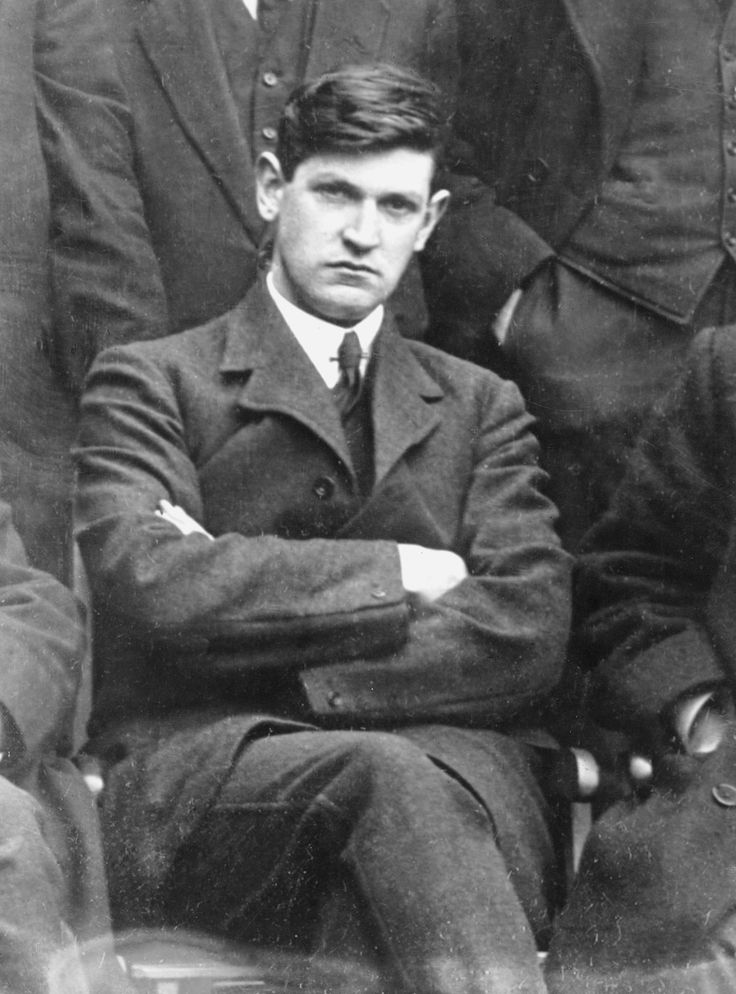
Michael Collins, The Man Who Made Ireland

I have reprinted a letter to the editor to the Eagle Tribune written by myself and printed a few years back. This version has been edited.

As we celebrate St. Patrick’s Day it seems fitting to remember and honor Michael Collins, called by Irish historian Tim Pat Coogan the “Man who Made Ireland.”

Collins remains a controversial historical figure, having made decisions that have been both hailed and vilified. To this day there is discomfort in some Irish republican circles talking about the historical record when it comes to Collins. The signing of the Good Friday Agreements in 1998 inevitably led to comparisons with the Collins decision, as one of the Irish plenipotentiaries, to sign the Anglo-Irish Treaty of 1921. Is it a fair comparison, and does it help us to assess the Collins legacy? I submit that it does.

The Collins legacy was created by his immense contributions to the Irish cause in the War of Independence that began in 1919. Collins had multiple roles in the self- proclaimed Irish government, including Minister of Finance, and Director of Intelligence. As Director of Intelligence Collins was responsible for combating the British intelligence service, as well as being instrumental in the formulation of the guerrilla tactics employed by the Irish Republican Army with such great success against the occupying British army. The tactics of Collins allowed a smaller, lesser equipped and self-trained guerrilla army to fight the world’s greatest military power to a draw.

Collins’ creation of “The Squad” also allowed him to brutally eliminate British intelligence assets in Ireland, reversing the ability of the British to know what the Irish resistance was planning, and giving the Irish an insight into British intelligence activities that had never been available to them prior to his efforts. His contributions, recognized by all as indispensable, led Arthur Griffith, the founder of Sinn Fein, to remark that Collins was “the man who won the war.”

With the declaration of truce in July of 1921 the Irish and the British began to talk about settlement of the issues outstanding. The Irish position was indeed difficult, as the political agenda had been laid out by the Easter Proclamation of 1916, which declared an Irish Republic, with governing authority over the entire island. The political and governing authority of the self-proclaimed Irish Dail flowed from that document. The British had other ideas.

Michael Collins was sent to London in October of 1921 as part of the Irish negotiating team, empowered by the Irish Dail to sign a treaty with the British. Space will not allow a full examination of the issues involved in the sending of Collins, but it is clear that the Irish President, Eamon De Valera, having been to London in July with a negotiating team that did not include Collins, realized that any agreement would, by necessity, fall short of the Irish ideal. He chose not to go again but to send Collins and Arthur Griffith as the heads of the Irish delegation. De Valera’s decision, and subsequent actions, had tragic consequences for the Irish nation.

Collins brought home a treaty, later ratified by the Cabinet, the Dail, and the Irish people, that gave Ireland Dominion status, recognizing the British king as sovereign, and allowed British control over Irish ports. But it removed the British military presence from the 26 counties of the newly created Irish Free State, which enabled Collins to correctly state that the treaty was a “stepping stone” to true Irish independence. History has borne out the Collins judgment, but the treaty itself propelled the Irish Civil War, and split the Irish political leadership in two, and led to the death of Collins.

The political arguments centered principally on the oath of allegiance to the British king, and the acceptance of partition through the unionist veto in the northern six counties. (Which was not a provision of this treaty, but had been achieved through the Government of Ireland Act of 1920)  Collins principal political opponent on the treaty, Eamon De Valera, entered the Free State Dail in 1927 and took the oath. He later, using the Free State apparatus that he had so vehemently opposed, got rid of the oath and produced a new constitution for Ireland. The Irish Free State, under a Fine Gael Taoiseach, proclaimed Ireland a Republic in 1948. Collins argument, that the Free State would propel Ireland towards a fuller freedom, had come to pass.

And so we arrive at the Good Friday Agreement, reached in 1998. The agreement included the I.R.A., and dealt with partition, amongst a host of other issues. In short it codified the principle that the northern six counties could not be compelled to join the Irish Republic but would do so only by vote of the six counties. It deleted the provision in the De Valera constitution that made a territorial claim to the Northern six by the Irish Republic and did so after approval by the voters of the Republic of Ireland.

The Good Friday Agreement, as well as the evolvement of the Free State into the Irish Republic, provides undeniable proof of the essential brilliance of Michael Collins. He saw in 1921 what it took so many others multiple decades to see. That vision and the record that follows him surely vindicates the difficult, but ultimately necessary decisions he had to make to create the Irish Free State and ultimately the Irish Republic. He truly is the father of modern Ireland.

Posted in Ireland | Tagged , , | Leave a comment

RIP William Hurt

Aside from some occasional music posts I do not typically put up posts on actors. William Hurt shall be the exception. He passed away this past weekend, and while his movie credits are extensive and his awards many I was always fascinated by his involvement with Lawrence Kasdan, the writer/director of The Big Chill and Body Heat. Not everyone agrees but those two films brought William Hurt some of his greatest roles, and brought us some truly outstanding performances. Kasdan wrote some great movies, but Hurt truly was magnificent in both. He had so many other great, and Oscar winning performances, but for today lets look at some of the clips from his partnership with Kasdan. The great score from Body Heat by John Barry should not be forgotten either. RIP William Hurt.

Posted in Media | Tagged , , , , | Leave a comment

Seabrook Election Results 2022

The Seabrook election results are in. The Town warrant results are in the below document.

Posted in Seabrook | Tagged | Leave a comment

Methuen Dedicates the Quinn Public Safety Building

I had prior done a post on the rededication of the Searles Building as the seat of Methuen’s City Government. Of course the City was moving those operations from its prior municipal building, now known as the Quinn Public Safety Building. The dedication of this building occurred on October 24, 1993 at 2:00 p.m. The building was dedicated in memory of retired Methuen Fire Captain William S. Quinn. Captain Quinn was a wonderful gentleman, and the honor was well deserved. The letter from Town Manager Donald DeSantis inviting the Town Council to this dedication is below.

Posted in Methuen, Methuen City Council | Tagged , , | Leave a comment

A Look at “The Devil’s Alliance: Hitler’s Pact With Stalin

The Devils’ Alliance: Hitler’s Pact with Stalin, 1939-1941 by Roger Moorhouse

My rating: 4 of 5 stars


A good time to examine one of the root causes of many years of Soviet/Russian political and military dominance of Eastern Europe. I read this book last year after seeing a tremendous bargain on my Kindle. Well worth the price, with a pretty good overview of what became known as the Molotov-Ribbentrop Pact that remains so very controversial to this day.

Author Roger Moorhouse has an entire book to focus on the treaty, how it was arrived at, and the politics involved in the run up to the actual treaty signing. I thought he did a good job, but I expected a little bit more on the treaty, and how the treaty ended up being utilized by each side in advance of the German invasion of the Soviet Union. In light of Hitler’s long history of invective towards Soviet Russia many have just assumed that the German violation of the treaty was baked into the German ideological cake. I have never believed that, although Hitler’s writings made clear his desire to conquer lands to the East. Was there something in the post treaty interactions that led Hitler to his invasion decision beyond ideology?

In all matters of World War II a reliance on William Shirer can help to more fully understand some of the details involved. In this case Shirer’s “The Rise and Fall of the Third Reich” still is an outstanding help in understanding Hitler and Stalins motivations, and gives us some great details on the treaty interactions after signing. After the Hitler takeover of rump Czechoslovakia (a truly terrible story by itself) the German dictator set his sights on new territorial demands to be made on Poland: The status of Danzig, and the German desire for a extra-territorial “corridor” through Poland to connect East Prussia to Danzig and Germany proper. The western powers, having had their eyes opened by Hitler’s duplicity on the Czech issue, now determined to draw a red line on potential German aggression against the Polish state. When both Britain and France issued “guarantees” to protect the Polish borders Adolph Hitler found himself in a predicament. The British and French made diplomatic efforts to secure Soviet participation in a common front against Germany, but these efforts were so ineffectual as to be counter-productive. The Polish government’s refusal to accede to transit rights for the Red Army to move onto Polish soil to meet an aggression by Germany sealed the fate of any common front against Germany that would include Soviet Russia. With Hitler intent on invading Poland by a date certain he began to entertain the concept of a rapprochement with Russia that would allow him, militarily, to finish off Poland and then turn West. Hitler was in a hurry, and Stalin liked what Hitler had to offer, which was the fate of several states, including Poland, that would now fall into the Soviet “sphere of influence.”

German outreach to the Soviets was reciprocated slowly, but eventually German Foreign Minister Ribbentrop ended up in Moscow to finalize the non-aggression treaty, along with the “secret protocols’”that have been the subject of so much discussion, and denial, by Soviet and Russian governments.

Josef Stalin was a tough and notoriously difficult negotiating partner in the best of circumstances. When he understood the imperative to Germany of concluding a non-aggression treaty in short order he drove an especially difficult bargain.

“Discussion swiftly moved to the essence of the Nazi-Soviet arrangement, the so-called secret protocol by which both parties were to divide the spoils of their collaboration. The initiative came from the Soviet side. Realizing that Hitler was impatient to proceed with his invasion plans for Poland, Stalin sought to extract the maximum possible territorial concession. “Alongside this agreement,” he announced, “there will be an additional agreement that we will not publish anywhere else,” adding that he wanted a clear delineation of “spheres of interest” in central and eastern Europe. Taking his cue, Ribbentrop made his opening offer. “The Führer accepts,” he said, “that the eastern part of Poland and Bessarabia as well as Finland, Estonia and Latvia, up to the river Dvina, will all fall within the Soviet sphere of influence.” This was exceedingly generous, but Stalin was not satisfied and demanded all of Latvia. Ribbentrop stalled. Although he had been given the authority to agree to terms as was necessary, he utilized the negotiating trick of breaking off talks to refer a question to a higher authority. Replying that he could not accede to the Soviet demand for Latvia without consulting Hitler, he asked that the meeting be adjourned while a call was made to Germany.”

Moorhouse, Roger. The Devils’ Alliance . Basic Books. Kindle Edition.


Hitler, after consulting a map, quickly acceded to Latvia falling into the Soviet “sphere.” The conclusion of the treaty was a source of great relief to Hitler, who now felt free from the potential of a two-front war. The Germans launched their invasion of Poland on September 1, 1939, and achieved rapid military success. In light of that success Josef Stalin, looking to get his share of the spoils, invaded Poland from the East. This action, regardless of historical revisionism, was one of the most cynical acts of the war.

At 3 a.m. that morning the Polish ambassador in Moscow, Wacław Grzybowski, was summoned to the Kremlin, where he was presented with a note from the Soviet government outlining the grounds for its intervention. As if to emphasize the impossibility of Poland’s predicament, the note itself had been drawn up jointly by the Soviets and the German ambassador in Moscow, Friedrich-Werner von der Schulenburg. It claimed, “The Polish government has disintegrated,” and “the Polish state no longer exists.” Given this apparent collapse, it went on, “the Soviet government cannot remain indifferent at a time when brothers of the same blood, the Ukrainians and the Byelorussians, residing on the Polish territory have been abandoned to their fate.” Consequently, the Red Army had been ordered to “cross the border and take under their protection the lives and property of the inhabitants of Western Ukraine and Western Byelorussia.” By “Western Ukraine” and “Western Byelorussia,” the note meant eastern Poland.

Moorhouse, Roger. The Devils’ Alliance . Basic Books. Kindle Edition.


At this key point the non-aggression pact appeared to be working to further the interests of the Soviets and Germans, but there were the seeds of tension nonetheless. The Germans dutifully turned over Polish territory to the Soviets in accordance with their treaty obligations, and Poland was effectively dismembered. But it was not only Hitler who had large territorial ambitions. Josef Stalin, with attention focused on Hitler, began to make demands on his peaceful neighbors that fell into his “sphere of influence.” Estonia was first, but not the last. The Estonian Foreign Minister Karl Selter was greeted in Moscow by Molotov, with an assist from Stalin, who made it quite clear that unless a “mutual assistance” pact was concluded there would be ominous repercussions for Estonia.

In response to Selter’s protestations of his country’s innocence in the affair, Molotov called upon Stalin himself to join the discussion. The Soviet leader showed his avuncular side upon entering the room soon after, joking with the Estonians, but he quickly got down to business. Once apprised of the essentials, he stated ominously, “What is there to argue about? Our proposal stands and that must be understood.” What passed for negotiations continued for the next couple hours, the Soviets insisting on placing 35,000 Red Army troops in Estonia to “protect order” and demanding a base in Tallinn itself, and the Estonians desperately trying to resist while sticking to the diplomatic niceties that their opponents had long since abandoned. Browbeaten, berated, and bullied, the Estonian delegates returned the following day having decided that they had no choice but to yield. Yet, with Ribbentrop waiting in the wings, they were again met with additional demands and the threat that “other possibilities” existed for ensuring Soviet security. The mutual assistance pact was finally signed at midnight on September 28 and ratified by the Estonian president a week later. Nominally, the treaty obliged both parties to respect each other’s independence; yet, by allowing for the establishment of Soviet military bases on Estonian soil, it fatally undermined Estonian sovereignty. Estonia was effectively at Stalin’s mercy.

Moorhouse, Roger. The Devils’ Alliance . Basic Books. Kindle Edition.


Hitler had used similar tactics in his meetings with unfortunate Presidents and Foreign Ministers of target countries, but Josef Stalin needed no lessons on this score. Similar tactics were used against Latvia and Lithuania, with Stalin effectively gobbling up the Baltic states. Those states appealed to Germany for help, but Hitler turned a deaf ear to their pleas. Despite that fact the Germans were not entirely comfortable with Stalin’s aggressive moves.

Nazi ideologue Alfred Rosenberg, himself born in Tallinn, was clear on the potential consequences, confiding to his diary, “If the Russians now march into the Baltic States, then the Baltic Sea will be strategically lost to us. Moscow will be more powerful than ever.”

Moorhouse, Roger. The Devils’ Alliance . Basic Books. Kindle Edition.


In addition to the geopolitical issues there existed a heavy Germanic population in the Baltics that brought political pressure to bear on Hitler. (Yes, Hitler was concerned with German public opinion.) Stalin was not quite done, issuing an ultimatum to Romania over the province of Bessarabia, which Stalin occupied shortly thereafter. He occupied a bit more than the Germans had bargained away in the treaty, and was coming perilously close to Romanian oil fields which were essential for fueling the Nazi war machine. Hitler was appalled, and took measures to protect those oil fields, and what was left of Romania itself. The tension with Soviet Russia had begun, and although Hitler always had an attack on the Soviet Union on the German menu of military options it is my belief that the tensions that started with Romania would ultimately lead Hitler to decide that hostilities with Russia could not be avoided. The Molotov visit to Berlin to discuss some of these issues, in which he directly challenged Hitler in a face to face meeting over Romania, as well as German use of Finland for troop transit, and how to properly divide the geographic spoils of war, did not go well. Hitler’s not so veiled warning to Molotov during that discussion showed that Ribbentrop was not the only dense Foreign Minister in the room. In discussing the status of Finland Hitler, in stark terms, warned Molotov that there must not be a war launched in the Baltics, describing such a possibility as having the potential to create a heavy strain on Soviet-German relations that could have “unforeseen consequences.”

Moorhouse gives us detail on the brutality of the Polish invasion by both Hitler and Stalin, and of the difficulty Stalin had in explaining the pact to communists all over the world, who detested Hitler.

In light of the Soviet aggression against Poland and the Baltic states the question has arisen as to how Stalin got a pass on his actions while the West determined to stop German aggression. The answer is simply that the British and French identified Germany as the greater threat, and took steps to “keep the Soviet Union in play,” refusing to extend the guarantee of Polish borders to potential aggression by the Soviet Union.


Although Whitehall was aware that, in the aftermath of the Nazi-Soviet Pact, the Poles might be reckoning with a Soviet invasion as well as a Nazi one, the guarantee was not extended to include aggression by Moscow. The British Foreign Office viewed the pact as a fundamentally unnatural arrangement, and so—expecting it to prove temporary—was unwilling to close off a potentially vital link to the USSR by prematurely making her an enemy. Thus, though the treaty mentioned only aggression by an unspecified “European Power,” it was appended by a secret protocol, similarly signed by both parties, which provided clarity. By “European Power,” the protocol explained, the signatory parties understood “Germany,” and in the event of aggression by any other power, they resolved only to “consult together” on their response.

Moorhouse, Roger. The Devils’ Alliance . Basic Books. Kindle Edition.


The Devil’s pact ended badly for both Germany and the Soviet Union, with Hitler launching his invasion of the Soviet Union in 1941. But as the world deals today with a revanchist Russia it is clear that the territorial demands of Russia are influenced by the Molotov-Ribbentrop pact, and its secret protocols. Utilization of the Stalin methodology of dealing with weaker neighboring states is still part of the Russian playbook, as evidenced by the brutal invasion of Ukraine. This book is not new but brings back a truly terrible point in history. We should never forget the lessons of that period.

Putin Blames Poland for World War II

Putin Seeks Rehabilitation of Soviet-Nazi Pact


View all my reviews

Posted in Uncategorized | Tagged , , | Leave a comment

Methuen City Government Moves to the Searles

On October 5, 1993 the Town Manager, and former Chief of Police, Donald DeSantis, invited the Town Council to the rededication of the Searles Building as the Seat of Government in Methuen, which occurred on October 17. In looking over some old documents I have found that original invite, which is posted below. Donald DeSantis was a very important person in the history of Methuen, serving as both Chief of Police and Town Manager before the charter was changed to a mayoral form. He was a man of strength and integrity, and I think of him, and the things I learned from him, often.

Posted in Uncategorized | Tagged , , , | Leave a comment

A Look at The Afghanistan Papers by Craig Whitlock

The Afghanistan Papers: A Secret History of the War by Craig Whitlock

My rating: 5 of 5 stars


Another long term military commitment for the United States, and another large scale failure. After Vietnam the idea that we could commit the same errors, engage in the same type of deceptions, and continue a war based on those deceptions, would not seem possible. Craig Whitlock, in the Afghanistan Papers, pulls the curtain down on the mess that the U.S. made out of this war.

Lessons Learned

Whitlock has gotten to the files of a U.S. government project called Lessons Learned, run by the Special Inspector General for Afghanistan Reconstruction (SIGAR) that contained interviews with many of the principals involved in policy formulation, as well as with the personnel responsible for developing the military strategies. The resulting work product was not pretty, and like the Pentagon Papers provided a damning view of how the war was conducted, the failure to come to grips with reality, the total deception used to justify continuing it, and the massive failure of the political leadership, from both parties, to confront the nonsense that was put forward by the military. Over the course of decades the Vietnam analogy has been overused, but not in this case. The similarities are eerie.

President George W. Bush, with near unanimous political and public support, launched military action in Afghanistan to root out al-Qaeda and topple the Taliban. That is the mission that earned him such political support, and with the initial military success the effort seemed to be on solid ground. But the seeds of the eventual disaster were formed there.

“Speaking confidentially years later to government interviewers, many U.S. officials who played a key role in the war offered harsh judgements about the decision making during the conflict’s early stages. They said the war’s goal and objectives soon veered off into directions that had little to do with 9/11. They also admitted that Washington struggled to define with precision what it was hoping to accomplish in a country that most U.S. officials did not understand. “

The Afghanistan Papers. A Secret History of the War. Whitlock, Craig page 7

Mission creep. And mission creep without a plan. A recipe for disaster. So how did this extension of the original concept come to be? Stephen Hadley, Deputy National Security Advisor in the Bush Administration:

“ ‘We originally said that we don’t do nation-building but there is no way to ensure that al-Qaeda won’t come back without it,’ Hadley said to a Lessons Learned interview. ‘[We] did not want to become occupiers or to overwhelm the Afghans. But once the Taliban was flushed, we did not want to throw that progress away.’ “

The Afghanistan Papers. A Secret History of the War. Whitlock, Craig page 14

So the Administration that had vehemently criticized “nation building” now determined that there was no alternative to that very concept. Of course the American record on nation building, after the efforts with the defeated Axis powers post World War II, has been abysmal. This effort, kept up through multiple administrations, turned out to be a massive failure. Whitlock gives us some parts of the effort, like the poppy eradication program, that were so inept that clever Afghan farmers managed to get paid for destroying poppy acreage after they had cultivated, thereby doubling their income. Richard Holbrooke, who would get a chance in Afghanistan, said of the Bush Administration poppy eradication program:

“…. the emphasis on eradication ‘may be the single most ineffective program in the history of American foreign policy.’ ‘It’s not just a waste of money. It actually strengthens the Taliban and al-Qaeda,’ Holbrooke wrote.”

The Afghanistan Papers. A Secret History of the War. Whitlock, Craig page 141

There was a revolving door of U.S. military commanders in Afghanistan, all of whom always expressed optimism about the prospects for victory, without defining what victory meant. With the start of the Obama Administration Defense Secretary Bob Gates dismissed one of those commanders, Get. David McKiernan, citing the need for a new direction.
McKiernan, in his last press conference as NATO and U.S. commander, from the book:

“McKiernan described the war as ‘stalemated’ in the south and ‘a very tough fight’ in the east. Hours later, at a private dinner at military headquarters, Gates told him he was done.”

The Afghanistan Papers. A Secret History of the War. Whitlock, Craig page 147

As soon as we got a bit of honesty from a war commander that general was cashiered. Whether that was the reason for the sacking may never be known but the message was sent nonetheless. After this sacking General Stanley McChrystal took over as commander, with General David Petraeus as his boss. They unveiled a counter-insurgency plan that would require a substantial infusion of new troops to undertake. McChrystal is a major talent, but his prescription had major flaws, and was undercut by a public announcement, from President Obama, that the “surge” would end by a date certain. The ability, surge or not, to win over the Afghan people was just not there, and while they were happy to take in all the cash being thrown at them, the American effort was simply inept, and never came close to achieving the goal of winning over the people of Afghanistan.

The American effort, as in Vietnam, was infused with an ignorance of the country that we were seeking to “help.” Like the government of South Vietnam the Afghan government of Hamid Karzai was riddled with corruption, and could not project military power beyond Kabul. Our ignorance of the tribal system in Afghanistan, and our belief that we could convert Afghanistan into a western style democracy was borne of the same hubris that led to disaster in Vietnam. Finally, as in Iraq, our understanding of the regional relationships between the nations in the neighborhood appeared to be non-existent. Our total failure with Pakistan, who was receiving major military and financial assistance from the U.S. while providing border sanctuary and some political support to the Taliban, is but one aspect of the total failure of American diplomacy.

Is this method of operation just baked into the American cake? I hope not, but the record is not impressive. Whitlock gives an excellent view of the 20 year failure of American policy in Afghanistan, with the words of the participants providing the evidence not only of failure, but of the deception that helped to create that failure.


View all my reviews

Posted in Uncategorized | Tagged , | Leave a comment

The Seabrook 2022 Warrant

The Seabrook Board of Selectmen have finalized the 2022 Warrant in advance of the Town Deliberative Session on February 8, 2022. The 2022 Warrant is posted below. Thanks to the Board of Selectmen, all of the Department Heads, and the Budget Committee for all of their hard work.

Posted in Uncategorized | Tagged | Leave a comment