Review of “The Death of Expertise” by Tom Nichols

The Death of Expertise: The Campaign Against Established Knowledge and Why It MattersThe Death of Expertise: The Campaign Against Established Knowledge and Why It Matters by Tom Nichols
My rating: 4 of 5 stars

I very much enjoyed “The Death of Expertise” by Tom Nichols. (Is that enjoyment a case of “confirmation bias?”) Nichols is a center-right Republican who wrote a piece for the Federalist back in 2014 dealing with the same subject http://thefederalist.com/2014/01/17/t…

If you have witnessed, or worse yet, participated in a “discussion” on affairs of state via social media you likely understand Nichols subject matter without even reading the book. Have a reasoned discussion where even in the event of disagreement you can agree on a set of underlying “facts?” Not likely. More likely is that you will encounter someone with no knowledge of, or understanding, of the subject of the discussion. But that person will hold forth as someone with vast knowledge of the subject matter, even insulting those with differing viewpoints, often in harsh terms. There is more than a little irony when you have a “low information individual” decrying the participation of “low information voters” in the political system. Nichols nails that down pretty cleanly.

“In modern America, policy debates sound increasingly like fights between groups of ill-informed people who all manage to be wrong at the same time. Those political leaders who manage to be smarter than the public (and there seem to be fewer of those lately) wade into these donnybrooks and contradict their constituents at their own peril.
There are many examples of these brawls among what pundits and analysts gently refer to now as “low-information voters.” Whether about science or policy, however, they all share the same disturbing characteristic: a solipsistic and thin-skinned insistence that every opinion be treated as truth. Americans no longer distinguish the phrase “you’re wrong” from the phrase “you’re stupid.” To disagree is to disrespect. To correct another is to insult. And to refuse to acknowledge all views as worthy of consideration, no matter how fantastic or inane they are, is to be closed-minded.”

Nichols, Tom. The Death of Expertise: The Campaign Against Established Knowledge and Why it Matters (p. 25). Oxford University Press. Kindle Edition.

Of course the “death of expertise” is not limited to politics. Nichols skewers the people trying to offer guidance on medical matters, such as the anti-vaccine crowd. It is not just the advice, but more importantly that in todays atmosphere of “anti-intellectualism” that such advice is given credence by a pretty large group of Americans. Nichols drives home this point in his Federalist piece.

“This isn’t just about politics, which would be bad enough. No, it’s worse than that: the perverse effect of the death of expertise is that without real experts, everyone is an expert on everything. To take but one horrifying example, we live today in an advanced post-industrial country that is now fighting a resurgence of whooping cough — a scourge nearly eliminated a century ago — merely because otherwise intelligent people have been second-guessing their doctors and refusing to vaccinate their kids after reading stuff written by people who know exactly zip about medicine. (Yes, I mean people like Jenny McCarthy.)”


Nichols, Tom. The Death of Expertise The Federalist. January 17, 2014.

Nichols covers a lot of ground, and after reading the book you are likely to be substantially more pessimistic about the future. Before I read the book I looked at some of the reviews, some of which were critical of Nichols for not producing a more “scientific” look at the problems he identifies. I understood, but I think the book highlights issues that are corroding our democracy, and need to be talked about. Nichols is not putting forward empirical data, but rather a point of view. Without a doubt some of Nichols observations are not “politely” put forward, but they are, in many instances, from my perspective, absolutely correct. While my observation above about the tenor of social media “debates” is obviously anecdotal I do not believe that the nasty and tribal nature of the dialogue online can be denied. Nichols brings forward many observations that highlight the rejection of rationality in political discourse.

“Public debate over almost everything devolves into trench warfare, in which the most important goal is to establish that the other person is wrong. Sensible differences of opinion deteriorate into a bad high school debate in which the objective is to win and facts are deployed like checkers on a board—none of this rises to the level of chess—mostly to knock out other facts. Like the customer in Monty Python’s legendary “Argument Clinic” sketch, we find ourselves merely gainsaying whatever the other person said last. (“This isn’t an argument,” the angry customer tells the professional arguer. “Yes, it is,” he responds. “No, it isn’t! It’s just contradiction!” “No, it isn’t.” “Yes, it is!”)”

Nichols, Tom. The Death of Expertise: The Campaign Against Established Knowledge and Why it Matters (p. 41). Oxford University Press. Kindle Edition.

“All of this interaction is doing little to loosen the attachment of laypeople to misinformation. In fact, the problem may be worse than we think. When confronted by hard evidence that they’re wrong, some people will simply double-down on their original assertion rather than accept their error. This is the “backfire effect,” in which people redouble their efforts to keep their own internal narrative consistent, no matter how clear the indications that they’re wrong.”

Nichols, Tom. The Death of Expertise: The Campaign Against Established Knowledge and Why it Matters (p. 131). Oxford University Press. Kindle Edition.

Nichols believes that the “death of expertise” has marginalized so called experts, giving rise to a tower of babel on important issues. While he takes pains to qualify his desire for “experts” to be given the deference and respect that their expertise warrants, and acknowledges that the experts have proven disastrously wrong on many occasions his presentation can be grating, and at times come off as more of a rant. Despite that mild criticism I think he makes some prescient points, and brings some “reason” to the discussion.

Maybe past discussions were this acrimonious, and we are all just exaggerating the “death of expertise” and the aversion to rationality in politics. I think not, but anti-intellectualism has always been a strong strain in American life. Although Nichols covers expert errors the disastrous results in Vietnam and the epic mistake made in invading Iraq have contributed greatly to popular distrust of “experts.”

The Iraq war, for me, highlights the role tribalism plays in the positions that people take. I have many friends that supported the war in the strongest of terms, even after the disaster was apparent. Without any knowledge of the region, the history, or the religious issues involved I received many lectures from these people about the war being the “right thing to do,” and impugning the patriotism of those who opposed it. Many of those same people now support President Trump, and have, within the warm confines of the Trump criticism of President Bush and the Iraq invasion, changed their position on the war. Many have expressed shock at, and blamed President Obama for, the expansion of Iranian influence in Iraq, forgetting that they laughed off the potential for Iran expanding its regional influence as a result of the U.S. invasion. As long as tribalism trumps rationality those discussions are difficult, and in many cases simply not worth having.

Nichols expanded the original federalist article to create this book, and though you may take issue with how he presents, and with some of the arguments he makes, I recommend the book. Nichols not only brings forward some interesting concepts, but does so in a very entertaining fashion. I have to say that while I disagree with many of his social media observations I follow his twitter feed @radiofreetom and enjoy that very much as well.

View all my reviews

Posted in Books | Tagged , | Leave a comment

The Seabrook Finance Report May 2018

At the May 7, 2018 meeting I presented the Board of Selectmen with a financial report in advance of the budget season, pulling together Seabrook’s disparate financial data into one report. As part of that report I have also submitted the 2017 water report, as well as the 2017 sewer report. Those reports highlight the growing amount of the “tax subsidy” flowing from taxpayers to ratepayers. The 2017 report on the ambulance revolving fund, as well as two additional reports (Appendix A and B) are also below. I have included an executive summary, which is also reprinted in full below.

Seabrook Financial Report
Executive Summary

The report submitted today will commence the conversation, and help to clarify some of the underlying issues, on Seabrook’s financial future. The financial data was compiled with the assistance of Carrie Fowler, our Finance Manager, and Angie Silva, our Assessor. 
The report looks at what factors go into setting our municipal tax rate, with the data showing us where we get our tax dollars, and where those tax dollars go. The report shows us the trend lines involved, with the goal of assisting our policy makers on the Board of Selectmen and the Budget Committee.

What are some of the important trends shown in the report? We see that the total dollars raised through taxation by the Town of Seabrook, in the measured period, (2014-2017) have grown by slightly over $2 million, a rate of growth of less than 2%. That makes it difficult to make the case that Seabrook has a “spending” problem. The report shows the impact that the drop in NextEra tax revenue has had, and how that drop has fundamentally changed the percentages paid by the different classes of taxpayers. In 2016, for the first time since the Seabrook Station opened, the “residential” class of taxpayers paid more in taxes than NextEra. That trend line has accelerated since then. As this trend continues it will present major policy challenges for the Town. Another trend that the report highlights is the importance of the commercial/industrial/other utility category, which has grown in the measured period by over $2 million, bringing that number to over $9 million annually. This category will likely pass NextEra as a tax contributor in the next three to five years, and shows that the idea that Seabrook could do without this tax class is misplaced. The new growth numbers are examined, and show that $2 million in new tax revenues have been derived in the measured period, and that “new growth” has been vital, financially, to Seabrook.

The report also examines where our tax dollars are going. It shows that the “town” portion of the overall dollars raised has declined slightly, with the local school portion rising correspondingly. It would appear, based on that trend, that the schools will pass the Town, budget wise, within three years. The four year increase in the total tax levy for the Town is $322,711, which is a rate of increase of less than 1/2 of a percent a year. The report looks at some of the reasons for that number, including the history of the “unexpended fund balance,” which was driven to over $9 million in 2016, allowing the Board to strategically deploy some of those resources to hold down the tax levy. The drop in NextEra payments is also reflected in that number. It is further evidence that the issues facing us have less to do with a “spending” problem than with a “redistribution” of the relative tax burden.

As we look at some of the key numbers in the report each measured year looks at “local revenues,” and points out that the dollars raised through “local revenues” reduces the need for money to be raised through taxation. Appended to the main report are the two 2017 reports detailing the subsidy from taxpayers to the sewer fund, and the water fund. These two reports show that the subsidy amounts to over $1.8 million without the inclusion of capital. If capital is included that number will exceed $2 million. Operationally that is 8.2% of the operating (non-capital) budget, and a major issue facing us going forward.

The report looks at employee health care costs, which have been relatively stable over the course of the measured period, albeit at a major percentage of the overall budget. Those costs are over 15% of our operating budget, and the report looks at what a reduction in that number would mean for Seabrook’s budget. The report looks at this number in combination with the above mentioned water and sewer subsidy, recognizing that in combination those two items constitute 23% of the operating budget, and growing. The problem that creates, budget wise, is obvious. These two items are crowding out other necessary spending, and if the trajectory continues the strain will only become more substantial. The report looks at the 2017 tax rate, and determines that without a water and sewer subsidy the tax rate increase would have gone from the actual 9.9% to 2%.

The policy issues facing the governing body and the Budget Committee are discussed in general terms. What are they?

Should services be maintained at current levels?

If services are to be maintained should they be delivered in the same fashion?

If service cuts are to be made where should they come from?

Should steps be taken to end the subsidy from taxpayers to water and sewer ratepayers?

How should we deal with the trend of lower overall payments from NextEra?

This report is not the end, but rather the beginning of the many policy issues facing Seabrook. Hopefully it will provide some tools for our policy makers as this process begins.

Seabrook Finance Report Executive Summary

Seabrook Financial Report 2018

Seabrook Finance Report Appendix A

Seabrook Finance Report Appendix B

Seabrook Finance Report Appendix Ambulance

Seabrook Finance Report Appendix Water

Seabrook Finance Report Appendix Sewer

Posted in Seabrook | Leave a comment

Methuen Democratic Breakfast 2018

Great turnout at the 2018 Methuen Democratic Town Committee breakfast, where over 300 Democrats gathered to hear candidates speak, recognize Christine Metzmaekers as Democrat of the Year, and conduct a straw poll for some of the exciting races we have coming up later this year. Congrats to Christine, a great Democrat who really deserved the recognition. Thanks to our Chair Jessica Finocchiaro for all of her hard work in putting it together. Thanks to all the Committee members who worked so hard to make the breakfast a success. The poll results are below. Thanks to all the candidates who took the time to attend the breakfast and offer all of us some perspective on their candidacies.

GOVERNOR (choose one):
4___Stephen Golub
***140___Jay Gonzalez
119___Bob Massie

LIEUTENANT GOVERNOR (choose one):
3___Peter Lin-Marcus
14___Louis Marino
***152___Quentin Palfrey
64___Jimmy Tingle

SECRETARY of State (choose one):
***131___Bill Galvin (I)
129___Josh Zakim

U.S. SENATE (choose one):
17___Robert Mancini
5___Ronald Reden
***252___Elizabeth Warren (I)

U.S. REPRESENTATIVE – THIRD CONGRESSIONAL DISTRICT:
0___Jeffrey Ballinger
14___Alexandra Chandler
16___Beej Das
75___Rufus Gifford
0___Leonard Golder
77___Dan Koh
25___Barbara L’Italien
24___Patrick Littlefield
2___Bopha Malone
8___Juana Matias
0___Keith St. John
***115___Lori Trahan

GOVERNOR’S COUNCILOR – FIFTH ESSEX DISTRICT
***261___Eileen Duff (I)
29___Nicholas Torresi

STATE SENATE – FIRST ESSEX DISTRICT
5___Stephen Battle
***252___Diana DiZoglio
8___Adele Martino

STATE REP 14th ESSEX DISTRICT
***197___Lisa Ferry
69___Christina Minicucci

NORTHERN ESSEX REGISTRAR OF DEEDS (choose one):
***203___Paul Iannuccillo (I)
12___Michael Fielding
14___Francisco Paulino
21___Alexcy Vega

Posted in Methuen, Uncategorized | Tagged | Leave a comment

Mayor James Jajuga State of the City Address

On Tuesday April 24, 2018 Mayor James P. Jajuga gave his first State of the City Address as Mayor, at Mann’s Orchard. The video of his remarks is below.

The Eagle Tribune coverage of Mayor Jajuga’s speech.

Posted in Methuen, Methuen City Council, Methuen Mayor's Race | Tagged , , | Leave a comment

Seabrook Fire Receives Equipment Donation from Chartwell

The Seabrook Board of Selectmen voted to accept an very generous equipment donation from Chartwell, the owners of Rockingham Village, who donated two Lucus Cor automatic CPR machines worth over $15,000 each, along with a new radio box system that will vastly improve information flowing to the Department upon the sounding of an alarm. The entire donation totaled over $82,000 and the Board of Selectmen expressed their appreciation to Chartwell for this very generous donation to Seabrook Fire. Congrats to Chief William Edwards for all of his work on this project.

Seabrook Firefighters Nate Mawson and Christopher Perry

Media coverage of the Chartwell Donation

Posted in Seabrook | Tagged , , | Leave a comment

Seabrook Elementary School Unveils Mosaics for Anniversary Celebration

On Friday April 20, 2018 the Seabrook Elementary School unveiled four Mosaics that students and Artist Lizz Van Saun created to help celebrate the 250th anniversary of the Town of Seabrook. What a great program it was, with wonderful music and the unveiling of the four mosaics. Thanks to the School Board, Principal Stephanie Lafreniere, Assistant Principal Mark Dangora, and Music Teacher Katrina O’Brien for a wonderful event. Members of the Historical Commission, the Anniversary Committee, and the Board of Selectmen were on hand to enjoy the mosaics, and the entire program.

Posted in Uncategorized | Leave a comment

RIP Seabrook Police Officer Jim Cawley

Seabrook lost a terrific person who impacted our community for many years as a Police Officer, Jim Cawley. Jim was a terrific person who we lost far too soon. Officer Jim Cawley was brought home to Seabrook, and his procession passed Seabrook Town Hall, the Seabrook Fire Department, and the Seabrook DPW. That procession had throngs of his friends and co-workers standing out of respect, and affection for Jim personally. Thanks to Fire Chief William Edwards, DPW Manager John Starkey, and Police Chief Gallagher and Lt. Kevin Gelineau for bringing Jim home in such a nice way. The Seabrook Board of Selectmen joined in making this statement to the media on Officer Cawley.

“Today’s display of respect and affection for him is indicative of the esteem in which he was held by his fellow police officers, firefighters and the many town workers who knew and admired him,”

Media on the passing of Officer Cawley

Posted in Seabrook | Tagged , | Leave a comment

Brown’s Lobster Pound in Seabrook Re-Opens

The Seabrook Board of Selectmen were on hand Friday April 13, 2018 to help the Brown family to cut the ribbon as they re-opened Brown’s Lobster Pound after rebuilding the facility following a major fire. Brown’s Lobster Pound has been a Seabrook institution for decades, and the Brown family was determined to rebuild this great destination point despite the great challenges, and expense, of the effort. Congratulations to Mr. Bruce Brown and the entire family for the successful grand opening, which has produced a beautiful and modern facility designed to serve the massive customer base of Brown’s for many years to come. Thanks to Executive Councilor Russell Prescott for his attendance, and his kind words. Thanks to Governor Sununu, who sent a citation celebrating the re-opening.

Posted in Seabrook | Tagged , | Leave a comment

Congrats to Retiring Seabrook Police Officer Chet Felch

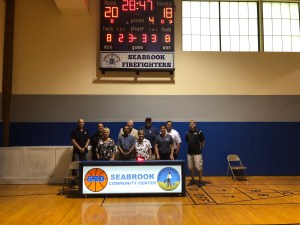
The Board of Selectmen recognized and honored retiring Seabrook Police Officer Chet Felch for his long and distinguished career at yesterdays Board meeting. Congratulations and best wishes to Chet as he embarks upon a well deserved retirement.

Posted in Seabrook | Tagged , | Leave a comment

Review of “Present at the Creation” by Dean Acheson

Present at the Creation: My Years in the State DepartmentPresent at the Creation: My Years in the State Department by Dean Acheson
My rating: 3 of 5 stars

The Dean Acheson memoir, published in 1969, has a title that is actually very appropriate. Acheson was a State Department official serving under FDR, and later under Harry Truman, eventually rising to the position of Secretary of State. This memoir takes us on a tour of some of the most difficult, and momentous, times in American diplomatic history.

Acheson covers the critical post war period, offering first hand insights even for the period that he was out of government. That time presented truly difficult choices for the United States, with the decisions made delivering the post war system and consensus that we are all so familiar with. What were the issues, and how did the Post World War II world order come into being? Acheson covers the tough challenge that Stalin gave to the West immediately after the war, with a strong focus on the German question. The status of Germany post war, accepted and known now by our generation as western in outlook and governance, was not something that just happened. Josef Stalin put enormous political and psychological pressure on the West, including blockading Berlin, offering political inducements to the West Germans (potential re-unification under a “neutral” political framework) and creating major political obstacles to successful four power governance and occupation of defeated Germany. As the Germans moved to rebuild and become part of the European and world community the diplomatic challenges were stark. Acheson covers them in detail, with a quick look at the Marshall Plan. As Europe rebuilt after the war the seedlings of the Common Market, and the E.U. were planted. That diplomacy required substantial balancing between French fears of German industrial and military resurgence, and the German desire to shed the occupation and become re-integrated into the European community. Acheson spends much time on how this progressed, and all of the problems that needed to be overcome. The long and expensive cold war between East and West grew out of this dispute, and Acheson gives us a great viewpoint on Soviet Russia and the inherent difficulty of negotiating with Stalin. The fiscal difficulty of picking up the West, economically and militarily, is also looked at, with some discussion of getting the “allies” to pick up a greater share of the military burden, and the diplomatic and domestic issues surrounding that question. Fortunately Acheson and President Truman recognized the realities and made the necessary investment that enabled the U.S. to “contain” the Soviet threat. Acheson covers how the U.S. picked up the burden in Greece as the British were leaving, holding off the threat of “losing” Greece to Soviet influence.

Acheson was the face of U.S. foreign policy, along with George Marshall, during the Truman years, and he took plenty of heat from a GOP controlled Senate. His views on China, and on the issue of “who lost China” to the communists, brought much criticism from the Acheson described “primitives” of the Senate. Acheson is quite emphatic that the serious errors of Chiang caused the loss of the Nationalists to Mao, (even producing an extensive China White Paper) and I do believe that history has vindicated that judgement. But that political argument, in my view, had negative consequences for the U.S. for years to come, impacting the major policy makers as they considered U.S. options in Vietnam, giving them a political fear of “losing” Vietnam and being subjected to the same type of political attacks launched on Truman and Acheson on the China issue, in my view making decisions based on that political fear, rather than on a pragmatic policy basis. Despite his characterization by the GOP as soft on Chinese communism Acheson continued to be a staunch opponent of recognizing the Mao regime in Peking.

Acheson took major heat after the Korean War broke out, with critics citing his speech that outlined the “defensive perimeter” of the U.S. that omitted Korea. The critics, upon the North Korean invasion, cited the Acheson speech as an “invitation” to the Soviets and North Koreans to launch the military action. Acheson was highly sensitive to this charge, and took great pains to rebut it in the book. He gives us a good view of the action in Korea, with a very strong, negative view of the actions of General Douglas MacArthur, and strong support for President Truman’s eventual sacking of MacArthur. The diplomacy involved in the Korean conflict, the Soviet error of leaving the U.N. in advance of the vote to oppose the North Koreans by the international community, and the connection of the Korean and Taiwan (Formosa) issues are covered extensively.

No Acheson book can be complete without mentioning that he operated in the period that spawned Joseph McCarthy. McCarthy, and the Acheson described “primitives,” are covered extensively, and the damages done by them were felt for years. Hyper-partisanship, and party hatred, did not start in 2016. As GOP Senator McCarthy and his minions terrorized the U.S. government, and the State Department especially, some in Congress spoke out against the madness. Republican Senator Margaret Chase Smith, in her Declaration of Conscience, issued in 1950, (joined by 16 colleagues) said: ‘The nation sorely needs a Republican victory. But I do not want to see the Republican Party ride to political victory on the Four Horseman of Calumny-fear, ignorance, bigotry, and smear.” (Acheson, Dean Present at the Creation page 365) Of course Acheson was the subject of many of these attacks, and the back and forth with the Senate, and how this dynamic impacted foreign policy, is covered extensively.

Finally Acheson covers the policy adopted by the U.S. with regards to Indochina. Acheson exhibits a dim view of French policy, but concedes that U.S. policy makers, himself included, felt constrained by the need to counter the Soviets in Europe, and feared French backlash if the U.S. were to become too critical of the failed French policy in Indochina. He exhibits, at this early date, some of the same failures of thought that characterized U.S. policy makers in the decades to come, especially with regards to Ho Chi Minh. Acheson tacitly admits the failure, but confesses that even as he wrote the memoir he could not justify the policies, but could not think of a workable alternative. For those that think the study of history is a waste of time look at the early development of U.S. Indochina policy, and how ignorance of history helped to foster one of the greatest foreign policy disasters in U.S. history.

Acheson truly was “present at the creation,” being the State Department (not as Secretary) representative to the Bretton Woods Conference that established the post war financial system, including the IMF and the World Bank, working on the creation of NATO, as well as the economic agreements that started the European Common Market, and the E.U., and was one of the key architects of the “containment” policy designed to limit Soviet influence and expansion at a time of great strategic danger for the U.S. He was not the Secretary, but the U.S. recognition of the State of Israel in 1948 by President Truman was one of the major post war foreign policy decisions that helped to shape the new world order. (Both Acheson and General Marshall were opposed) Managing the British retrenchment world wide, especially in the Middle East, started with Truman and Acheson. He managed the German question, but was also responsible for concluding the peace treaty with Japan, helping to craft the post war order in that vital part of the world. Acheson designed the process that effectively prevented the Soviets from derailing the treaty, or making changes that would have been inimical to U.S. interests. His work there was outstanding, and is still being felt in a positive way today.

This book is very long, and could have benefitted from the omission of many minor details. Acheson is exceedingly deferential to President Truman but is not afraid to highlight areas of disagreement with his boss. He is less deferential to FDR, with whom he had some major areas of disagreement. I read this book the old fashioned way as it was not available on Kindle. Despite the length I am happy to have read it, and recommend it to those interested in how the post World War II world order was established. Acheson was a major intellectual force in the development of that order, and certainly one of the most impactful Secretaries in U.S. history.

View all my reviews

A look at the Acheson book from “Foreign Policy” Magazine.

Posted in Books | Tagged , , | Leave a comment