Jim Sciutto has given us a very interesting, and obviously timely, book on the new relationship dynamics between the great powers of the world. The post World War II order has not disappeared but is teetering, with an ascendant China, a revanchist Russia, and some like minded middle powers pushing hard to knock down the edifice largely created by the United States.
Sciutto gives us a focus on the great hot spots (Russia-Ukraine, China-Taiwan) as well as the close cooperation between Russia, China, and the smaller powers determined to change the dynamics of the international system. (Iran, North Korea)
Sciutto comes down fairly hard for stopping the Russian military expansion into Ukraine, and I was delighted that he included the perspective of Estonian Prime Minister Kaja Kallas in the book. As we move further away from World War II many have forgotten the horrors visited upon the Baltic states by Russia and Stalin while the West was preoccupied with stopping the naked aggression of Adolph Hitler. The odious Molotov-Ribbentrop pact giving Stalin a free hand in the Baltics while enabling Hitler to invade Poland and start World War II allowed the Russians to simply absorb the Baltic states, including Estonia. Others may have forgotten that lesson but Prime Minister Kallas has not, and she is a strong voice giving warning about Russian intentions were they to win in Ukraine.
I think it important that Sciutto included some detail on the war game results conducted by The Center for Strategic and International Studies on a potential invasion of Taiwan by China. The results are fairly sobering, and despite plenty of public comment on these results they would likely be a shock to many Americans.
Sciutto talks about the difficulties inherent with today’s configuration of great powers for the United States. The U.S. has a strong alliance system in place, but the cooperation of Russia and China is creating major difficulties for the exiting world order. There are major flash points, and as Sciutto points out, fewer guardrails, between the great powers today. Sciutto has done a fine job of looking at the complexities, and dangers, inherent in these relationships.
The Seabrook Water and Sewer reports for 2023 are below. I have produced these reports for many years, and while they retain the existing format they now include capital costs into the calculation of the annual subsidy going from taxpayers to rate payers. The reports show that the annual water/sewer deficit for 2023 is $2.3 million.
The Select Board has determined to make the system self reliant in 2024. They have adopted a rate system that should fully fund both water and sewer departments, including all capital costs. The new rates were effective as of January 1, 2024. These rates will lift that $2.3 million dollar subsidy off of the tax rate and move it to the ratepayers. Taxpayers should realize a large benefit.
If you have any questions or concerns do not hesitate to contact my office.
Tim Pat Coogan gives us a tour de force on Michael Collins, the man who made Ireland, in this book which is both a biography of the “big fella” and a history of a critical point in Ireland. These events are still argued about today, and of course led to the great split in the Irish movement for independence that brought the Irish civil war, a tragedy for the entire country.
There can be no mistake about where Coogan stands on the events that led to the creation of the Irish Free State and the civil war. He is unabashedly on the Michael Collins side of that argument. If you have some sympathy for Eamon De Valera this might not be the book for you.
The book is thick with details, which some have said made it a difficult read, especially for those that might not be familiar with this era of Irish history. Tim Pat has a lot of ground to cover, as the biography of Collins is simply intertwined with Eamon De Valera and the Irish movement of independence. You cannot tell the story of Michael Collins without getting into the weeds of the movement for Irish independence. It was Collins whole life.
Michael Collins was a volunteer and survived the disaster of the Easter uprising of 1916. The military failure forever colored Collins views on how to militarily confront the superior British force stationed in Ireland. Static warfare would lead Collins to master the tactics of a guerrilla campaign against the British. As successful as his tactics were even this eventually brought Collins into conflict with Eamon De Valera.
Collins life and death were tied to Irish history, and to the other giant of the Irish independence movement, Eamon De Valera. The eventual split in the movement, and the basis of the Irish Civil War, in large part was attributable to the eventual break between Michael Collins and Eamon de Valera. This book, by necessity, delves into that break, how it happened, and who the author thinks bears ultimate responsibility for the costly divide.
After the debacle of 1916 Eamon De Valera assumed overall leadership of the Irish Republican movement, but Michael Collins was a driving force in the movement, acting as Director of Finance, Director of Intelligence, as well as many other roles in the self declared Republican government of Ireland. He was a member of the first Dail, and though he made some enemies within the movement his leadership was simply immense. When Eamon De Valera decided to travel to America to build political support as well as gather financial support Collins was left in charge. The Collins success in prosecuting the guerrilla campaign against the British included a high degree of brutality, including executions of key British personnel in Ireland by a squad of assassins put together by Collins. The “squad”, or the “12 Apostles” put together by Collins, inflicted heavy damage on the British police and military infrastructure in Ireland. Collins was able to identify and mark for execution many British assets through superior gathering of intelligence, including turning key workers for the British in Ireland into informants for him. He was responsible for floating the national loan that financed the war effort and the activities of entire “Irish government” that claimed legal authority over the entire country. It was the war efforts of Collins, without any doubt, that drove the British to sue for some sort of accommodation with the Irish. That process, supposedly led on the Irish side by De Valera, became the point of fracture between Collins and De Valera. That fracture would have horrible ramifications for the Irish movement, and would cost Collins his life.
What was the cause of the split? Before we get to that question let us look at how Coogan described the De Valera trip to the United States, where he became embroiled in a major political dispute with prominent Irish American supporters of Irish independence. The De Valera stubborn streak, or maybe straight out hubris, is described.
At an early stage in the De Valera tour one Irish-American leader, watching the tensions build up, commented that the best thing to do with De Valera was ‘turn everything over to him. He will make a failure of it , but a failure is better than a split. And a split is certain unless De Valera can have his way.’
The Man Who Made Ireland: The Life and Death of Michael Collins Tim Pat Coogan pg. 190
When the British made peace overtures to the Irish several key questions faced the Irish. The Irish government embraced the declaration of a Republic by the Easter 1916 rebellion. The commitment to the establishment of an Irish Republic with authority over the entire island was a key tenet of Irish Republican political thought. It was a difficult, if not impossible political goal in light of British policy and politics. The status of Northern Ireland was a sensitive one for both sides. Like today the counties that made up Northern Ireland were a political football in British politics, with “unionist” sentiment a majority in what became Northern Ireland. That majority had close political ties to the Conservative Party in Great Britain and that made any deal on the North very difficult. The second key question for the Irish was whether something less than a Republic could meet their political goals. The British, at this juncture, were simply not going to take the great leap towards a Republic for Ireland that would force a disassociation from the Crown. With those challenges ahead both sides agreed to a truce in place in July of 1921 in the hope of reaching some sort of agreement.
The truce of 1921 had some major military ramifications. Collins had fought the British to a standstill using guerrilla tactics that were often quite harsh. His intelligence network, and his fighters, were operating under a certain cover. With the truce declared Collins worried about what might happen should the negotiations fail and hostilities re-commence.
“He commented, ‘once a truce is agreed, and we come out in the open, it is extermination for us if the truce should fail…We shall be like rabbits coming out from their holes.’”
The Man Who Made Ireland: The Life and Death of Michael Collins Tim Pat Coogan pg. 217
This Collins analysis would go a long way towards explaining his later actions.
De Valera agreed to travel to London for direct talk with British P.M. David Lloyd George on July 12, 1921. The Irish delegation did not include Collins, who was omitted from the team by De Valera over Collins protests. This decision by De Valera also would go a long way, in my view, to explain the later disaster.
In his meetings with Lloyd George De Valera remained difficult to pin down. In a report from Lloyd George to the British cabinet on his discussions with De Valera the P.M. said:
“After three {there were actually four in all} interviews with Mr. De Valera, aggregating several hours, I found it difficult to see exactly where the Irish leader stood…What he wanted was a Republic, but this the Prime Minister had said was impossible, being inconsistent with the Monarchy. Mr. De Valera however had not admitted this inconsistency…as the conversation progressed , it became increasingly clear that Ulster was the real difficulty.”
The Man Who Made Ireland: The Life and Death of Michael Collins Tim Pat Coogan pg. 221
This articulation of the British position on a Republic in direct meetings with De Valera, was also critical in understanding the pivotal events that would soon come.
The conference did not end in agreement, but further discussions continued, with plans for a second British/Irish conference. In the run-up to the second conference De Valera and Lloyd George exchanged multiple letters. Within those exchanges the parameters of British flexibility became obvious for all to see, and likely lead De Valera to some fateful decisions. In outlining the Irish position in advance of the second round De Valera, in a note to Lloyd George, stated that
“our nation has formally declared its independence and recognizes itself as a sovereign State. It is only as the representatives of that State, and as its chosen guardians, that we have any authority or powers to act on behalf of our people.”
The Man Who Made Ireland: The Life and Death of Michael Collins Tim Pat Coogan pg. 225
Lloyd George rejected this formulation clearly.
“From the very outset of our conversation I told you that we looked to Ireland to own allegiance to the Thrown, and to make her future as a member of the British Commonwealth. That was the basis of our proposals and we cannot alter it. The status which you now claim in advance for your delegates is, in effect, a repudiation of that basis.”
The Man Who Made Ireland: The Life and Death of Michael Collins Tim Pat Coogan pg. 225
This was not the end of the correspondence between the two, and I will give additional text. But before I do we see the very clear position of the British on the concept of an Irish Republic. De Valera, seeing the British inflexibility on this issue, followed with a note offering to go to a conference with no pre-conditions. This effectively acknowledged that the British did not recognize the delegation as representatives of an Irish Republic. The Lloyd George response, and invitation said:
“His Majesty’s Government…cannot enter a conference upon the basis of this correspondence. Notwithstanding your personal assurance to the contrary, which they much appreciate, it might be argued in future that the acceptance of a conference on this basis had involved them in a recognition which no British Government can accord. On this point they must guard themselves against any doubt…The position taken up by His Majesty’s Government is fundamental to the existence of the British Empire and they cannot alter it. My colleagues and I remain, however, keenly anxious to make in co-operation with your delegates another determined effort to explore every possibility of settlement by personal discussion…We, therefore, send you herewith a fresh invitation to a conference in London on 11 October, where we can meet your delegates as spokesmen of the people you represent with a view to ascertaining how the association of Ireland with the community of nations known as the British Empire may best be reconciled with Irish national aspirations.”
The Man Who Made Ireland: The Life and Death of Michael Collins Tim Pat Coogan pg. 226
When the split came Collins would shred the De Valera argument that the only acceptable negotiated settlement would be British recognition of the Irish Republic by pointing to De Valera’s acceptance of the conference on the basis of this very correspondence. We get a bit ahead of the story, but Collins later said, after the split:
“The communication of September 29th from Lloyd George made it clear that they were going into a conference not on recognition of the Irish Republic… if we all stood on the recognition of the Irish Republic as a prelude to any conference we could very easily have said so, and there would have been no conference…it was the acceptance of the invitation that formed the compromise.”
The Man Who Made Ireland: The Life and Death of Michael Collins Tim Pat Coogan pg. 226
Robert Barton, a member of the second Irish delegation who ended up opposing the Treaty and falling out with Collins, nonetheless agreed with this idea.
“In these preliminaries the English refused to recognize us as acting on behalf of the Irish Republic and the fact that we agreed negotiate at all on any other basis was possibly the primary cause of our downfall. Certainly it was the first milestone on the road to disaster.”
The Man Who Made Ireland: The Life and Death of Michael Collins Tim Pat Coogan pg. 227
As mentioned I got a bit ahead of the story. With the conference set the Irish leadership had to determine who would go to London for this make or break negotiation. The first conference was led by De Valera, who left Collins at home. This time De Valera made the fateful decision to send Michael Collins to London while he stayed in Dublin. This disastrous decision has been analyzed repeatedly over the years. De Valera’s explanations for not leading the delegation were, in my view, nonsensical. As the so called “President of the Irish Republic” De Valera had an obligation to lead the delegation and do the negotiating. Coogan offers De Valera no relief here:
“Having left Collins at home while he teased out from Lloyd George what was on offer, he now, having found out, began to steer Collins towards the negotiating table in Downing Street.”
The Man Who Made Ireland: The Life and Death of Michael Collins Tim Pat Coogan pg. 227
De Valera would later compound his errors in ways that ripped apart the Irish independence movement. But this cynical ploy started the Irish, as Barton points out, on the road to disaster. Knowing full well that any potential agreement would be something short of recognition of a Republic De Valera sent Collins, knowing that either failure or a compromise would be the result. He did not want to be associated with either. In response to the many objections to De Valera not going to London, including strenuous objection from Collins, De Valera said:
“He said that he himself would go if he were not the President, the ‘symbol of the Republic.’ The ‘symbol’ should be untouched…not compromised by any arrangements which it might be necessary for plenipotentiaries to make.”
The Man Who Made Ireland: The Life and Death of Michael Collins Tim Pat Coogan pg. 229
Coogan mentions “Machiavellian” in describing the thought process of De Valera. I agree.
A tragic set of misunderstandings, mixed in with some bad faith, combined to create some major issues that would come back to haunt the Irish. The delegation was sent as
plenipotentiaries, with the Irish Dail empowering them as such. Coogan mentions De Valera’s attempt to apply handcuffs, but does not make clear that their power was subject to the limits desired by De Valera. (Send back a draft treaty to Dublin and await a reply before signing) Arthur Griffith, whose contributions to the Irish independence movement were enormous, was the nominal Chair of the Irish delegation. As expected the British were only willing to go so far, and any idea of a negotiated solution that placed Ireland outside of the British Commonwealth was a non-starter. The British delegation included Lloyd George, Churchill, and Birkenhead, an A list of talent. The Irish delegation was assigned by De Valera to be “balanced” but had some less than stellar personalities. The Irish submitted a De Valera driven idea of “External Association” that was soundly rejected by the British, who offered Dominion status. The Irish delegates were in fact back and forth to Ireland to report, but the Irish Cabinet was badly divided, and simply did not offer clear instruction. At the critical time, with negotiations coming close to an end, De Valera once again refused to join the delegation.
The sides narrowed the differences, and the Irish delegation signed the draft Treaty that included the oath to the British Crown and Dominion status, with the Ulster question deferred. Collins, in a statement to Birkenhead, said “I may have just signed my actual death warrant.”
After the signing the row began, with De Valera’s reaction one of outrage:
“They managed to get him a few minutes after he had read the Evening Mail. He was in a ‘towering rage.’ Duggan handed him the Treaty, and noticing that he was taking no interest in it, asked him to read it. “Why should I read it?’ was the reply. Taken aback, Duggan told him about the publication arrangement and pointed out that it was then nearly eight o’clock. ‘What,’ exclaimed De Valera, ‘to be published whether I have seen it or not-whether I approve or not?’”
De Valera, in a fit of pique over the plenipotentiaries having signed an agreement without his assent, after having refused to go to London himself, now moved to expel Collins, and two other delegation members, from the Cabinet. He did this before they had arrived back from London, and without offering them an opportunity to defend their actions. Machiavelli had made his move. De Valera had miscalculated, and this brazen move to eliminate Collins politically failed.
The De Valera argument, that the signing of the Treaty without a referral back to him or the Cabinet, was a violation of a pledge made by Arthur Griffith, in the light of history, may have some merit. But that merit gets washed away by the fact that the Treaty was subject to ratification by the Irish Dail. It was referred back, and could have been rejected by the elected representatives of the Irish people. The Dail debate was truly vicious, and both sides of the debate gave as good as they got. A piece of the debate by Collins is worth looking at. Speaking of the Treaty Collins said:
“In my opinion it gives us the freedom, not the ultimate freedom that all nations desire and develop to, but the freedom to achieve it…we have stated we would not coerce the North-East. We have stated it officially. I stated it publicly in Armagh and nobody has found fault with me. What was the use of talking big phrases about not agreeing to the partition of our country. Surely we recognize that the North East corner does exist, and surely our intention was that we should take such steps would lead to mutual understanding. The Treaty has made an effort…to deal with it on lines that will lead very rapidly to goodwill and the entry of the North East under the Irish Parliament.”
The Man Who Made Ireland: The Life and Death of Michael Collins Tim Pat Coogan pg. 301
De Valera made some truly horrible decisions in this time frame. His debate position urged the Dail to adopt what became known as “Document No. 2. This document, similar in many respects to the actual Treaty, cost De Valera some critical support from hardliners. Document No. 2 can safely be called an exercise in ego, and unacceptable to the British.
De Valera’s stature was such that many attempts at compromise were offered, and rebuffed by him directly. Making the Provisional Free State Government subsidiary to the Irish Dail by an act of the Dail was agreed to by both sides, including Collins, and brought to De Valera, who rejected it.
“Joseph McGuiness said in the Dail afterwards ‘the people on this side literally went on their knees to President De Valera to try to preserve the unity of the country, …in private session the next morning de Valera thumped the table and said:’There is no use in discussing it. The whole of Ireland will not get me to be a national apostate and I am not going to connive at setting up in Ireland another government for England.’”
The Man Who Made Ireland: The Life and Death of Michael Collins Tim Pat Coogan pg. 303
The whole of Ireland phrase would prove prophetic. Before the debate was over the Cabinet Minister for Defense, Cathal Brugha, launched an all out attack on Collins. That relationship had been badly strained for years, and the Treaty broke it. In response to this attack on Collins Arthur Griffith said Collins:
“He was the man that made the situation: he was the man, and nobody knows it better than I do how, during a year and a half he worked from six in the morning until two the next morning. He was the man whose matchless energy, whose indomitable will carried Ireland through the terrible crisis and though I have not now, and never have had, an ambition, about either political affairs or history, if my name is to go down in history I want it associated with the name of Michael Collins. Michael Collins was the man who fought the Black and Tans for twelve months until England was forced to offer terms.
The Man Who Made Ireland: The Life and Death of Michael Collins Tim Pat Coogan pg. 306
Griffith, in the final analysis, had it right. The Dail voted in favor of the Treaty, by a margin of 64-57. De Valera, in response, announced his resignation, moving the country on a course of disaster.
As the sides engaged in political sparring De Valera gave a speech in which he said:
If they accepted the Treaty, and if the Volunteers of the future tried to complete the work the Volunteers of the last four years had been attempting they…would have to wade through Irish blood, through the blood of the soldiers of the Irish government, and through perhaps, the blood of some of the members of the Government in order to get Irish freedom.
The Man Who Made Ireland: The Life and Death of Michael Collins Tim Pat Coogan pg. 319
The blood of fellow Irishmen, who themselves had fought the British side by side with De Valera. Truly despicable, and a comment that hung around his neck for the rest of his life. The best efforts of Collins to restore some unity, including forming an electoral pact with the anti-treaty elements, all ended up foundering. The Anti-treaty wing of the IRA, Collins comrades in an earlier period, seized a Free State building in Dublin, and while Collins likely waited too long, eventually Free State forces took back the building, triggering the Civil War. Collins, in an ambush, was killed in that conflict.
De Valera’s hypocrisy was shown years after Collins death by his willingness to enter the Free State Government with the oath of allegiance to the Crown still a part of the entry requirement. He took over the Free State government after abstaining from participating, and at some point years later cracked down on his ostensible allies in the IRA. Collins vision, that the formation of the Free State was a steppingstone to further progress, had been borne out. Coogan ends the book with a quote from De Valera, who through his many years in power was small and petty over any attempts to honor the service of Michael Collins:
“I can’t see my way to becoming Patron of the Michael Collins Foundation. It’s my considered opinion that in the fullness of time history will record the greatness of Collins and it will be recorded at my expense.”
The Man Who Made Ireland: The Life and Death of Michael Collins Tim Pat Coogan pg. 432
Collins was indeed, in his short time here, a man of greatness. His vision, and his willingness to endure much political animus, brought forward the nation of Ireland. During this St. Patrick’s Day month we should remember the monumental contributions of the Big Fella, Michael Collins.
There has been, in the context of the Russian invasion of Ukraine, lots of discussion of Poland, and how World War II started. Some of the commentary, especially the comments by Vlad Putin blaming Poland for the start of World War II, and not Adolph Hitler, have created quite a stir. From my perspective Putin’s comments were not really surprising as he has been using the German playbook from that period. What happened in the run-up to the German invasion of Poland in 1939, and how did Germany, and the Soviet Union, view the Polish state? Are there similarities to how Putin views the Ukrainian state?
World War II started when Nazi Germany invaded Poland on September 1, 1939. The British and French, having guaranteed Polish borders, declared war. The German invasion provided the casus belli, but it was the culmination of a series of aggressive German actions that finally pushed the French and the British into action. These prior German actions, well covered in history, included assimilating the State of Austria (the Anschluss) by invasion, and then making territorial demands on Czechoslovakia that were settled in favor of Germany by the British at Munich, where Czechoslovakia was carved up, and a major piece handed to Hitler’s Germany. We will look at some additional detail on these events, but the first lesson is that an aggressor state is not likely to be placated by attempts to “settle” disputes when its territorial ambitions are clearly larger than the immediate issue at hand. Hitler digested the Sudetenland and Austria, but his grievances and hunger for additional territory could not be satisfied by those concessions. Aggressor states, for all of the lying about short term intentions, usually have stated long term goals fairly clearly. That was the case with Hitler. It is quite clearly the case with Putin.
The tactics and rationales used today by Putin relative to Ukraine are not similar to the German rationales used in the run-up to World War II. They are identical. Putin has said plenty about the Russian rationale for the invasion of Ukraine. We have heard that Ukraine is not a “real state” and that the government of Ukraine was committing “genocide” against the Russian population. Putin points out that Ukraine was a part of the Soviet Union, and that the “artificial separation” of Ukraine into a state within the Soviet Union was an invention of Lenin and the Soviet Communist Party. His early interventions in East Ukraine were driven by these claims of genocide.
“How else can one interpret the shelling of residential areas by Ukrainian Armed Forces using multiple rocket launchers or the discovered mass grave sites of almost 300 civilians near Lugansk, who were killed only because they considered Russian as their native language?”
Anatoly Antonov Russian Ambassador to U.S. (on Facebook)
Hitler would make use of the same technique in his propaganda war against Czechoslovakia in the run up to the Munich Conference, demanding the return of the geographic area inside
Czechoslovakia called the Sudetenland where there were 3 million ethnic Germans residing. Hitler controlled the German political apparatus in the Sudetenland and used that apparatus to create a political firestorm inside Czechoslovakia. With civil disorder inside Czechoslovakia the government did respond, attempting to quell the chaos, and to negotiate with the Sudeten Nazi leader Konrad Heinlein. The attempts to restore civil order were characterized by Hitler as attacks and atrocities being committed by the Czech authorities against the German population. Heinlein was called to Berlin to be given his marching orders. German foreign office documents described his instructions from Hitler:
“Hitler’s instructions, as revealed in a Foreign Office memorandum, were that ‘demands should be made by the Sudeten German Party which are unacceptable to the Czech government.’ As Heinlein himself summarized the Fuehrer’s views, ‘We must always demand so much that we can never be satisfied.’ “
Shirer, William, “The Rise and Fall of the Third Reich” pg. 359
So we see the use of ethnic Russians in Ukraine, and the German use of ethnic Germans in Czechoslovakia. What about the issue raised by Putin that Ukraine is not a real state? Even that is poached from the Hitlerite playbook.
As we move further from World War II the historical memory becomes a little less sharp. It is generally remembered that the Germans, and especially Hitler, despised the Treaty of Versailles. The Treaty imposed some harsh conditions on the Germans after World War I, and those are generally remembered as financial burdens, imposed through reparations. But there was a lot more to the Treaty of Versaille than reparations. There were major relocations of borders, and the creation of nation-states that had not prior existed. This was the case for Czechoslovakia.
“Why did Chamberlain go to Munich? What could he have hoped to accomplish by brokering the transfer to Hitler of a Sudetenland that held the mountain fortifications of Czechoslovakia, loss of which would put Prague at the mercy of Berlin? To answer these questions we must go back to 1919. At Paris, 3.25 million German inhabitants of Bohemia and Moravia had been transferred to the new Czechoslovakia of Thomas Masaryk and Eduard Bones in a flagrant disregard of Wilson’s self-proclaimed ideal of self determination. Asked why he had consigned three million Germans to Czech rule, Wilson blurted, ‘Why, Masaryk never told me that!’ H.N. Brailsford, England’s leading socialist thinker on foreign policy, had written in 1920 of the Paris peace: ‘The worst office was the subjection of over three million Germans to Czech rule.’ Austrian historian Erik von Kuehnelt-Leddihn describes the polyglot state the men of Paris had created: The Czechs numbered 47 percent of the population of Czechoslovakia. It was only by “annexing” the Slovaks, much against their expressed will, into a hyphenated nation which had never existed historically that they suddenly became a “majority.” In fact, there were more Germans (24.5%) in Czechoslovakia than Slovaks. But by clever gerrymandering devices the Czechs maintained a parliamentary majority and exercised an oppressive rule which drove the German minority (inexactly called “Sudeten Germans) into a rebellious and disloyal nationalism that would evolve into national socialism.”
Buchanan, Patrick “Churchill, Hitler and the Unnecessary War” pg. 214
Hitler hated the Czech state, and considered its very existence to be an outrage, an artificial creation of Versailles. As the British and the French negotiated over the demands of Hitler which culminated in the Munich conference their position eventually became that the Czechs were going to have to give up territory based on the essential soundness of the German position as well as the military threats being brandished by Hitler. The French and the British also believed Hitler’s assurances that the settling of the Sudetenland question would resolve his territorial demands and would not present a threat to what would be left of the Czech state. (“This is my last territorial demand in Europe.”) They would soon learn a very hard lesson. The Munich Agreement, reached without the participation of the Czech government, are instructive politically and militarily. After the agreement was reached the French attempted to offer condolences to the Czech foreign minister, who responded presciently.
“The French Minister’s attempt to address words of condolence to Krofta was cut short by the Foreign Minister’s remark: ‘We have been forced into this situation; now everything is at an end; today it is our turn, tomorrow it will be the turn of others.’ “
Shirer, William, “The Rise and Fall of the Third Reich” pg. 420-421
The turn of others would come in short order. But as you look at the dismemberment of Czechoslovakia you hear some of the same discussion points today. It is not our problem, Ukraine is a fake state that has a large ethnic Russian population, and the military might of Russia is simply too much for Ukraine in any case. Cede territory to Russia and simply call it a day. After the forced turnover of 11,000 square miles of Czech territory to Germany Hitler demanded a change of government in Prague, which happened immediately. President Benes not only resigned but was forced to leave the country, wisely, as his personal safety was at risk. Hitler’s guarantee of the rump Czech state was a sham from the moment he gave it. A top secret directive issued by Hitler to the military on October 21, 1938 called for “the liquidation of the remainder of Czechoslovakia.” With the German government refusing to offer the guarantees required by the Munich and the Germans fomenting separatist sentiment in what was left of Czechoslovakia, Hitler sent German troops into rump Czechoslovakia on March 15, 1939, ending the state of Czechoslovakia. Daniel Henninger, in the Wall Street Journal, looked at some of these similarities:
“Months later in the Munich Agreement, British Prime Minister Neville Chamberlain, attempting to avert war, conceded that Hitler could occupy the German-speaking territories of Czechoslovakia in return for promising no further territorial expansions. Mr. Putin has justified his invasion of eastern Ukraine in part on the basis of Russian speakers there and has made similar threats against Latvia on behalf of Russian-speaking minorities. Last week the Russian police put Estonian Prime Minister Kaja Kallas on its wanted list for the “desecration of historical [Russian] memory.”
Daniel Henninger, Wall Street Journal February 21, 2024
Henninger, a conservative columnist, asks the right questions in that piece.
“For starters, what did Mr. Trump mean when he said he could end the war between Russia and Ukraine in 24 hours? Does he in fact mean Mr. Putin should be allowed to annex eastern Ukraine? Would he withdraw the U.S. from the roughly 50-nation Ukraine Defense Contact Group? Would he cede Russian-speaking areas of the Baltics to Mr. Putin? I would ask Mr. Trump if he thought the Munich Agreement was a mistake in 1938, or just poorly negotiated.”
Daniel Henninger, Wall Street Journal February 21, 2024
It did not take long for Poland to realize its “turn” as Adolph Hitler began to create the same type of trouble in Danzig that he created in the Sudetenland. With tensions escalating there occurred a serious diplomatic back and forth between Germany and Great Britain in advance of the German invasion. When the Poles refused to send a plenipotentiary to Berlin to negotiate the Germans published what they described as their final negotiating position. Even William Shirer acknowledged that the published position of Hitler was a “generous” one.
“Compared to his demands of recent days, they were generous, astonishingly so. In them Hitler demanded only that Danzig be returned to Germany. The future of the Corridor would be decided by a plebiscite, and then only after a period of twelve months when tempers had calmed down. Poland would keep the port of Gdynia. Whoever received the Corridor in the plebiscite would grant the other party extraterritorial highway and railroad routes through it-this was a reversion to his “offer” of the previous spring. There was to be an exchange of populations and full rights accorded to nationals of one country in the other.”
Shirer, William, “The Rise and Fall of the Third Reich” pg. 582
This “offer” is the basis of Putin’s remarks blaming Poland for the start of World War II. Hitler, before he made it, had issued the order for “Case White,” the German invasion of Poland. Putin’s remarks were not the first time the Poles had been blamed. Pat Buchanan’s book, “Churchill, Hitler and the Unnecessary War” put forward the same proposition many years ago.
“But no war is inevitable until it has begun. What made a European war “only a matter of time” was not Hitler’s occupation of Prague but Britain’s guarantee to Poland. Had there been no war guarantee, Poland, isolated and friendless, might have done a deal over Danzig and been spared six million dead. Had there been no war guarantee of March 31, there would have been no British declaration of war on September 3, and there might have been no German invasion of France in May 1940, or ever. For there was nothing inevitable about Hitler’s war in the west.”
Buchanan, Patrick “Churchill, Hitler and the Unnecessary War” pg. 293
So Buchanan also blames the British, and the book, which caused a firestorm of criticism, lays much of the blame for the war on the Poles and the Allies.
Many people see the identical playbook that Putin is using, from the claims of genocidal attacks on ethnic Russians to the charge of being a non authentic state. The idea that Poland should have capitulated to German demands, even if you accept that the Polish diplomatic effort was clumsy, is a perversion of history, and ignores Hitler’s prior treatment of Austria and Czechoslovakia. Hitler was a man of the right, and so is Putin. Pat Buchanan ultimately, in my view, would have preferred western acquiescence, if not support, for German aggression against the Soviet Union. That would come.
Finally Daniel Henninger’s questions in his recent column bring us back to Munich. What is the current American belief on Munich? Poland in 1939 most certainly was not a democracy. Should the west have given a guarantee to Poland? It looks like the upcoming Presidential race may have many revisiting the events of 1938-1939? I was sure I knew where most stood on that issue. I am not so sure anymore.
A pretty good book about one of the first true retail behemoths in the United States, the Great Atlantic & Pacific Tea Company. This book came to my attention when I read that Jeff Bezos had recommended it to his staff at Amazon.
I am (unfortunately) old enough to remember the A&P retail grocery stores. This book details the rise of the business, from a relatively small tea retailer to the gigantic retail operation it became. Before the retailer began using its size to squeeze massive efficiencies out of the operation the author gives us a look at how clever marketing by the company founder managed to create an illusion of differentiation in tea. The Hartford brothers took control of the firm, and built it into a juggernaut. The American business landscape for the sale of groceries essentially consisted of mom and pop small retailers across the country, locally owned and run. A&P most certainly, as it grew, totally disrupted that model. The book shows us the backlash against A&P that grew into a mini-political movement, with laws passed that attempted to hinder the ability of A&P to use its size to squeeze out better pricing from its vendors. That battle is covered extensively. They squeezed so hard that they became the largest retailer in the United States.
“Rather than being accused of acting like monopolists to keep prices artificially high, the Hartfords were found to have done the opposite. They and their company, Lindley declared, had acted illegally in restraint of trade by using A&P’s size and market power to keep prices artificially low.”
Levinson, Marc. The Great A&P and the Struggle for Small Business in America (p. 2). Amazon Digital Services LLC; 2nd edition (December 16, 2019). Kindle Edition.
The changing landscape for food retailing put mom and pop stores at a severe disadvantage, and with the A&P using those economies of scale to reduce prices and exact big savings from wholesalers it was only a matter of time before the old system would be replaced by a newer, more efficient way of doing business. “Creative destruction” entered the business vocabulary.
“A contemporary of the Hartfords, the economist Joseph Schumpeter, coined the phrase “creative destruction” in 1942 to describe the painful process by which innovation and technological advance make an industry more efficient while leaving older, less adaptable businesses by the wayside.”
Levinson, Marc. The Great A&P and the Struggle for Small Business in America (p. 7). Amazon Digital Services LLC; 2nd edition (December 16, 2019). Kindle Edition.
The Great A&P revolutionized business, and the methods they used would be further refined by business moguls yet to come.
“In the first half of the twentieth century, the Hartfords turned their company into one of the greatest agents of creative destruction in the United States. Although shifts in the way the world buys food are far less heralded than innovations such as cars and computers, few economic changes have mattered more to the average family. Thanks to the management techniques the Great A&P brought into widespread use, food shopping, once a heavy burden, became a minor concern for all but the poorest households as grocery operators increased productivity and squeezed out costs. The proportion of workers involved in selling groceries plummeted, freeing up labor to help the economy grow. And the company’s innovations are still evident in the supply chains that link the business world together. Although the Hartfords died decades before the invention of supercenters and hypermarkets, they employed many of the strategies—fighting unions, demanding lower prices from suppliers, cutting out middlemen, slashing inventories, lowering prices to build volume, using volume to gain yet more economies of scale—that Walmart’s founder, Sam Walton, would later make famous.”
Levinson, Marc. The Great A&P and the Struggle for Small Business in America (pp. 8-9). Amazon Digital Services LLC; 2nd edition (December 16, 2019). Kindle Edition.
The political battles that engulfed A&P as it rose, as mentioned above, had to do with the grocers determination to lower costs and then prices. The essence of the argument against them was that they had an unfair advantage and should be forced to maintain higher prices, with much legislative action undertaken to try to force that result. A&P struggled at times with the onslaught against it, but the attempt to stave off this creative destruction was doomed to failure. They brought not only lower pricing but convenience, consumer packaging, and a host of other new concepts to grocery shopping that crushed the opposition.
Bezos, as I understand it, thought the book important not because of the lessons learned about business from the rise of A&P, but from its ultimate destruction. The Hartford brothers devoted their lives to the business, both building it, then maintaining it, through a core set of business principles. While they were alive the business thrived. After the deaths of the brothers the new management team simply failed to adapt to a changing climate in grocery retailing. The A&P, which had led the way in change and innovation, became the old and inflexible under the successor management. The creative destruction they had brought to grocery retailing ended up destroying the Great Atlantic and Pacific Tea Company. It is a lesson that Bezos wants his folks at Amazon to understand and appreciate. The business titan of today can be the business failure of tomorrow, and “creative destruction” can claim any business that loses its focus. A great business (history) book for those that might be interested in that subject matter.
McKay Coppins has written a fascinating book that is a both a biography of Mitt Romney and a real important examination of the evolution of GOP politics over the past decade or so. How Mitt Romney fit into the new Republican ecosystem and his response to the changes makes this book so much more than a standard biography.
There was plenty of publicity about Coppins access to Romney’s papers, including his daily journal, and some of the rather unflattering observations that Romney made about Senate colleagues, and assorted other GOP grandees. Coppins had to have been delighted with the great material provided by Romney, and how some of those observations got some great book buzz going. In this case the negative observations Romney made were actually more than click-bait, as they were reflective of his deep discomfort with the path that the GOP was traveling down. As the Party moved closer to Donald Trump Mitt Romney, the GOP nominee for President in 2012, moved further away from the Party.
Coppins manages to engage Romney not only on his divergence from Trumpism, but on his own compromises over the years of his political involvement. Romney reflects, and acknowledges, that some of his own political decisions may have been made out political expediency, and that charges of hypocrisy against him may have had some merit. Coppins does an extraordinary job of getting Romney to engage on this front, and I have to give some credit to Romney for his willingness to discuss and give some ground in this area.
We get a good look at the Romney biography, including his reverence for his father George Romney, and his climb into business, where he made his fortune at Bain, and his ascent into politics, including his failed effort to unseat Teddy Kennedy in a Massachusetts Senate race. Coppins does omit Romney’s rather rough treatment of Republican Acting Governor Jane Swift, who Romney swept aside as he won the Massachusetts Governors office. RomneyCare, advocated for by Romney and passed with Democratic support in Massachusetts, ultimately became a political albatross for him. A precursor to ObamaCare, Romney’s health care package in Massachusetts was both effective and popular (in Massachusetts.) As he looked to go national he had to contort himself in the most ridiculous ways to explain to the ever changing GOP why RomneyCare was different than ObamaCare, even though the basis for some of Romney’s health care plan came from conservative think tank The Heritage Foundation. Along with his contortions on the abortion issue Romney garnered the reputation as a “flip-flopper” without an ideological core. Coppins forces him to address these inconsistencies.
Romney’s view of Trump has evolved over the years, but from my view that evolution is more understandable than some of the other highlighted inconsistencies. Romney admits in his journal that he found Trump amusing and actually had cause to enjoy some of their interactions (well before Trump became a dominant figure in the GOP.) As Trump engaged in some outrageous behavior (including birtherism) Romney became less amused. Romney’s acceptance of Trump’s endorsement in 2012 was one of those events that Romney candidly looks back on with some level of regret. The care and feeding of the Trump ego in the 2012 campaign is covered, as well as the campaign itself, with Romney’s opinions of some of the competition not very flattering. He scores Rick Perry hard (we need candidates that can complete a sentence) with former President George W. Bush joking of Perry:
“If they thought I was stupid wait until they see him.”
Romney: A Reckoning. McKay Coppins pg. 103
Romney’s 2012 campaign gave him some taste of what was coming. The rise of the “Tea Party” and Romney’s interactions with his own voters showed the potential for a huge realignment.
“The more he traveled, though, the more he sensed that his message wasn’t working on those Tea Party voters he’d hoped to win over with policy. They nodded along at his speeches and clapped politely when he finished, but there was no conviction, no animal energy. The lack of enthusiasm perplexed Romney. He was saying all the right things, after all. He had a plan to cut taxes, trim government spending, and gradually bring down the deficit. But when he talked about those plans at town halls or Tea Party rallies, he was met with impatience, sometimes even contempt. …..At an event in New Hampshire a man confronted him with an accusatory question. ‘Are you going to compromise?’ the voter asked. ‘I don’t want to vote for anybody who is going to compromise.’
Romney: A Reckoning. McKay Coppins pg. 103-104
Romney’s defeat eventually brought him to the Senate race in Utah, where he was recruited to succeed Orrin Hatch. But before that the antics of now candidate, and soon to be President, Donald Trump, simply repulsed Romney. (He wasn’t alone) Romney unloaded on Trump in a speech given at the University of Utah. And the bad blood between the two just boiled over and has never really gone away. Romney’s descent with the GOP base can be said to have started here. Despite the Romney distaste for Trump he agreed to consider, after the Trump victory, the potential for being Secretary of State in the Trump Administration. Coppins again highlights Romney’s willingness to bend principle to achieve a political objective. Was Trump toying with Romney? We don’t know, but Romney’s willingness to abase himself was not one of his shining moments.
Romney’s vote to convict Trump on the impeachment charge related to the call to Ukraine is covered quite extensively, with Romney’s real effort to be an impartial juror flying in the face of the demands from the base, and his GOP colleagues in the Senate, to deliver a not guilty for Donald Trump. If he had a chance to recover politically within the GOP this vote sealed his fate.
This book is an easy, and excellent read. We all have our views of Mitt Romney, as do I. The book gives a tip of the hat to the idea that Romney is at heart a technocrat. His “ideological core” is a belief that he is usually the person best suited to solve problems, which Coppins assigns to his hubris. Before his national ambitions took over he was willing to do things (like RomneyCare) that he felt best addressed a policy problem. But his constituents changed, and that changed cut hard against problem solving as a governing principle. His polite demeanor and even temperament are simply not suited for a large portion of the Republican base, who want hard combat against the opposition, and are not interested in compromise. Romney can safely be characterized as a conservative, but in the more traditional, Ronald Reagan style. In light of his strong opposition to Trump there has been an assumption by some on the Democratic side that Romney would overnight become more liberal, with disappointment and criticism of him when that turned out not to be the case. The reality is that those Democrats should value the idea that a contest of ideas fought out at the ballot box between conservatives and liberals could occur without all the vitriol and hate that we have seen since 2016. Mitt Romney is definitely not perfect, but who in political life is? This book is highly recommended.
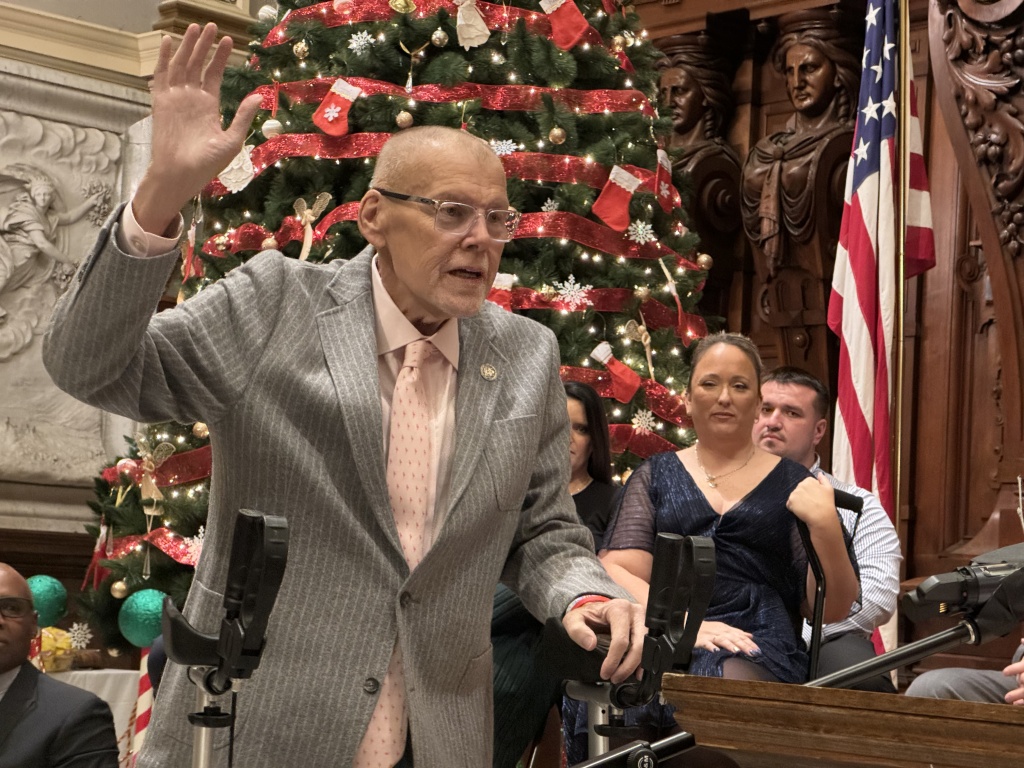
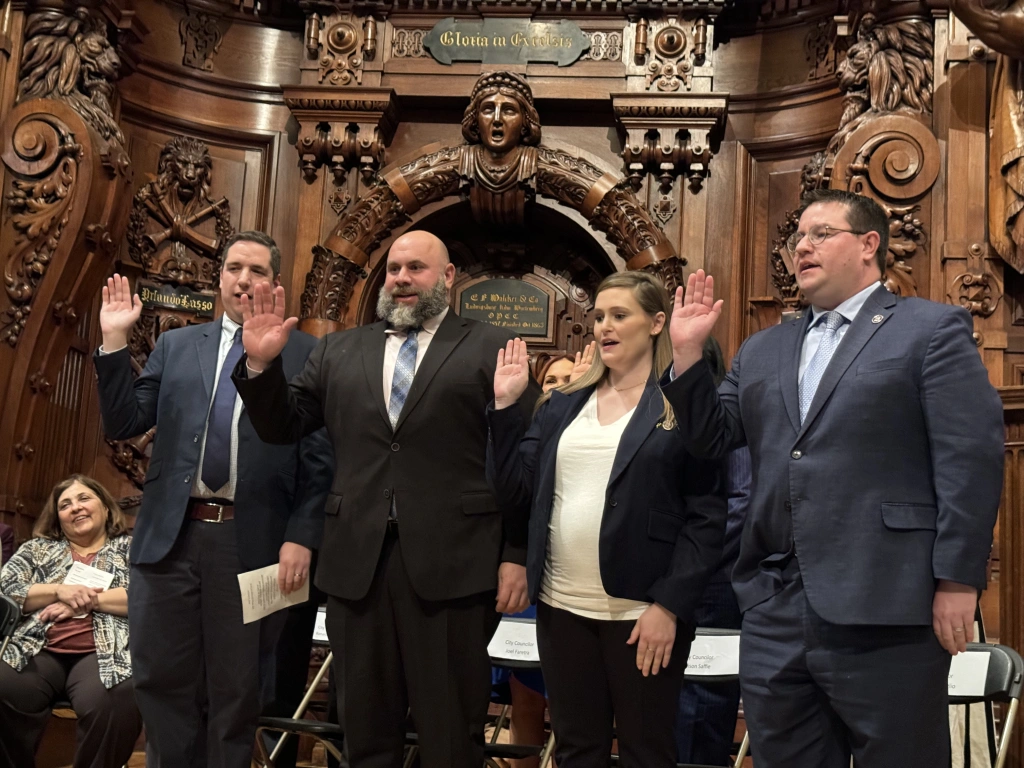
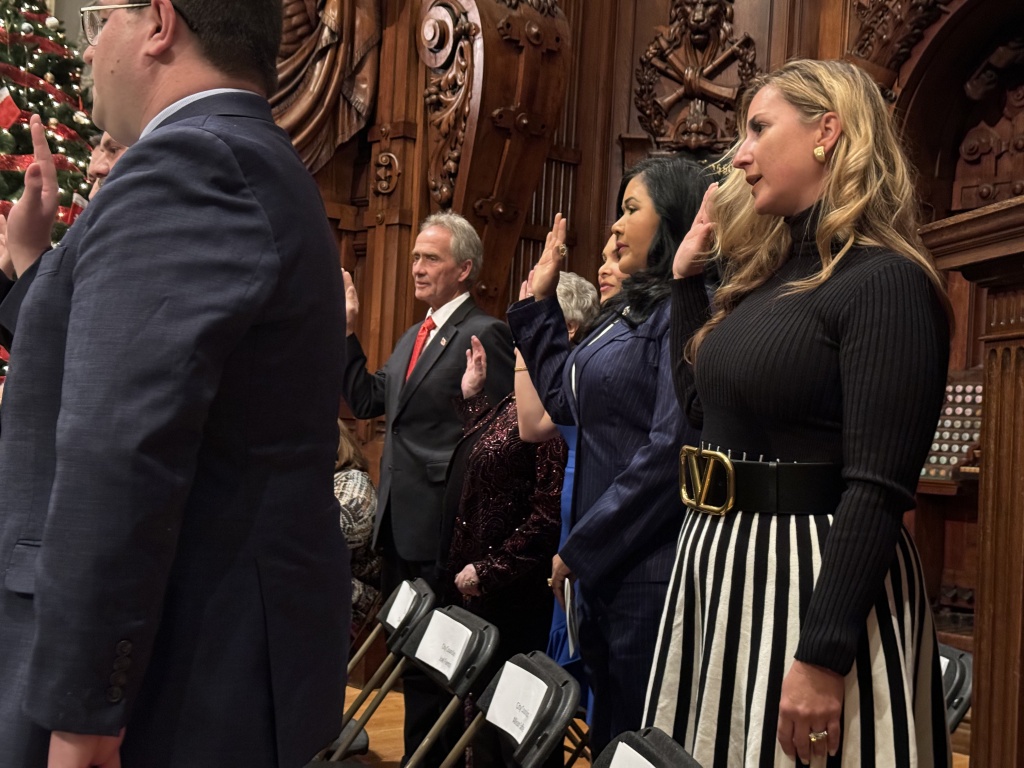
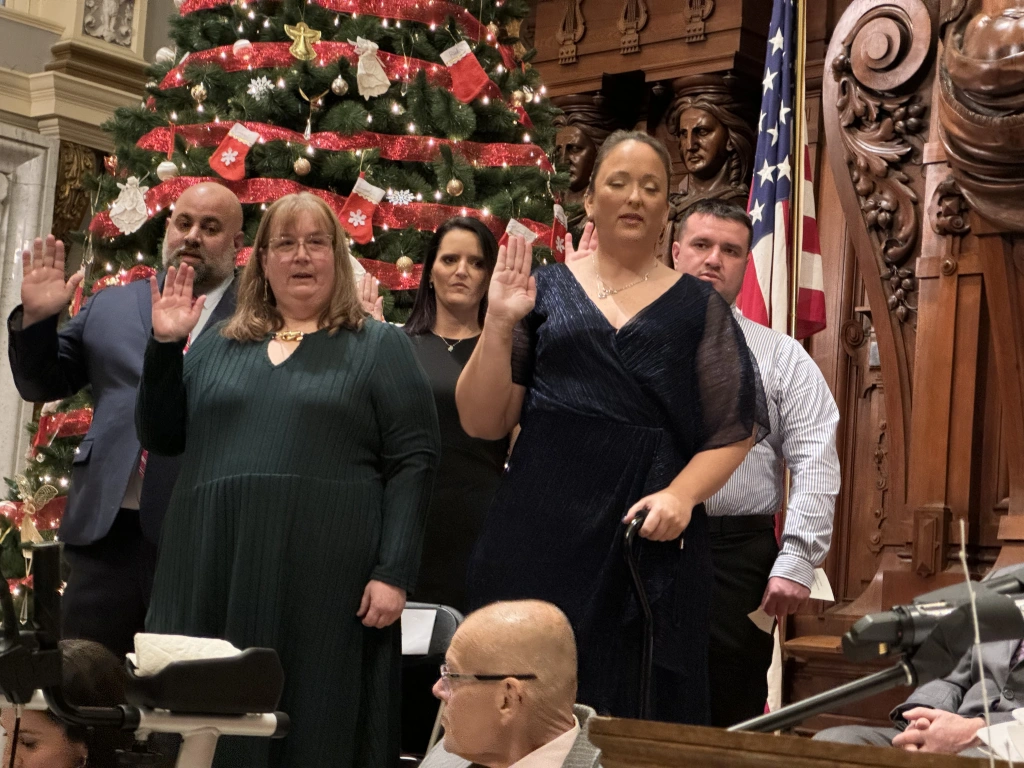
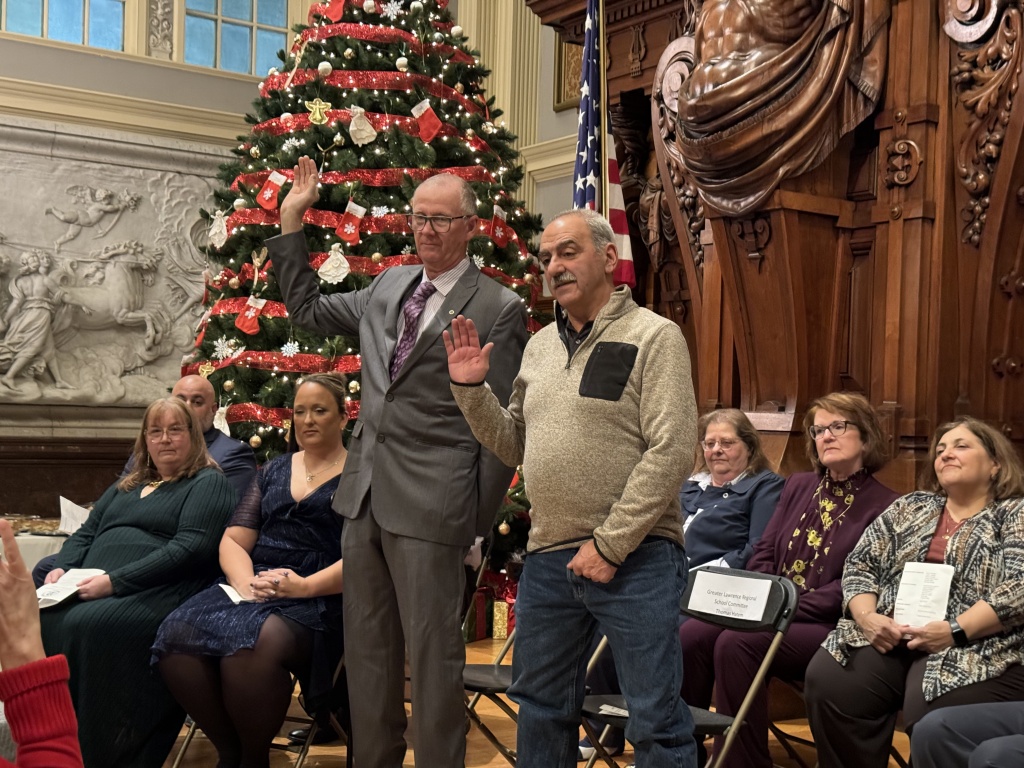
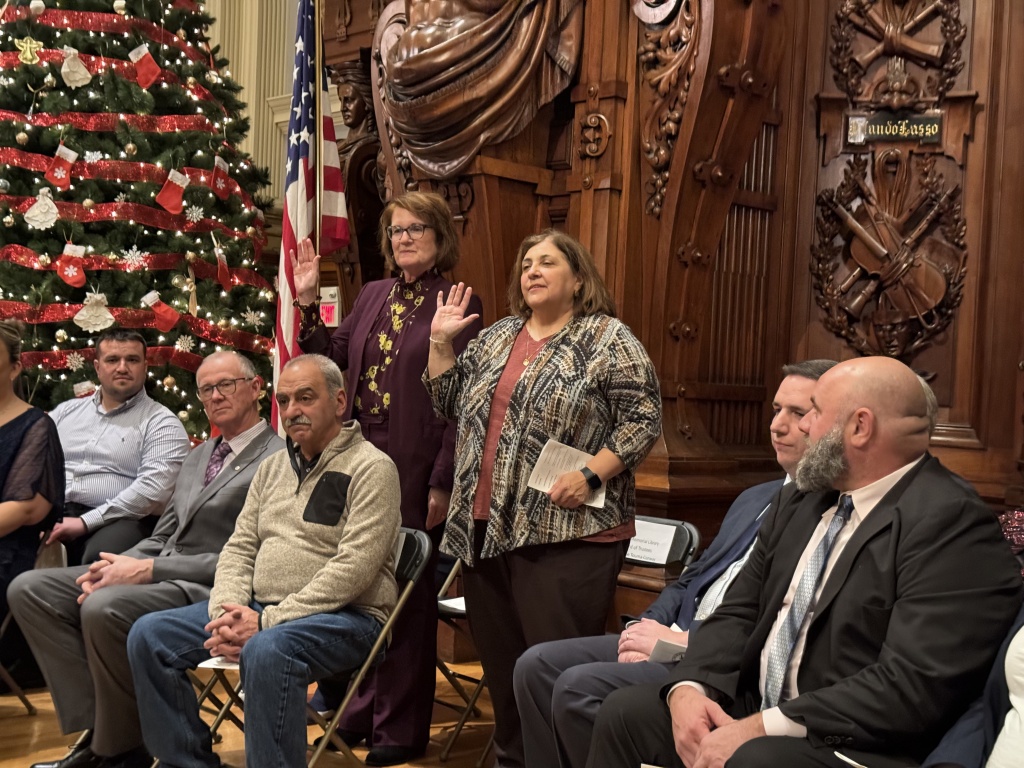
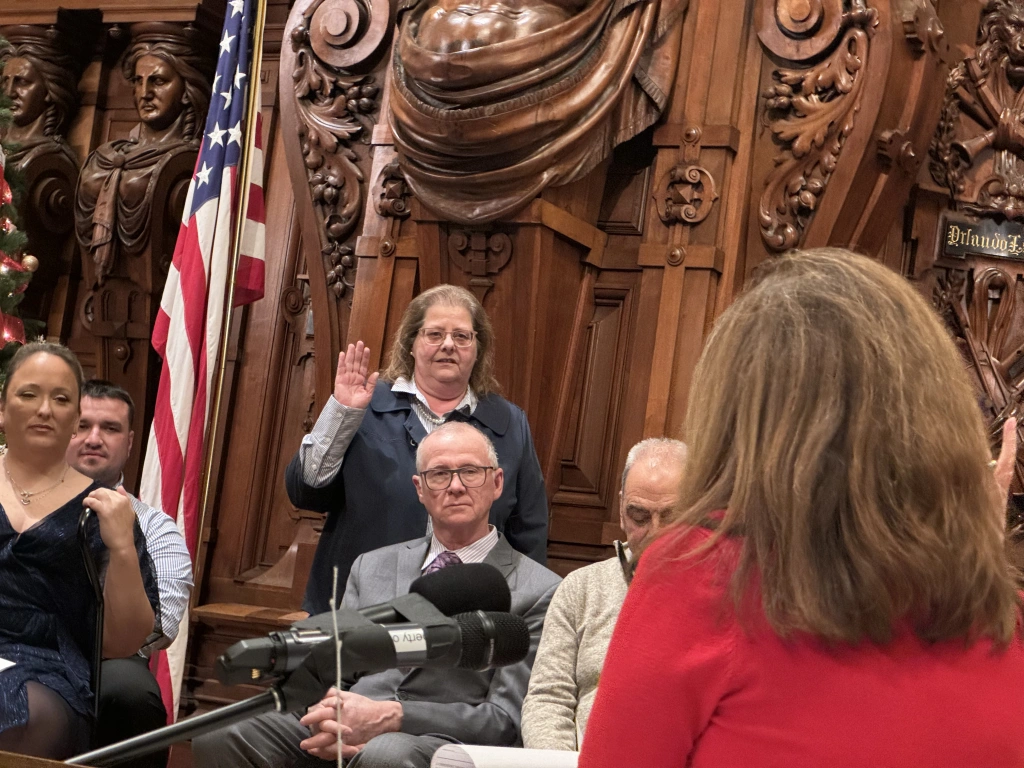
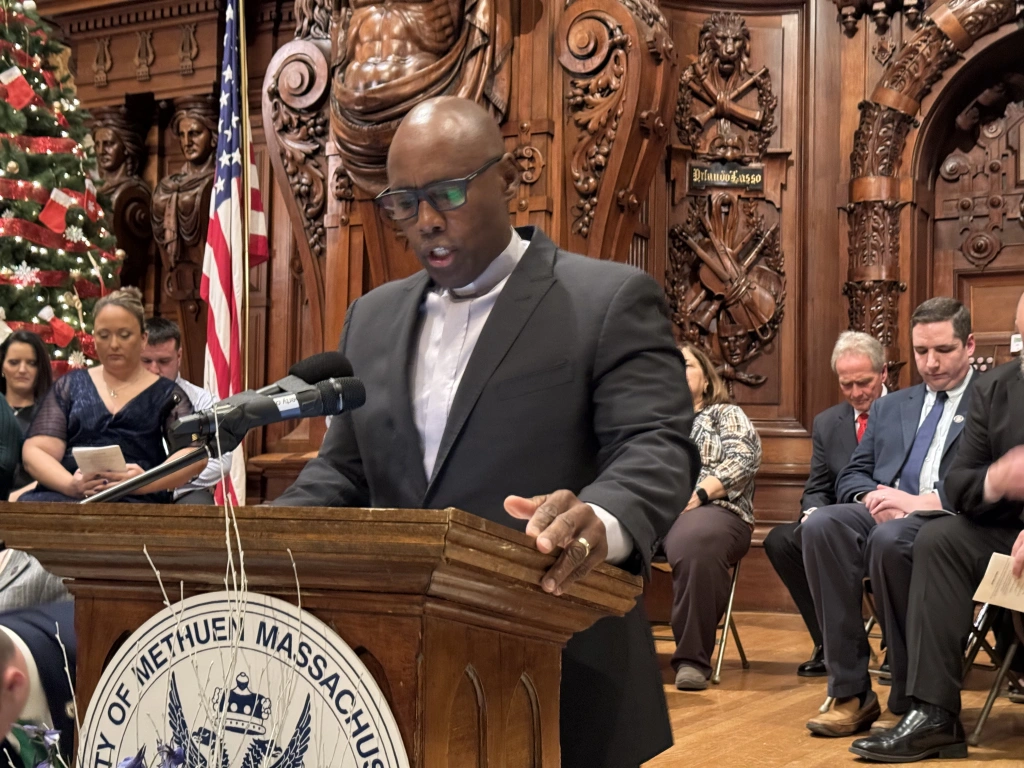
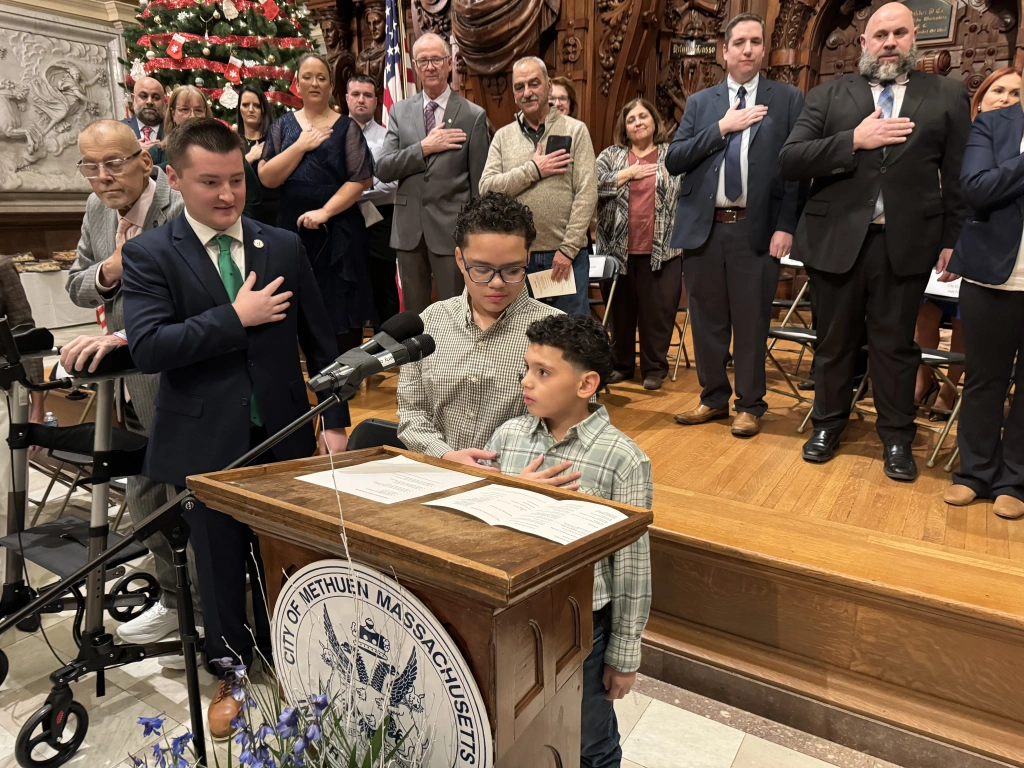
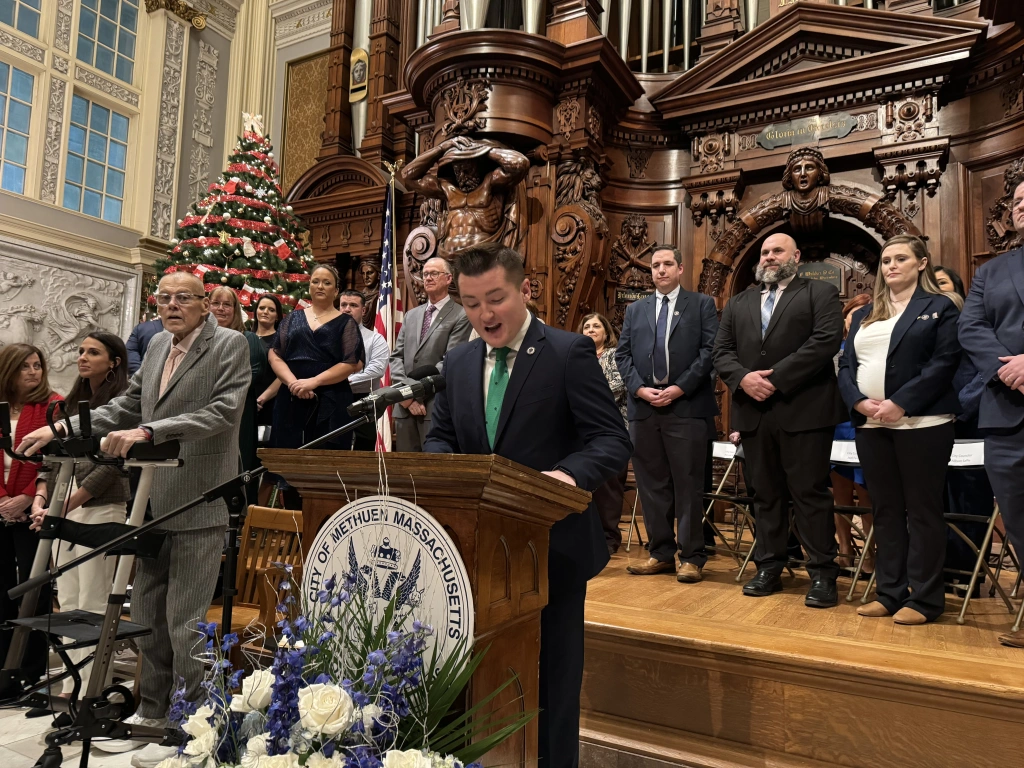
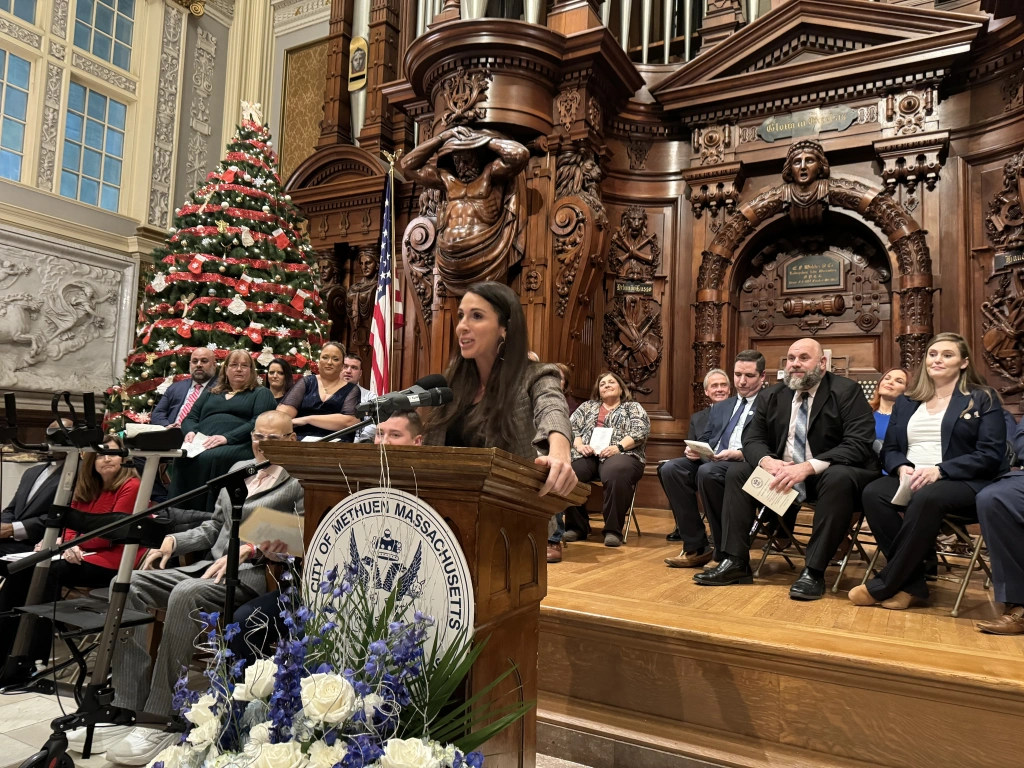
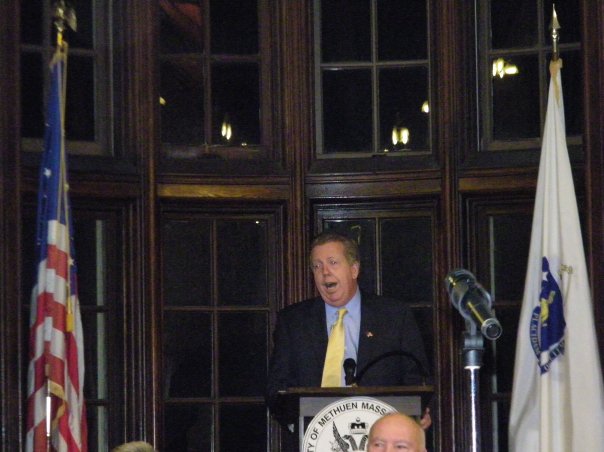
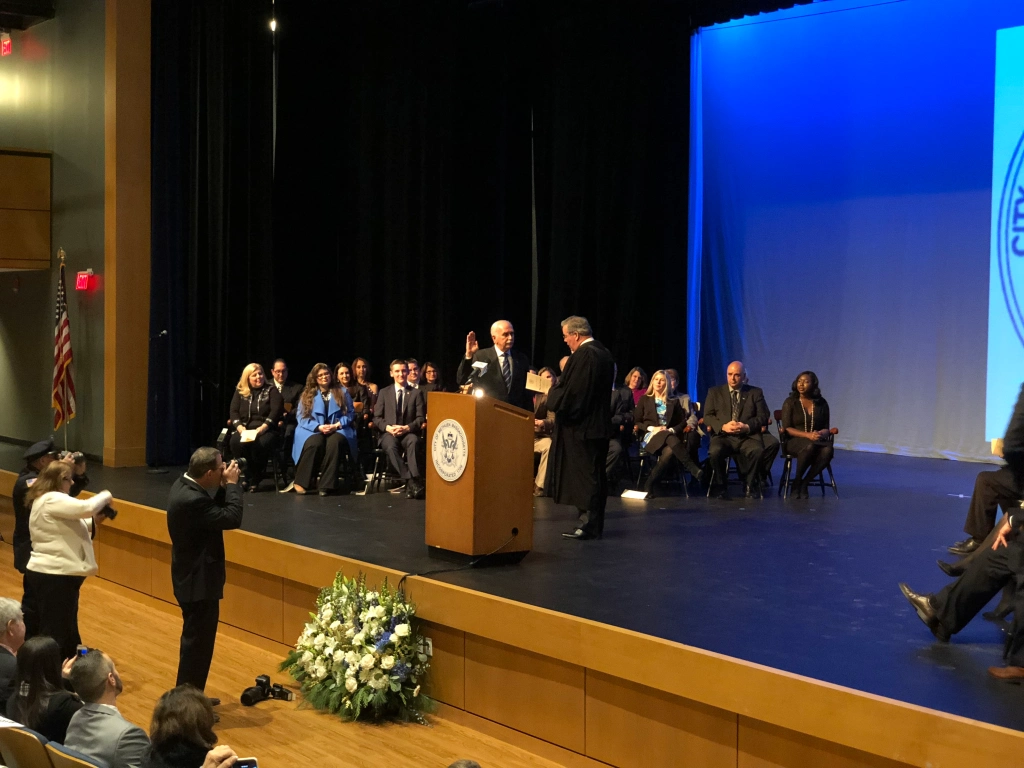
Methuen Mayor Neil Perry was inaugurated for his third term of office on Wednesday January 3, 2024. The event was held at the beautiful Methuen Memorial Music Hall. In addition to Mayor Perry the newly elected members of the Methuen City Council, the Methuen School Committee, the Greater Lawrence Regional School Committee, the Methuen Housing Authority, and the Nevins Memorial Library Board of Trustees were all sworn in. The Master of Ceremonies was State Representative Ryan Hamilton, and the guest speaker was State Auditor Diana DiZoglio.
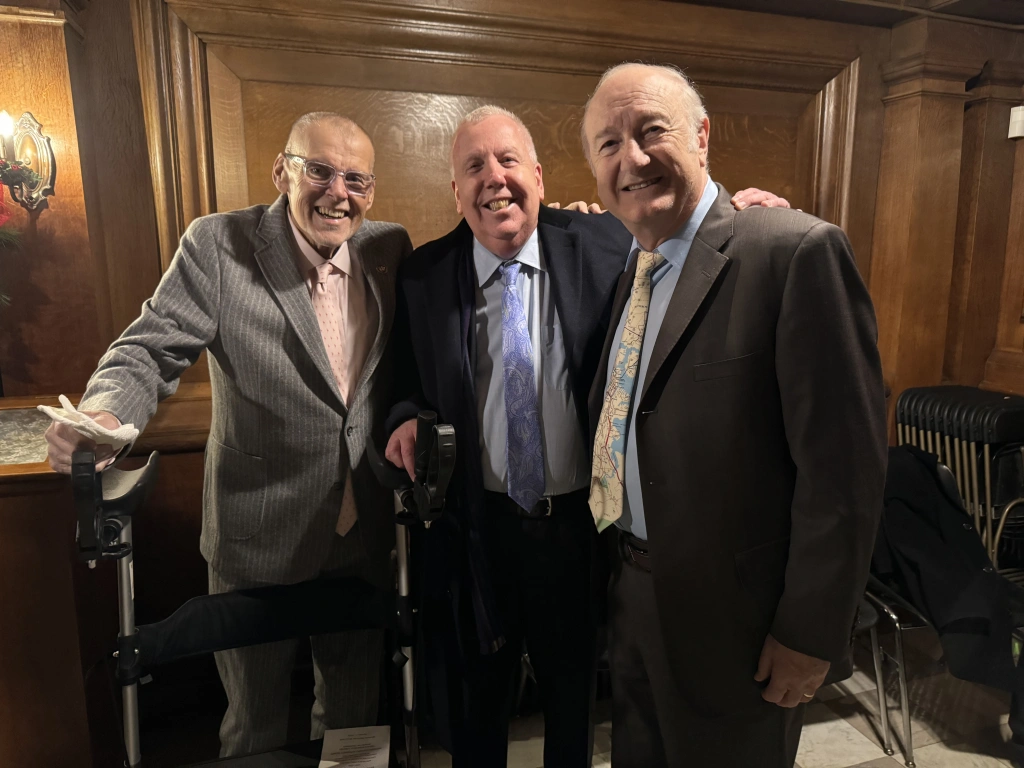
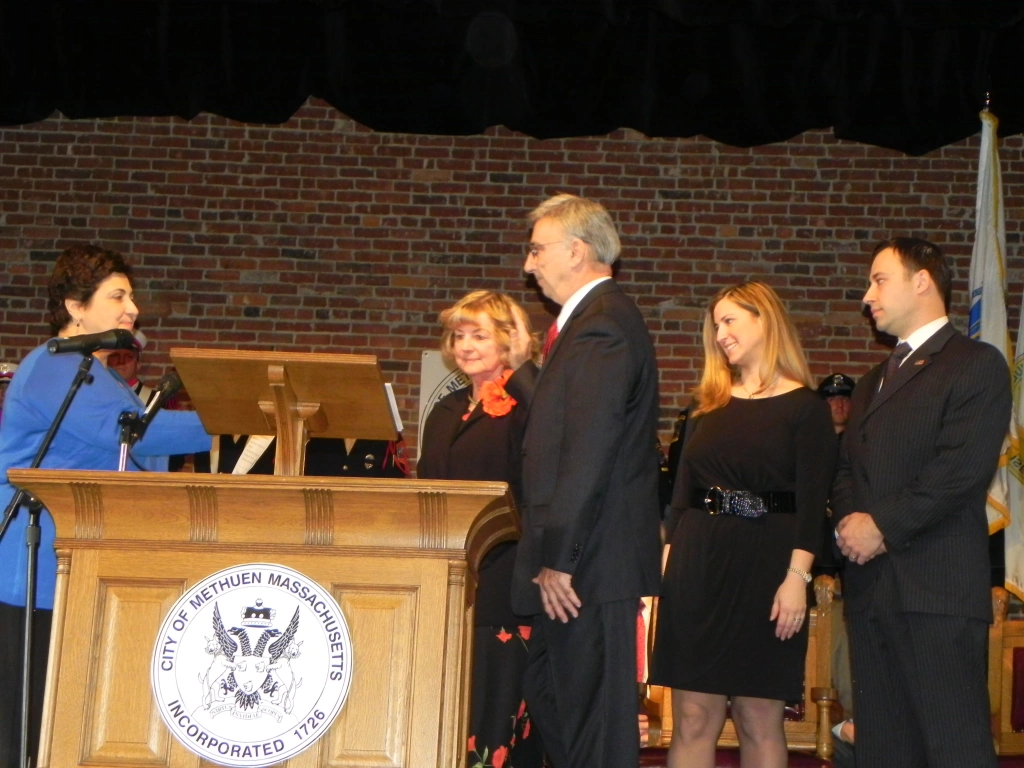
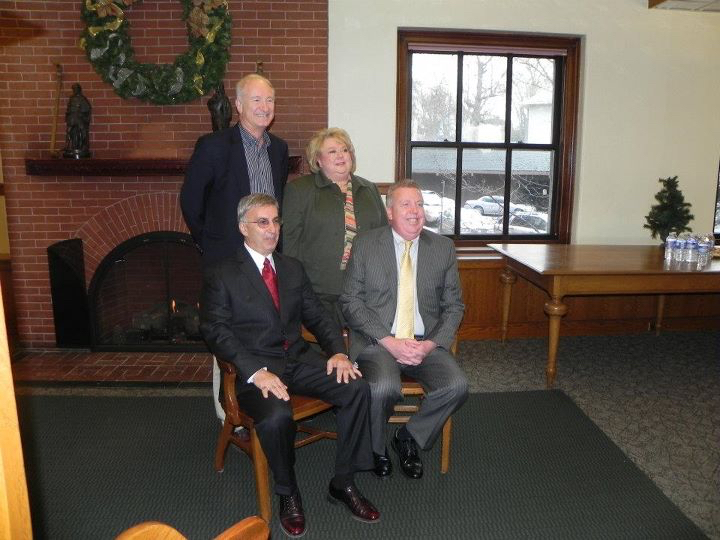
Mayor Perry Sworn InMethuen City Council Takes the Oath of Office 2024Methuen City Council Takes Oath of Office 2024Methuen School Committee Takes the Oath of Office 2024Greater Lawrence Regional School Committee Takes the Oath of Office 2024Nevins Memorial Library Trustees Takes the Oath of Office 2024Methuen Housing Authority Takes the Oath of Office 2024Reverend Nathaniel Burnes gives the InvocationJoel and Armani Valentin of the Tenney Grammar School lead the Pledge of AllegianceMaster of Ceremonies State Representative Ryan HamiltonMassachusetts State Auditor Diana DiZoglio speaks at the 2024 Methuen InauguralThree Mayors. Mayor Neil Perry with former Mayors William Manzi III and Dennis DiZoglio
Mayor Perry is Methuen’s sixth Mayor of the modern era following the Charter change that brought us the Mayoral form of government in 1993. Methuen changed to a Town Administrator/Council form in 1973 and then a Town Manager/Council form of government after abandoning Town Meeting. After the 1993 change Methuen had its first Mayoral election since Samuel Rushton won the office before 1920. Mayors, by Charter, are limited to three two year terms. Let us take a look at the inaugurals of the five Mayors that preceded Mayor Neil Perry!
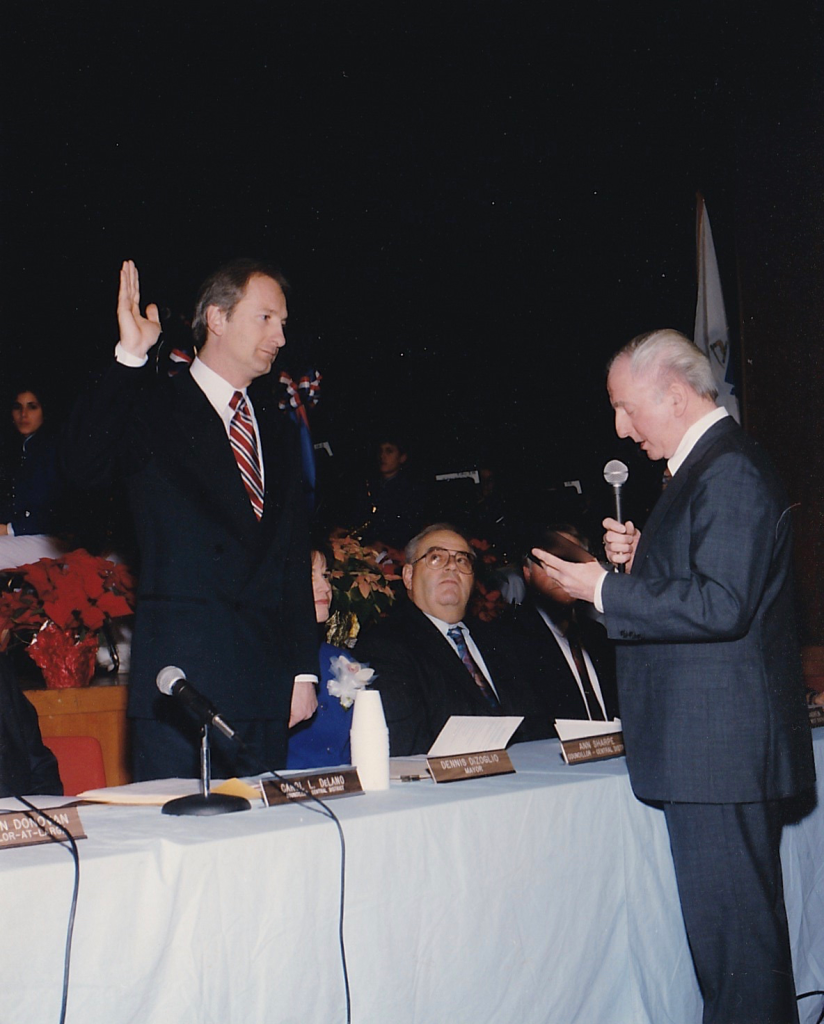
In 1994 Dennis DiZoglio led the ticket in the very large primary field, and then defeated a young upstart City Councilor named William Manzi in the final election to become Methuen’s first Mayor of the modern era. Mayor DiZoglio won three terms as Mayor, and during his tenure the school system built the three K-8 grammar schools (Marsh, Tenney, and the Timony schools.)
Mayor DiZoglio sworn in by Town Clerk James Maloney.
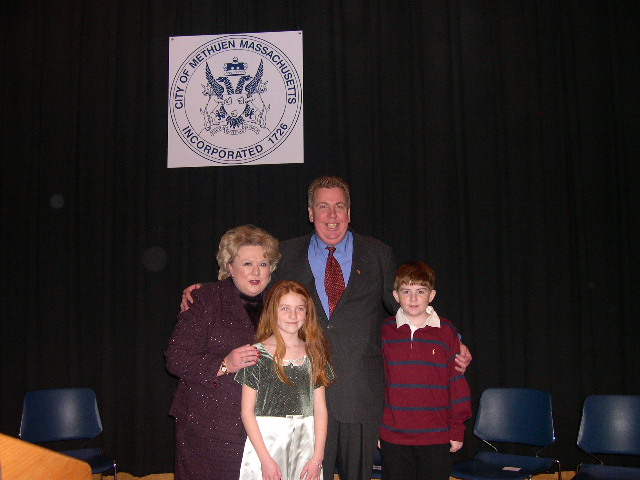
Mayor Sharon Pollard won the first of her three terms by defeating City Councilor Larry Giordano in her first run for that office. Mayor Pollard was a former State Senator, and a former Secretary of Energy for the Commonwealth of Massachusetts, working for Governor Dukakis. A little remembered fact is that then City Councilor Steve Zanni was in that preliminary election for Mayor.
Mayor Pollard posing with the Manzi family at her Inaugural
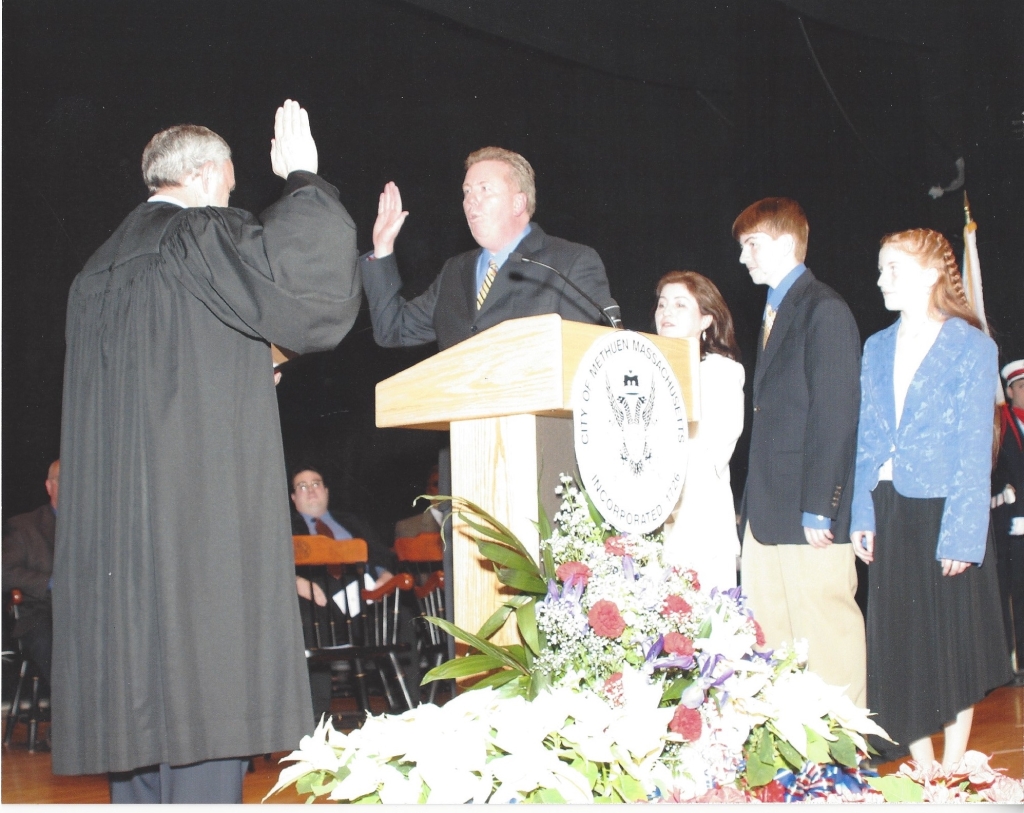
Following Mayor Pollard was Mayor William Manzi III. (Yes, the same one that lost to Mayor DiZoglio.) In my initial race I defeated Ellen Bahan for the office. In 2006 I was sworn in by none other than today’s Mayor-elect James P. Jajuga, outfitted in a regal set of Justice of the Peace robes. I also served three terms, and was very happy to secure the state financing for the High School project, and get that construction started.
The third Manzi Inaugural, in the Great Hall, Searles Building.
Mayor Stephen Zanni was the fourth Mayor of the modern era. Mayor Zanni defeated Al Dinuccio in 2011, and twice won re-election. During his Administration the total renovation of Nicholson Stadium, including brand new artificial turf, occurred.
Mayor Zanni sworn in by City Clerk Tina Touma-Conway.The Four Mayors of the modern era pose at the Inaugural of Mayor Zanni in January of 2012.
James P. Jajuga was Methuen’s fifth Mayor of the modern era, and won election in 2017 while running unopposed. Mayor Jajuga is a former State Senator, has served as the Massachusetts Secretary of Public Safety, as well as having a long and distinguished career as a Massachusetts State Trooper. Mayor Jajuga served one term as the Mayor of Methuen.
Mayor Jajuga is Sworn in as Methuen’s Fifth Mayor of the Modern Era. The Five Mayors of the modern era pose at Mayor Jajuga’s Inaugural
The recent death of Henry Kissinger has brought all sorts of writing on his career, and in death the controversy and arguments over his impacts, his actions while in power, and even his actions and writing after leaving office, have been renewed with some level of vigor. I do believe that Kissinger, always looking to be in the limelight, would have been delighted with the attention he has been receiving.
Kissinger was, without question, and by his own admission, someone with a very healthy ego. His memoirs are in three volumes, with this volume (2) coming in at 1214 pages. I have read the first two, and as observed for the first volume this book will not be for everyone. The other similarity to be noted is that Kissinger uses his memoirs to burnish his reputation, and to justify some fairly controversial decisions reached during his tenure. Critics point to this as if it would be unusual for a memoir writer to justify actions taken during his tenure. It must be taken into account but does not take away from the vast historical importance of his writings here.
Volume two begins with the advent of Richard Nixon’s second term. This term, for Nixon, would end in disaster, and that disaster would be a significant factor in Kissinger amassing as much influence and power that he came to have. Kissinger does not ignore the political storm that came to destroy the Nixon Administration in his writings, bemoaning the fact that Nixon’s preoccupation with Watergate, and his diminishing political authority, caused serious problems for him as he tried to maneuver in so many areas of critical foreign policy decision making. Kissinger treats Nixon gently, but in his own way makes clear that Nixon’s effectiveness, and his stability, were clearly at issue as Watergate accelerated.
Many have mocked the three volumes as a testament to Kissinger’s massive ego, and in reading this volume there is no doubt that the twelve hundred pages could have come in a bit lighter. In fairness Kissinger (and Nixon) dealt with some enormous issues over the course of Kissinger’s tenure, and Kissinger deals with these in detail, and I believe contributes greatly to the ultimate historical understanding of some critical events.
Kissinger is the only man to serve jointly as National Security Advisor and Secretary of State, and will likely be the only man that will ever do so. Nixon’s appointment of him as Secretary starts this volume, and Kissinger gets right into Cambodia, a subject that has engendered massive criticism of his actions to this very day. Kissinger, for all the criticism, lays out the actions undertaken to counter the North Vietnamese intrusion, and semi-occupation, of Cambodia. The Kissinger/Nixon prescription to the North Vietnamese utilization of Cambodia as a safe haven for its troops, and as a transit route for supplying its troops in the South, was to introduce U.S. air power, and eventually troops, into Cambodia. This expansion of the war to Cambodia came with enormous criticism, which Kissinger took on directly.
“The absurd myth by which guilt for abandoning Cambodia has been assured runs like this: Cambodia was a peaceful, happy land until America attacked it. There was no reason for this attack: it was the product of the psychosis of two American leaders determined to act out their own insecurities on the prostrate body of an innocent people. They covertly dislodged the only political leader, Sihanouk, who held the fabric of the country together. Then American bombing turned a group of progressive revolutionaries, the Khmer Rouge, into demented murderers. By this elaborate hypothesis American actions in 1969 and 1970 are held principally responsible for the genocide carried out by the Cambodian Communist rulers after we left in 1975-two years after all American military actions ceased-as well as for the suffering imposed by the North Vietnamese invasion of 1978.”
“On March 18, 1970, the neutralist chief of state Norodom Sihanouk was deposed by his own government and national assembly. The reason was Cambodian popular outrage at the continued presence of the North Vietnamese occupiers, and Sihanouk’s inability to get them to leave. When Cambodia’s new leadership demanded the departure of the North Vietnamese , the latter responded by a wave of attacks all over eastern Cambodia designed to topple the new government in Phnom Penh- a month before the U.S.-South Vietnamese “incursion” into the sanctuaries, which lasted eight weeks. It was Hanoi that had spurned our proposal to immediately restore Cambodia’s neutrality, which I made to Le Doc Tho in a secret meeting on April 4, 1970.”
Kissinger, Henry “Years of Upheaval” pg. 336
Kissinger did not directly address whether the United States, also frustrated by Sihanouk’s inability to deal with the North Vietnamese bases in Cambodia, had a hand in the Lon Nol coup that deposed Sihanouk. That action, whether encouraged or not, was not the right prescription for Cambodia, and brought what had to be the anticipated military backlash from Hanoi. Kissinger is correct on the facts as he outlines them above, but they are not the only facts to be considered. The U.S. errors in Indochina are too numerous to list here, and Nixon/Kissinger inherited the war, but the American groupthink mindset, and failure to grasp nuance, and the evolving relationship between the North Vietnamese and China, led in some respects to the vast debacle of Cambodia. That viewpoint cannot excuse the cynical and ruthless exploitation of Cambodia by the North Vietnamese.
Kissinger gives us a view of the Chinese perspective of the evolving Cambodian situation, and in so doing makes a stark admission. As China carefully walked the diplomatic tightrope in advance of the ultimate Khmer Rouge victory they gave subtle clues that they were open to something less than a full victory for the communist insurgency. Of course this was due to the Chinese aversion to North Vietnamese hegemony in Indochina. Kissinger acknowledged that a true master of diplomacy, Zhou Enlai, had left the diplomatic clues of potential convergence of Chinese and American interests in Cambodia, but that the American side (read him) had failed to appreciate or understand those clues, which were couched in denunciations of U.S. actions.
“Zhou Enlai tried to cut through these perplexities-at first a bit too obliquely for us to grasp.”
Kissinger, Henry “Years of Upheaval” pg. 349
The story did not end well for Cambodia, and eventually for Zhou as well. Kissinger believes, likely correctly, that the Zhou diplomatic play, which ended up not working for either the U.S. or China, was the ultimate cause of the downfall of Premier Zhou Enlai in China. Kissinger blamed the inability of the U.S. to hold up its end of the bargain, by maintaining military pressure on the Khmer Rouge, for the ultimate failure. This he attributed to Congressional action prohibiting financial support for this pressure.
China, North Vietnam, and Cambodia. Enough to fill the plate of any diplomat. Kissinger was dealing with the opening to China, detente and arms control with the Soviet Union, a very tenuous relationship with our European allies, “The Year of Europe” initiative, the overthrow of Salvador Allende in Chile (for which he is vilified strenuously today) and of course a major part of the book, the advent of the Yom Kippur War, and Kissinger’s monumental shuttle efforts that brought disengagement agreements between Israel and Egypt, as well as Israel and Syria. Kissinger’s efforts on this issue alone were herculean, and to this day held up as the gold standard in diplomacy. Kissinger’s goals here not only included reaching these stage one disengagements but through them the vast diminishment of Soviet influence in the Middle East. As the Middle East suffers through another breakout of war today and some strains begin to show between U.S. and Israeli viewpoints on what the proper actions should be Kissinger’s experiences dealing with the Israeli leadership are instructive, and show that there has always been a bit of strain at points between the countries. A great additional source of information on this issue is the Martin Indyk book “Master of the Game: Henry Kissinger and the Art of Middle East Diplomacy” which also gives us a great vantage point on the true extent of Kissinger’s achievements here.
Kissinger, in all his writings, always left observations that are worth repeating. This book has more than a few:
“One of the arts of diplomacy is to clothe a rejection in the form of an acceptance in principle.”
Kissinger, Henry “Years of Upheaval” pg. 843-844
“The political dilemma of democracy is that the time span needed for solutions to contemporary economic problems is far longer than the than the electoral cycle by which leaders performance is judged at the polls. ……The way is open for demagoguery, political polarization and violence.”
Kissinger, Henry “Years of Upheaval” pg. 886
I offer one last tidbit that displays Kissinger’s rather wry sense of humor, and actually got a laugh from me as I read it. As mentioned above Kissinger, in his Middle East dealings, sought to remove Soviet influence from the region. This effort was not made via a frontal diplomatic assault on the Soviets, but rather through a diplomatic dance that appeared to offer U.S. partnership with the Soviets to achieve a settlement between the parties (the Soviets were the major arms suppliers to Egypt and Syria, and considered to be their diplomatic patrons.) With the Soviets getting a bit uncomfortable with the Kissinger maneuvering and not at all happy at being marginalized through the process Soviet Foreign Minister Andrei Gromyko paid a visit to discuss these matters with President Nixon. Kissinger’s description:
“The Oval Office meeting was made to order for Nixon’s skills at obfuscation; he was a master of the philosophical explanation that explained nothing but created the impression that he was sharing a confidence with his interlocutor. So Nixon blithely expressed his satisfaction with the diplomatic progress that had been made. The United States had been active because the parties wanted it that way. There was no record that we had discouraged this development, but that did not keep Nixon from avowing his general preference for cooperative endeavors with the USSR. On the other hand, the concrete circumstances differed for each superpower: ‘Some areas we can get into where you can’t. We must consider this.’ In other words Nixon favored superpower cooperation in the Middle East except where it did not serve his purpose. Where and how to work jointly, mused Nixon, was a tactical problem to be solved by Gromyko and me-thus neatly getting himself out of the line of fire. All this was presented in Nixon’s best country-boy manner, as if there had been some terrible misunderstanding about a subject too trivial for him to focus on.”
Kissinger, Henry “Years of Upheaval” pg. 942
Kissinger was a major figure in U.S. diplomatic history, and this second volume of his memoirs, for those interested in history, is well worth the long read. The career of Henry Kissinger provides us with a critical view, for better or worse, of some policy decisions still impacting us to this very day. On to volume 3.
C.W. Goodyear has given us an insightful look at James A. Garfield, the twentieth President of the United States. Garfield is a President that I had no real knowledge of, which I suspect may be true for many. His Presidency was cut short by an assassins bullet but his career, and importance, entailed so much more than his short Presidency.
James Garfield was born into poverty, the last President born in a log cabin. He raised himself, through hard work and an innate intelligence, to great heights even before he entered politics. He became a teacher, a College President, a Union general in the Civil War, and finally a Representative in the U.S. House at a time of severe divisions in the country. From my perspective the book really shines during the House of Representatives tenure of Garfield. Reconstruction of the defeated Confederacy was underway, and the attacks on the attempts to create rights and real citizenship for the black citizens of the South were well underway. Garfield was present in the House through this turbulence, and he was counted amongst those looking to grant real rights to southern blacks. He was absent from the House when it impeached President Andrew Johnson but came to have sympathy for that effort. The politics of the era were not limited to Reconstruction, and the author gives us a great view of those politics, and the political maneuverings of some of the giants of the era.
Those giants included U.S. Grant, who most certainly comes away from this effort somewhat diminished. James G. Blaine and Roscoe Conkling play major roles, as does Chester A. Arthur, who became Garfield’s Vice President. Garfield was a political conciliator by disposition and understanding, never looking to achieve political ends which he thought unattainable or that would cause political wreckage even if achieved.
“‘It is the business of statesmanship to wield the political forces so as not to destroy the end to be gained,’ Garfield told a friend.”
“President Garfield: From Radical to Unifier” C.W. Goodyear, pg. 325
Garfield’s road to the Presidency was quite fascinating, with the political backdrop provided by the book making it a truly unique and fascinating story. He was nominated at a Republican convention that he entered not as a candidate, but as a supporter of another candidacy. After 36 ballots of deadlock, and with U.S. Grant one of the candidates, looking to reclaim the Presidency, Garfield was turned to as the “compromise candidate.” In securing the nomination Garfield managed to out-maneuver both Conkling (a Grant supporter) and Blaine. His nature as a conciliator continued after he won the presidency, as he looked to bridge the very large divisions within his own party. Many of the divisions were attributable to patronage, and control of some very lucrative job plums. Conkling desired to have his control of the Port of New York restored, and though Garfield made real attempts to conciliate with Conkling his naming of William Robertson to that post set Conkling into a rage. Garfield’s earlier designation of many Conkling allies to scores of New York jobs failed to placate Conkling, and the fight was on. Garfield’s desire for harmony through compromise was put to the test, as Conkling thought he could roll the new President on the issue. But Garfield had a tough side as well, and he drew the line on Conkling right here. Conkling was destroyed politically by Garfield, and some of that was due to his own overreach, but Garfield’s tenacity, and willingness to dig in and fight, carried the day. Garfield could only be pushed so far.
Garfield’s assassination, at the hands of a disgruntled job seeker, was a true tragedy, as the nation had suffered through the Lincoln assassination only sixteen years earlier. The shoddy and unsanitary treatment given to Garfield sealed his fate, likely as fatal to him as the gunshot wound suffered. We will never know what type of success he might have had as President as his tenure was so short but it is fair to say that the nation would have benefitted greatly had he been able to serve his full term.
I count this book as one of my favorites of 2023 and would highly recommend it.
The Town of Seabrook has completed, and the Board of Selectmen approved, the 2023 Emergency Operations Plan. This plan is updated every five years and follows our 2018 update. My thanks to Emergency Management Director Joseph Titone, Emergency Management Secretary Kelly McDonald, and Fire Chief William Edwards for all of their work on this project. The plan is attached below.
 Bill Manzi.com