I saw this new book and though I was not familiar with John Ganz I thought I would take a look. I am glad I did.
One of the book “blurbs” on the back cover comes from Rick Perlstein, the author of a series of books on the rise of the right in the GOP. (Before the Storm, Nixonland, The Invisible Bridge, and Reaganland.) This book made me think of those, and The Invisible Bridge might make a decent title for this book. We arrive at where we are today in the GOP not by accident, but through the efforts of those who pushed up against GOP orthodoxy over the years, mostly in a losing cause. Like the Goldwater debacle (for the GOP) in 1964 the ideological basis for a right wing resurgence was created through that loss, with an infrastructure that was not really visible to many, but was there and working. Ganz shows us how some of the losers of the 1990’s laid the groundwork for the Trump movement that has captured the GOP these days. In telling this story there likely will be much recollection of at least some of these events by readers, but Ganz manages to connect the dots in a way that has produced a fascinating and very readable book. I had a hard time putting it down.
Ganz recognizes some of the monumental changes that occurred in American society in the 90s. The hollowing out of the American manufacturing base, and the start of the devastation that change brought to some areas of the country, is front and center. In the view of Ganz that was the building block for what was to come. He then highlights some of the characters that seemed to grasp the changing dynamic, and tried to advantage themselves in ways that rejected “mainstream” Republicanism as well as the Democratic Party. Some of the tools in that toolbox look very familiar today.
One of the “characters” that Ganz pays attention to is David Duke, the neo-Nazi/Klan member who tried to break into Republican politics in Louisiana and then nationally. I remember Duke as a fringe candidate, with lots of condemnation from across the board. But Ganz brings some information that has to open your eyes a bit. That invisible bridge comes into view. When Duke ran for Governor against Edward Edwards (in Louisiana) in 1991 he got crushed 61% to 39%, and that is what I remember. But what I did not remember is that Klansman Duke won 55% of the white vote, and a whopping 69% of the white evangelical and fundamentalist vote. (Page 51)
Ganz brings us back Pat Buchanan, who many, including myself, believe to be the godfather of the MAGA movement. Buchanan was a few years ahead of the large wave that has swept the GOP, but he most certainly created many ripples that contributed. Buchanan, whose challenge to GOP President George H.W. Bush in the 1992 Republican primaries managed to wound Bush politically, hit some many of the themes that we see today. The book had so many pieces that jolted the memory, and many of those emanated from “Pitchfork Pat.” Reverence for the Confederacy, and for the monuments to the Confederacy, obviously is not new.
“In Georgia, with cameras in tow, he gazed up admiringly at Stone Mountain, the massive bas-relief monument to Robert E. Lee, Stonewall Jackson, and Jefferson Davis. He told gathered supporters there that the Voting Rights Act was ‘an act of regional discrimination against the South.’In the midst of a dramatic downpour, he stopped to lay flowers at the grave of his great-grandfather William Martin Buchanan, a Confederate soldier who he claimed had owned a plantation. He said that another great-grandfather ‘died on the way to Vicksburg’ during what he was calling ‘the war of northern aggression.’”
When the Clock Broke Con Men, Conspiracists, and How America Cracked Up in the Early 1990s. Ganz, John pg. 167
The Civil War as a “war of northern aggression?” Let that sink in a bit. The movement away from GOP orthodoxy on free trade did not begin with Donald Trump. In a foreword to a book called “America Asleep: The Free Trade Syndrome and the Global Economic Challenge” Buchanan wrote: “Suspicion of Japan is not only related to race…but to a sense that Tokyo’s trade policy is a bastard child of Hirohito’s imperial policy of 1941. It is related to a sense that Japan’s invasion of U.S. markets have been plotted at the highest level in Tokyo with the same thoroughness that Admiral [Isoroku] Yamamoto plotted Pearl Harbor, that Japan’s objective is to ‘go the economic road’ to acquire the hegemony in Asia and the world her army and navy were unable to win half a century ago.”
When the Clock Broke Con Men, Conspiracists, and How America Cracked Up in the Early 1990s. Ganz, John pg. 176
Buchanan, an ardent free trader when he worked for Reagan, had now started the GOP movement away from free trade.
After his loss to Bush in the primaries Buchanan, with Bush looking to shore up the right, was granted a prominent speaking role at the GOP convention. His speech is considered by many to be the opening salvo in the “culture wars,” a term he used explicitly. It was a different world back then for sure but his attack on gays and abortion rights , amongst other things, managed to galvanize Democrats and tarnish George H.W. Bush.
“My friends this election is about more than who gets what. It is about who we are. It is about what we believe, and what we stand for as Americans. There is a religious war going on in this country. It is a cultural war, as critical to the kind of nation we shall be as was the Cold War itself, for this war is for the soul of America.”
When the Clock Broke Con Men, Conspiracists, and How America Cracked Up in the Early 1990s. Ganz, John pg. 282
The speech led New York Times columnist Garry Wills to declare that George H.W. Bush was a “Prisoner of the Crazies.”
“The crazies are in charge. The fringe has taken over. A year earlier, Wills recalled, the televangelist Pat Robertson had published The New World Order, ‘arguing that the President’s gulf war, his protest achievement, was part of a diabolical plot to destroy America. By submitting to the U.N. and calling the world to its banner, President Bush was proclaiming the New World Order of the Antichrist.’”
When the Clock Broke Con Men, Conspiracists, and How America Cracked Up in the Early 1990s. Ganz, John pg. 284-285
Even GOP hating on the Bush family did not start with Trump. The book is a bit unkind to George H.W. Bush, playing on some of the, for lack of a better term, goofy moments of his re-elect effort. Unkind as they were Bush simply being out of touch with average voters was a major reason for his loss.
Buchanan is, as mentioned, a key figure in this movement, and his communication skills made him prominent where others had been ignored.
Ganz pays some attention to the Ross Perot independent candidacy for President, which had so many goofy moments of its own.
Ganz did bring to us some people that are less well known but just as important to the book. Sam Francis is one of those folks. I would describe him as a “theoretician” of the movement to change the focus of the right in the GOP. I was not acquainted with him before this book but like Buchanan he has been an advocate for the change that we have seen in the GOP. His rhetoric is even harsher than Buchanan’s.
“What is really amazing about American society today is not that there is so much violence and resistance to authority but that there is so little, that there is not or has not long since been a full-scale violent revolution in the country against the domination and exploitation of the mass of the population by its rulers. A people that once shot government officials because they taxed tea and stamps now receives the intrusions of the Internal Revenue Service politely; a society that once declared its independence on the grounds of states rights now passively tolerates federal judges and civil servants who redraw the lines of electoral districts, decide where small children will go to school, let hardened criminals out of jail without punishment, and overturns local laws that are popularly passed and have been long enforced.”
When the Clock Broke Con Men, Conspiracists, and How America Cracked Up in the Early 1990s. Ganz, John pg. 368
Francis is a key thread that runs through this book, bringing real insight as to the origins of the turbulence that we see in our politics today. The changes in the GOP did not happen overnight. Ganz draws us an excellent roadmap, as did Perlstein in his earlier series. This is my first exposure to Ganz, and based on the excellence of this book I anticipate much more in the future. This book is highly recommended.
This book popped up in a Kindle fire sale so despite the fact that I am patiently waiting for Robert Caro to deliver the last installment of his magnificent series on LBJ I could not resist this book at the price.
Joe Califano had an up close look at how LBJ operated as President, serving as a chief domestic advisor to Johnson. Califano was named in 1965, serving at a time when the most activist Administration in history was enacting the most sweeping legislative program since the New Deal. The legislation enacted during this period changed the country forever. The Civil Rights Act, the Voting Rights Act, Medicare, Medicaid, Head Start, and so much more. Johnson, in his sweeping victory in 1964, brought massive Democratic majorities into the Congress. If there was one man who knew how to use legislative majorities it was Lyndon Johnson.
Califano was strictly on the domestic side and hence had no real access to the detail involved in decision making on the Vietnam War. Despite that he could see the exhaustion that came to Johnson as a result of the workload he put onto himself. LBJ’s way was to get involved directly in many matters where there was a need for his people to be guided by his expertise. Even where the outside world may not have perceived Johnson as being involved in so many cases he was directing the action in a way that likely has not ever been matched. Nixon essentially outsourced domestic policy, having no real interest in it. Johnson, having an intimate knowledge of both the institution of Congress and the players serving in Congress, in many respects served as his own Congressional liaison. LBJ did not have a Chief of Staff, so he served as his own Chief of Staff as well. For better or worse LBJ ran the program, and he drove his staff, Califano included, mercilessly.
LBJ has been well covered but no matter how much has been written some great new (to me) LBJ stories always manage to come through. This book has its fair share of them. When LBJ sent Califano over to see wily Senator John McLellan to work out a deal on creating the federal Transportation Department (McLellan was holding out and was a Chairman.) Califano reported back directly to LBJ on his progress, which was non-existent. He reported that McLellan was indicating that he was having serious trouble getting a Committee quorum for the bill markup. After getting fed up with McLellan Califano phoned some of the other committee members, who informed him that McLellan had assured them that their presence was not needed for this matter in Committee. Johnson told Califano that:
“Johnson laughed. “You know something,” he said, “John McClellan is teaching you more about politics in two months than your old boss Tom Dewey III learned in two presidential campaigns.”
Califano Jr, Joseph A.. The Triumph & Tragedy of Lyndon Johnson: The White House Years (p. 157). Atria Books. Kindle Edition.
When Califano finally reached agreement with McClellan on this matter he rushed back to tell LBJ that he had achieved success. He was very proud of himself, and reported the terms of the deal to Johnson. His pride in the deal was soon over:
“When I finally came to an agreement with McClellan on easing standards for Corps of Engineers water projects, I returned to the Oval Office and proudly reported to Johnson that I had a deal and McClellan would move the bill. As I described the agreement, Johnson was sitting behind his green leather-topped desk and I was standing to his left, leaning on the cabinet that encased the AP and UPI wire-service tickers that constantly clicked away in his office. “Open your fly,” Johnson ordered. I just smiled, knowing he wasn’t serious but surprised nonetheless. “Unzip your fly,” he said rising from his green chair, “because there’s nothing there. John McClellan just cut it off with a razor so sharp you didn’t even notice it.” Johnson hit a button on his phone. “Get Senator McClellan for me.” As Johnson was telling me what a bad bargain I’d struck, McClellan got on the phone. ‘John,” the President said, “I’m calling about Joe Califano. You cut his pecker off and put it in your desk drawer. Now I’m sending him back up there to get it from you. I can’t agree to anything like that. You’ve got to realize that the transportation system of this country needs something besides more highways in Arkansas.’ ”
Califano Jr, Joseph A.. The Triumph & Tragedy of Lyndon Johnson: The White House Years (p. 157). Atria Books. Kindle Edition.
For those that might tell you that LBJ was not directly involved in legislative matters that story is but one of so many that show how involved he really was.
LBJ was not only a master legislative technician but the famed “Johnson treatment” made it very difficult to say no to him on matters where folks really did want to say no. When LBJ was putting together the Washington DC local government he ran into a refusal from John Hechinger to accept the City Council Chairman’s position. Johnson put Califano on it, and after Califano reported the refusal LBJ ordered Califano to bring Hechinger to the White House and persuade him. Califano tried to beg off, to no avail.
“At about 4 P.M., Christopher called to say Hechinger would not take the job. When I reported to the President, he told me to get Hechinger over to see me immediately in a White House car, so that he would have no opportunity to talk to anybody between Christopher’s office and mine. I told LBJ that I didn’t know whether Hechinger would come. “You get him to,” Johnson said as he hung up.”
Califano Jr, Joseph A.. The Triumph & Tragedy of Lyndon Johnson: The White House Years (p. 282). Atria Books. Kindle Edition.
Despite Califano’s best efforts Hechinger was dug in pretty hard. With Johnson ringing Califano’s phone every five minutes for progress reports Califano finally had to report failure. Johnson directed Califano to immediately proceed, with Hechinger, to see him.
“With a shrug, Hechinger walked over to the mansion with me. We went up to the living quarters, where, having gotten up from his nap and showered, the President was getting dressed, putting on his tie. “Mr. President, this is John Hechinger,” I said as the President emerged from the bedroom. The President grabbed Hechinger’s hand, and walked him toward the magnificent view from the southwest window of the living room, from which the Washington Monument is visible. Hechinger sighed, “Mr. President, that is a beautiful view.” “Mr. Hechinger,” said the President, “it certainly is, and what I’d like to do as President is keep that view beautiful and make this whole city as beautiful as that part of it is. But I can’t do it alone. I must have help. “This past year has brought to all Americans the importance of the city and the terrible trouble we’ve had in our urban communities. Washington should be a model. I want to do something for Washington which will make the whole country take notice. Mrs. Johnson and I know you can do this job. I don’t need a politician. Walter Washington is doing just fine in that area. I need someone who cares about this city and who is an administrator, a businessman, to chair this council. You talk about the District and the cities but now there’s an opportunity to do something. And you don’t have to worry about anyone cutting you up. There are two people in the District who can pick up the phone and talk to me. That’s you and Walter Washington.” The President turned to me for emphasis, “Do you hear that, Joe?” “Yes, sir,” I replied. “And there’s something else,” the President added turning again to face Hechinger as the two men now sat on the couch backed against the window. “I’ve extracted a pledge from each member of the council that they will work closely with you so that this first pilot government gets off the ground properly and we get full home rule here.” Hechinger was overwhelmed. Johnson glanced down at his folder on the coffee table in front of them. It was stamped “top secret.” Johnson looked deep into Hechinger’s eyes. “Mr. Hechinger, I know this is a very difficult decision for you.” Then he picked up the folder in his hand and continued, “Thank God you don’t have to make the decision that I do in a few minutes. You see this folder. I have to go over to a meeting and make some decisions whether to bomb the docks at Haiphong in North Vietnam. I’m trying to fight a war over there, to bring our boys back as fast as I can. I wish I could spend more time on the problems of Washington, but I can’t. I don’t need you in Vietnam. I need you right here to help me make this city the way it ought to be and the way I want it to be and the way every American wants their capital to be.” “I understand, Mr. President,” Hechinger said. Before he could say anything more, the President grabbed his shoulders and almost lifted him up from the couch as he rose to stand and said, “I knew you would, Mr. Hechinger. Thank you. I’m delighted that you’re willing to help me and serve as chairman of the City Council.” Hechinger didn’t know what had happened. The President pointed him toward the elevator and whispered quietly to me: “Call George. Tell him to get the press in his office, so that they’re waiting for you. Then announce this right away before he can change his mind.” Change his mind, I thought. Poor John Hechinger didn’t know what his mind was with this presidential rush. The President continued, whispering: “When you announce him, tell them no questions, just photographs.” The President moved toward the elevator with Hechinger. I went to the phone in the living room, and with a hand cupped over the receiver, I told George Christian I was on the way with Hechinger, and passed along the President’s instructions. I caught up with the President and Hechinger as Johnson turned to him. “John,” the President said, “for some reason Joe wants to make the announcement this afternoon. Why don’t you just go on with him over to the West Wing and take care of that and then you and I can get together soon for a long talk about the District and about what’s got to be done here. Mrs. Johnson and I look forward to seeing a lot of you and your wife.” With that, the President held his arm, shook his hand, and sent us on our way. Just as we were getting on the elevator, the President casually said to Hechinger, “Oh, by the way. On that tax matter Joe will have the bill at your house in the morning so you can pay it before noon.” Hechinger was so dazed he just said, “Thank you, Mr. President. Thank you very much.”
Califano Jr, Joseph A.. The Triumph & Tragedy of Lyndon Johnson: The White House Years (pp. 285-286). Atria Books. Kindle Edition.
The Johnson treatment even included forcing Hechinger to pay a disputed tax amount so that there would be no political dirt that could be dug up on him. A long excerpt, but one that shows the LBJ ability to get people on board for tasks that were not on their radar screen until Johnson asked.
Califano was both admiring, and in many ways, awe struck by Johnson. But even so he managed some criticism. As the Vietnam war expanded and became a financial drain Califano was one of the people charged with keeping the Great Society program moving forward in spite of the finances. LBJ did want guns and butter, and he resisted making adjustments that would take funding from the Great Society. Johnson, reluctantly, was forced to support a 10% income tax surcharge to help fund the war and the Great Society.
Califano had a front row seat for the LBJ withdrawal from the 1968 Presidential race. That withdrawal has been much discussed recently, with the Biden withdrawal spurring many to look back at what LBJ did. Different circumstances, but much similarity.
I did note that Califano expressed his view that LBJ did not like or respect Richard Nixon. While they had been rivals for some time the historical record on LBJ’s true thoughts on Nixon is mixed. Califano brought up the Chenault affair, which without question upset Johnson. While we will never really know the truth it is likely that LBJ understood Nixon, and at some level had respect for his political skills. Nixon most certainly respected those skills in LBJ.
For me an excellent Kindle read. Of course we shall wait on Caro, but this book makes the wait easier.
Hubert Humphrey was the first Vice President for me as a youngster, as I was too young to remember LBJ in that position. Humphrey, in my view, was one of the most consequential American political figures of the 20th Century. James Traub does a really good job of bringing the Humphrey life out, and does so in a balanced way. Humphrey, like most, was not perfect, but he led a life of consequence and achievement. Traub manages to give us the full story, even when the facts are not so sympathetic to the subject.
Where to start with a review? Before I read the book I confess to a life long empathy for Humphrey, and I always regretted the way that he was treated by many on the “new left” that became ascendant in the Democratic Party. As someone who read and enjoyed Hunter Thompson I would wince when the good doctor launched his vitriolic attacks on Humphrey, but those attacks were largely in line with the thinking of the younger folks that took over the Democratic Party in 1972. I wondered whether Traub would reference Thompson, and sure enough he did.
“Stewart Alsop, a confirmed centrist, like most of the members of the permanent establishment, even quoted the gonzo journalist Hunter S. Thompson to the effect that Humphrey ‘was a swine in 1968, and he’s a swine now. He should be put in a bottle and sent out with the Japanese current.’ “
Traub, James True Believer: Hubert Humphrey’s Quest for a More Just America pg. 420
For a more accurate version of the quote, which is even more brutal than the one above, see the Hunter Thompson classic “Fear and Loathing on the Campaign Trail ’72” pg. 158.
Of course I get ahead of myself. Traub gives us just enough biographical information on Humphrey, showing us how his youth influenced the politician he became. There were some contradictions in that upbringing, and Humphrey became a politician of some of those contradictions. He was a Mayor, of Minneapolis, but struggled to get started. He was a progressive when it was not so fashionable, especially in the mid-west, and a true leader on civil rights when such leadership was not wanted or valued in the Democratic Party. His speech at the 1948 Democratic Convention, calling for the Party to “get out of the shadow of states rights and walk forthrightly into the bright sunshine of human rights” both electrified the convention and split the Party, leading to a walk out of the Mississippi delegation. This fissure would eventually lead to the migration of the segregationists to the Republican Party. Humphrey, in his role as Mayor, and eventually as U.S. Senator, was a driving force in the creation of the Americans for Democratic Action (ADA) as well as the brains and political force behind the fusion of the Minnesota Democratic Party with the Minnesota Farmer-Labor Party, creating the Minnesota Democratic Farmer Labor Party. In this effort Humphrey established himself firmly as a progressive, but also as a strong anti-communist voice. The party building effort looked to eliminate, or mute, socialist influence where it had existed prior. Humphrey never wavered from this conviction. His leadership in Minnesota was a given, and he mentored much political talent, including Gene McCarthy and Walter Mondale.
Humphrey’s ascent to the Senate brought him to a new level of politics, and one, quite frankly, that he did not take to immediately. His full bore charge ahead on what he considered to be important issues not only brought conflict with his colleagues, but some level of ostracizing from those colleagues. He did not understand the game, but he was soon to get taught by possibly the greatest Senate Leader of all time, Lyndon Johnson. The life story of Hubert Humphrey cannot be told without a pretty big role for LBJ. Coming to know LBJ was both a blessing and a curse to Humphrey, who was brought along by LBJ in the Senate. Johnson helped Humphrey to overcome some of the initial animus of his Senate colleagues by showing him the legislative ropes and lending Humphrey some of his own massive credibility in the Senate. Traub describes Humphrey as a “star pupil” in the “Lyndon Johnson Academy” and gives us a couple of LBJ anecdotes that show what a legislative master he was.
“During the minimum wage debate he was standing by Johnson’s side when the majority leader turned to him and said ‘ I think we’ll pass that minimum wage bill now.’ Johnson had waited until Spessard Holland, who had been leading the opposition, left the floor. He instantly issued a quorum call, which was required for a vote, and then just as rapidly called for a vote before Holland had had a chance to return and rally his troops.”
Traub, James True Believer: Hubert Humphrey’s Quest for a More Just America pg. 176
“On the housing bill, Humphrey’s vote was crucial, but his flight from Minnesota, due to land at 2:30 in the afternoon, was delayed. In a tour de force, even by his own standards, Johnson used every parliamentary tactic in his bag of tricks to put off the vote while simultaneously bullying air traffic controllers to get Humphrey’s flight on the ground. The plane landed at 4:45, Humphrey was whisked to the Senate, and he cast the deciding vote to build one hundred thousand units of public housing rather than the thirty-five thousand Ike had called for.”
Traub, James True Believer: Hubert Humphrey’s Quest for a More Just America pg. 176-177
Johnson’s influence helped to establish Humphrey in the Senate as a man that could get things done. But in order to achieve legislatively compromise was a necessary part of the process. Humphrey was willing to do what he needed to do to get legislative victories, but compromise was not something that some of his liberal friends were interested in. Humphrey lost some ideological support during this period, and those losses continued right to the very end of his career. Traub described him as “ideologically incoherent” but sincere nonetheless.
Humphrey ran for President in 1960, but was simply trampled by the money and organization of the Kennedy family. LBJ always considered Humphrey as a “bridge” to the northern liberals, and selected Humphrey in 1964 to run with him as his Vice President after the assassination of JFK. As tough as LBJ was as Senate Leader he was even more mercurial as President. Humphrey would feel the LBJ lash continuously, and any independent thoughts he might have had as Vice President were ruthlessly suppressed by President Johnson. His 1965 memo to Johnson on Vietnam, in my view, showed where his head was at all along. After that private memo LBJ essentially froze Humphrey out of everything, forcing the Vice President to heel. Humphrey would suffer with this legacy as people, especially the anti-war activists, simply wrote him off on the war. LBJ, as smart as he was, always believed Humphrey to be “soft” on the war, and I think the 1965 memo is where his head stayed, no matter what came out of his mouth. In the tumultuous political year of 1968 Hubert Humphrey became the Democratic nominee for President without entering a primary. Super delegates indeed. The disaster that was the Chicago nominating convention in 1968 for the Democratic Party hurt Humphrey badly. His Republican opponent, Richard Nixon, had managed to tap into the backlash in the country over civil rights, Vietnam, and the LBJ Great Society, and it appeared that Humphrey’s candidacy was a lost cause after Chicago. Humphrey, despite the bad start and the lukewarm endorsement of LBJ, rallied to close the gap substantially, but not enough. He lost to Nixon by about 500,000 votes (43.4% to 42.7%) but the Electoral College margin was wider (301-191, with George Wallace at 46) The fissure in the Democratic Party started by Humphrey in 1948, and made permanent by the LBJ/Humphrey Civil Rights bills of 1964-65 drove the South away from the Democratic Party permanently. The Nixon “Southern Strategy” was borne out of the ramifications of that fissure.
This book gives you a great view, from Humphrey’s perspective, on some of the most monumental events in American history. After Humphrey’s loss in 1968 he managed to return to the Senate from Minnesota, and his estrangement from the left continued, as Humphrey grappled with the school busing issue, and the issue of crime, which Nixon had gotten such great political mileage out of in 1968. His old base of support blanched at some of his ideas on those matters, and the “Happy Warrior” continued to lose some old friends.
If you do not know much about Huber Horatio Humphrey Jr. this book is a great place to start. He was one of the major players in post World War II America, and one of the impactful participants in the watershed year of 1968. His early leadership on Civil Rights changed forever the Democratic Party, and arguably led to a major realignment in the American two-party system. While Humphrey may have brought on some of the enmity showered on him by the “new left” in the end that treatment, in my mind, was largely unfair, and shortsighted. This book is highly recommended.
The Humphrey 1948 speech to the Democratic Convention is linked directly below.
Brent Scowcroft had a long lasting and outsized role as a top figure in the U.S. foreign policy establishment, serving as national security advisor to Gerald Ford as well as George H.W. Bush. This book, on the long side, gives us a view of his life and contributions to U.S. foreign policy. Scowcroft may be the most important foreign policy figure of the last half century or so that many have never heard of. That is how Scowcroft worked, as an advisor that actually did stay in the background.
Brent Scowcroft was a military man (Air Force) and started assuming some vital positions in the Nixon Administration, where he became military assistant to the President, and was eventually tapped by Henry Kissinger to be Deputy National Security Advisor. As anyone familiar with Kissinger knows working for him could be considered a form of purgatory. As the Deputy and as a superb staff man Scowcroft impressed both Kissinger and Nixon, and his career as a key member of the U.S. foreign policy establishment began. Scowcroft was in charge of advance for the Nixon trip to Beijing and became the first U.S. military man to be in China since 1949. From this initial appointment Scowcroft was on hand for some major U.S. foreign policy achievements, such as the opening to China as well as the Nixon detente with the Soviets. He was also on hand for some U.S. foreign policy lows, including the incursion into Cambodia and the ultimate U.S. withdrawal under terrible circumstances from Vietnam.
Scowcroft, initially considered a Kissinger man, grew solidly into a figure with distinct views that were all his own. After the exit of Nixon and the ascension of Gerald Ford to the Presidency Ford determined to not allow Kissinger to be both security advisor and Secretary of State, forcing Kissinger out as security advisor. Scowcroft assumed that role, carving out his own area of influence. To replace Kissinger and then have to work with him as Secretary of State could not have been easy but Scowcroft managed the transition smoothly. It is a strength that Sparrow highlights continuously in the book, as Scowcroft showed a great ability to manage people and process. His rather large handprint on the National Security apparatus serving the President is still felt today. In that sense, as an organization man, he was superior to Kissinger, whose processes were more ego-centric and designed to meet Kissinger’s needs. Scowcroft sought to put together an apparatus that would manage to get the best information to the President, including information that may not have towed the President’s line.
Scowcroft, even while out of government, became an influential voice on foreign policy. After the Ford loss to Carter he worked at Kissinger Associates (and later formed his own consulting firm) but was consulted on a number of different issues. He showed a trait that would later become more pronounced, which was a willingness to speak (softly) against policies he did not agree with, regardless of the party of the President. He was very critical of the Reagan-Gorbachev summit in Iceland that had discussed the possible elimination of the nuclear arsenals of both countries.
Scowcroft filled some important roles in the Reagan Administration, as Reagan turned to him to serve on commissions charged with arms control issues as well as on the Tower Commission that wrote a report on Iran-Contra.
With the presidency of George H.W. Bush Scowcroft once again assumed the role of national security advisor to the President. In that role and working with the strong willed James Baker as Secretary of State Scowcroft was involved heavily in managing the collapse of the U.S.S.R, the reunification of Germany, the first Gulf War, which not only succeeded militarily but diplomatically, as the Bush Administration managed to win massive worldwide support, including from the Soviets, for the military effort to expel Saddam Hussein from Kuwait. The policy that drove the first Gulf War, a limited military objective that eschewed regime change, would come back for debate in the administration of George W. Bush. The book critiques that decision, looking at the alternatives, along with the real human cost to the anti-Saddam elements in Iraq, who were eradicated by the left intact Saddam regime. In the end the Bush policy, despite not being perfect, was the correct call, in my opinion.
Scowcroft remained close for life with George H.W. Bush. (They wore a book together) That relationship did not stop Scowcroft from opposing the George W. Bush move to invade Iraq. His letter to the Wall Street Journal precipitated his temporary fall from grace with his former colleagues Dick Cheney, Donald Rumsfeld, and his protege Condoleezza Rice. Many speculated that the Scowcroft letter was a way for George H.W. Bush to send a hard piece of advice to his son. I personally do not believe that but who really knows. Scowcroft ended up, of course, being shown to be correct on this issue.
In reading some of the reviews the book has been described as “laudatory” but I believe there is balance, as criticism is offered where the author thinks it warranted. Scowcroft was a major demo of the U.S. foreign policy establishment. In addition to being a real mentor to Condi Rice he was also the man who brought Bob Gates along. This book, on a figure involved in some of the most impactful foreign policy decisions in U.S. history, is a bit long but a very worthwhile read.
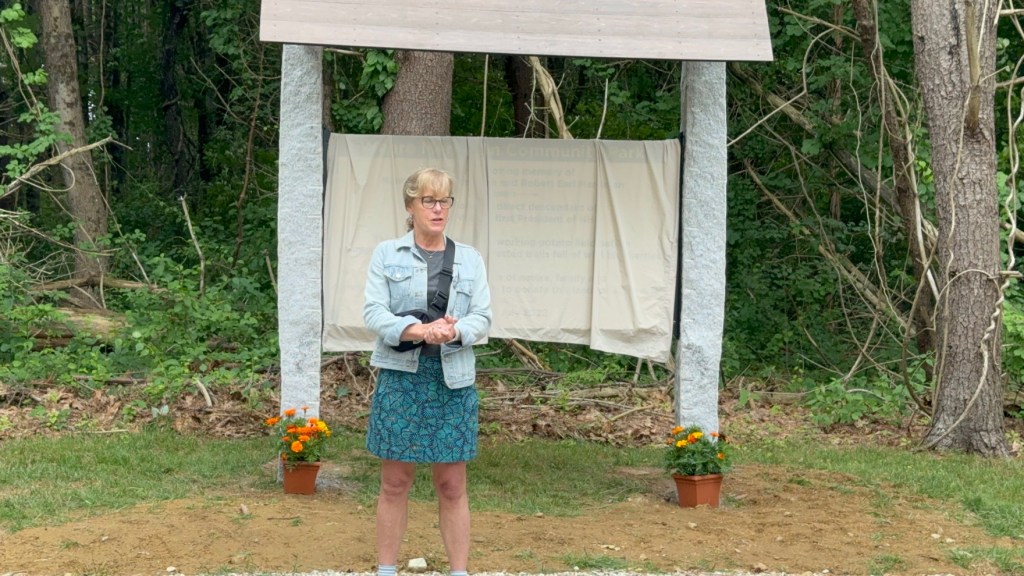
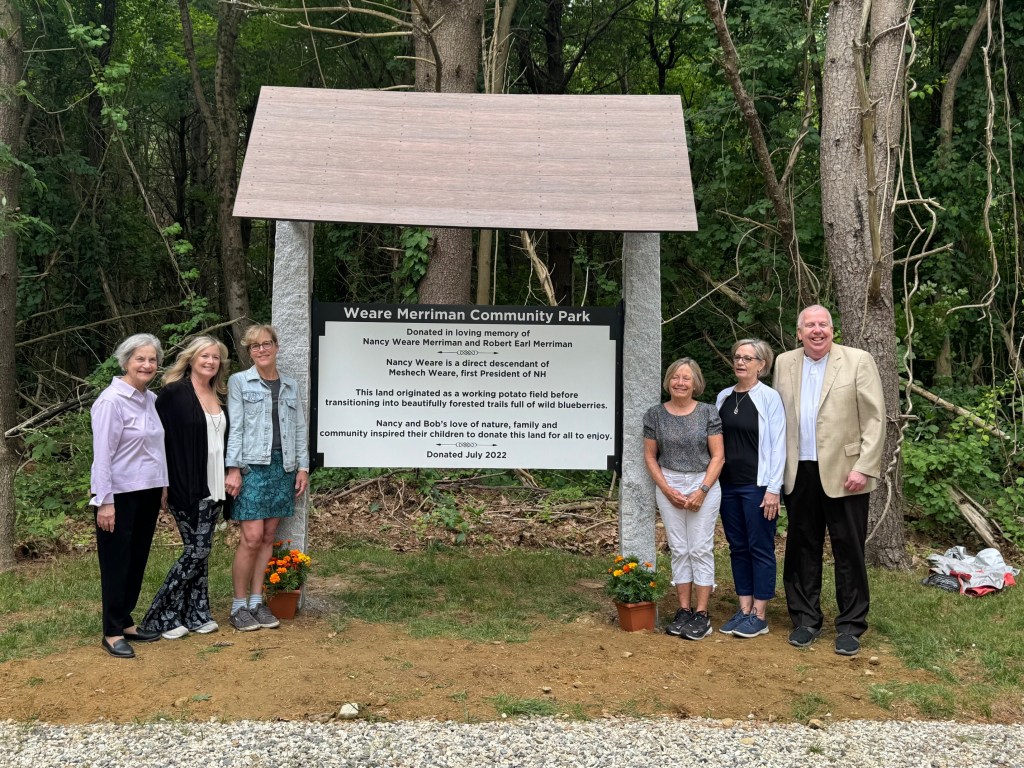
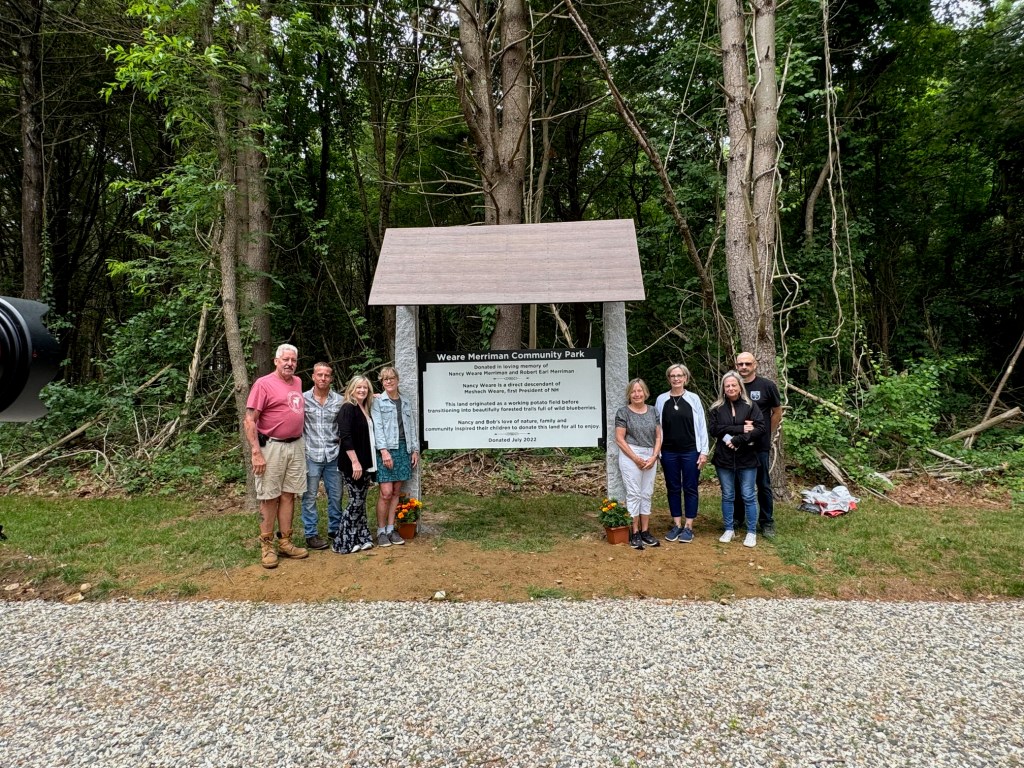
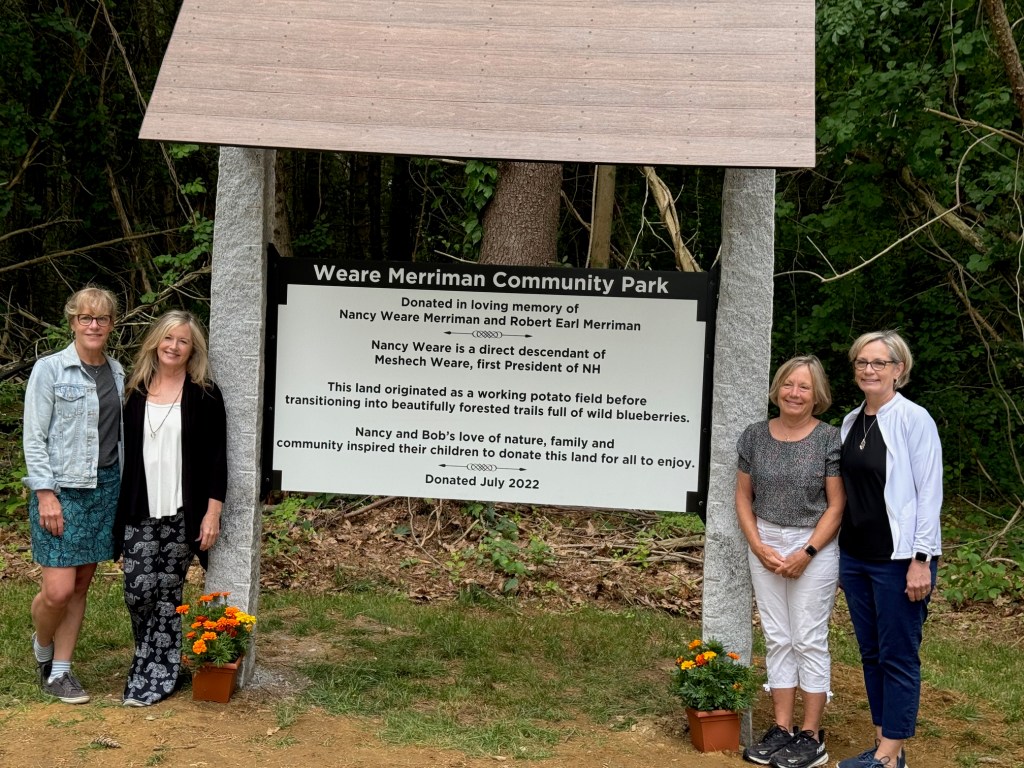
The grand opening of the Weare-Merriman Community Park happened over this past weekend. This park comes to the Seabrook community from the very generous donation of a twenty acre parcel by the Merriman family. Diane Merriman Shenberger, Cathy Merriman Cygan, Susan Merriman Synodis and Carol Merriman Schwanhausser together made this very generous donation, and then consented to having the Town explore for water on the site. Water Superintendent Curtis Slayton. Chief Operator George Eaton and the fabulous water team hit water, providing Seabrook with two major wells that will help to provide water security for Seabrook for the next twenty years. The water wells will not negatively impact the beautiful passive recreation desired by the family, along with the nine hole disc golf course that was constructed on site. My thanks to the family, who traveled to the site from as far away as California, to Curtis Slayton and his great Water Department, who did so much of the site work. My thanks to TEC, who helped to engineer the site and who brought us Dennis Grzywacz, of Acme Disc Golf, who designed the golf portion. The Seabrook Board of Selectmen were instrumental in making this happen. My thanks to Shaylia Wood, who worked diligently on getting the beautiful sign procured, and then helping to make sure the site was ready. The work has been going on since 2016. Slow and steady wins the day! Thank you to all.
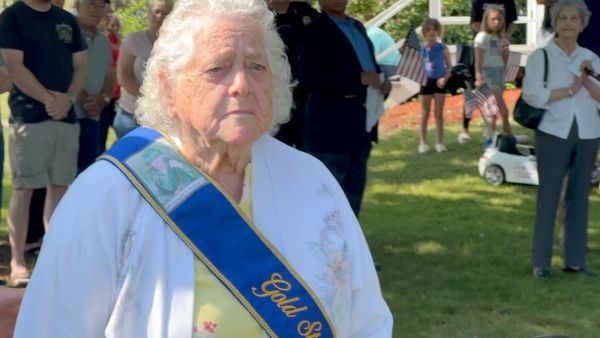
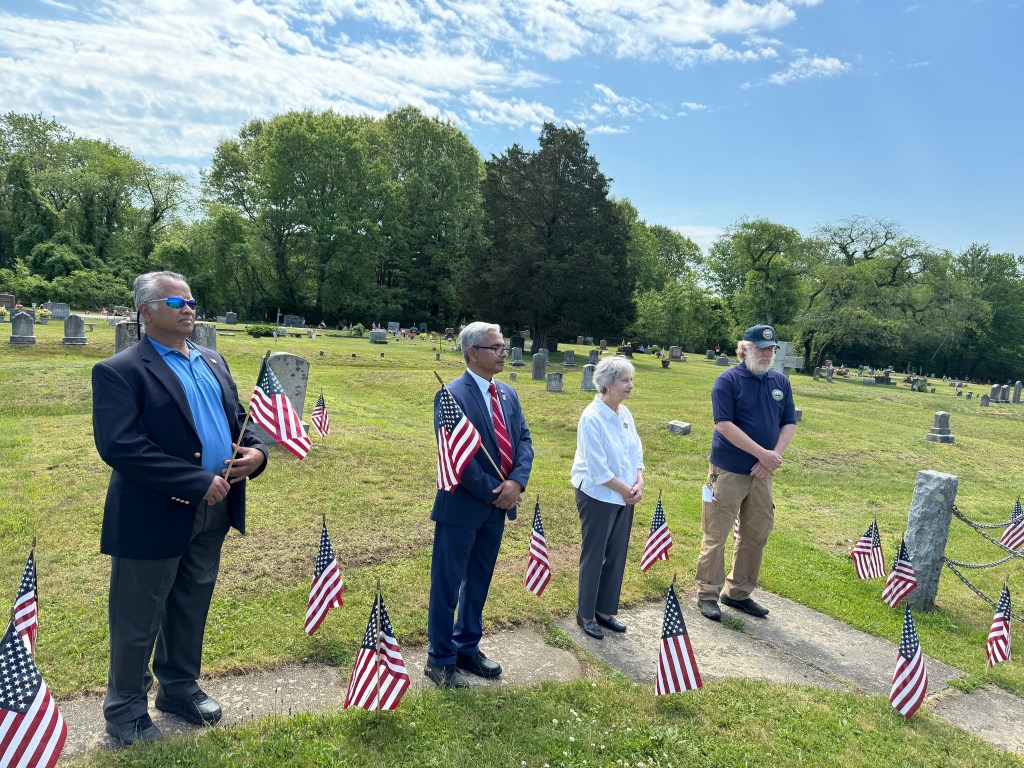
A very big thank you to the American Legion Raymond Walton Post 70, Cassandra Carter of Seabrook Recreation, the Seabrook DPW, and the Seabrook Police and Fire Departments, as well as the Board of Selectmen for supporting and attending, the annual Memorial Day Service. Thank you to the legislative delegation as well. It was an honor to have Gold Star Mother Florence Souther in attendance as well. It turned into a beautiful day for the ceremony and the Parade to honor the service and sacrifice of those that have given their lives in the defense of our nation. Thank you.
Jim Sciutto has given us a very interesting, and obviously timely, book on the new relationship dynamics between the great powers of the world. The post World War II order has not disappeared but is teetering, with an ascendant China, a revanchist Russia, and some like minded middle powers pushing hard to knock down the edifice largely created by the United States.
Sciutto gives us a focus on the great hot spots (Russia-Ukraine, China-Taiwan) as well as the close cooperation between Russia, China, and the smaller powers determined to change the dynamics of the international system. (Iran, North Korea)
Sciutto comes down fairly hard for stopping the Russian military expansion into Ukraine, and I was delighted that he included the perspective of Estonian Prime Minister Kaja Kallas in the book. As we move further away from World War II many have forgotten the horrors visited upon the Baltic states by Russia and Stalin while the West was preoccupied with stopping the naked aggression of Adolph Hitler. The odious Molotov-Ribbentrop pact giving Stalin a free hand in the Baltics while enabling Hitler to invade Poland and start World War II allowed the Russians to simply absorb the Baltic states, including Estonia. Others may have forgotten that lesson but Prime Minister Kallas has not, and she is a strong voice giving warning about Russian intentions were they to win in Ukraine.
I think it important that Sciutto included some detail on the war game results conducted by The Center for Strategic and International Studies on a potential invasion of Taiwan by China. The results are fairly sobering, and despite plenty of public comment on these results they would likely be a shock to many Americans.
Sciutto talks about the difficulties inherent with today’s configuration of great powers for the United States. The U.S. has a strong alliance system in place, but the cooperation of Russia and China is creating major difficulties for the exiting world order. There are major flash points, and as Sciutto points out, fewer guardrails, between the great powers today. Sciutto has done a fine job of looking at the complexities, and dangers, inherent in these relationships.
The Seabrook Water and Sewer reports for 2023 are below. I have produced these reports for many years, and while they retain the existing format they now include capital costs into the calculation of the annual subsidy going from taxpayers to rate payers. The reports show that the annual water/sewer deficit for 2023 is $2.3 million.
The Select Board has determined to make the system self reliant in 2024. They have adopted a rate system that should fully fund both water and sewer departments, including all capital costs. The new rates were effective as of January 1, 2024. These rates will lift that $2.3 million dollar subsidy off of the tax rate and move it to the ratepayers. Taxpayers should realize a large benefit.
If you have any questions or concerns do not hesitate to contact my office.
Tim Pat Coogan gives us a tour de force on Michael Collins, the man who made Ireland, in this book which is both a biography of the “big fella” and a history of a critical point in Ireland. These events are still argued about today, and of course led to the great split in the Irish movement for independence that brought the Irish civil war, a tragedy for the entire country.
There can be no mistake about where Coogan stands on the events that led to the creation of the Irish Free State and the civil war. He is unabashedly on the Michael Collins side of that argument. If you have some sympathy for Eamon De Valera this might not be the book for you.
The book is thick with details, which some have said made it a difficult read, especially for those that might not be familiar with this era of Irish history. Tim Pat has a lot of ground to cover, as the biography of Collins is simply intertwined with Eamon De Valera and the Irish movement of independence. You cannot tell the story of Michael Collins without getting into the weeds of the movement for Irish independence. It was Collins whole life.
Michael Collins was a volunteer and survived the disaster of the Easter uprising of 1916. The military failure forever colored Collins views on how to militarily confront the superior British force stationed in Ireland. Static warfare would lead Collins to master the tactics of a guerrilla campaign against the British. As successful as his tactics were even this eventually brought Collins into conflict with Eamon De Valera.
Collins life and death were tied to Irish history, and to the other giant of the Irish independence movement, Eamon De Valera. The eventual split in the movement, and the basis of the Irish Civil War, in large part was attributable to the eventual break between Michael Collins and Eamon de Valera. This book, by necessity, delves into that break, how it happened, and who the author thinks bears ultimate responsibility for the costly divide.
After the debacle of 1916 Eamon De Valera assumed overall leadership of the Irish Republican movement, but Michael Collins was a driving force in the movement, acting as Director of Finance, Director of Intelligence, as well as many other roles in the self declared Republican government of Ireland. He was a member of the first Dail, and though he made some enemies within the movement his leadership was simply immense. When Eamon De Valera decided to travel to America to build political support as well as gather financial support Collins was left in charge. The Collins success in prosecuting the guerrilla campaign against the British included a high degree of brutality, including executions of key British personnel in Ireland by a squad of assassins put together by Collins. The “squad”, or the “12 Apostles” put together by Collins, inflicted heavy damage on the British police and military infrastructure in Ireland. Collins was able to identify and mark for execution many British assets through superior gathering of intelligence, including turning key workers for the British in Ireland into informants for him. He was responsible for floating the national loan that financed the war effort and the activities of entire “Irish government” that claimed legal authority over the entire country. It was the war efforts of Collins, without any doubt, that drove the British to sue for some sort of accommodation with the Irish. That process, supposedly led on the Irish side by De Valera, became the point of fracture between Collins and De Valera. That fracture would have horrible ramifications for the Irish movement, and would cost Collins his life.
What was the cause of the split? Before we get to that question let us look at how Coogan described the De Valera trip to the United States, where he became embroiled in a major political dispute with prominent Irish American supporters of Irish independence. The De Valera stubborn streak, or maybe straight out hubris, is described.
At an early stage in the De Valera tour one Irish-American leader, watching the tensions build up, commented that the best thing to do with De Valera was ‘turn everything over to him. He will make a failure of it , but a failure is better than a split. And a split is certain unless De Valera can have his way.’
The Man Who Made Ireland: The Life and Death of Michael Collins Tim Pat Coogan pg. 190
When the British made peace overtures to the Irish several key questions faced the Irish. The Irish government embraced the declaration of a Republic by the Easter 1916 rebellion. The commitment to the establishment of an Irish Republic with authority over the entire island was a key tenet of Irish Republican political thought. It was a difficult, if not impossible political goal in light of British policy and politics. The status of Northern Ireland was a sensitive one for both sides. Like today the counties that made up Northern Ireland were a political football in British politics, with “unionist” sentiment a majority in what became Northern Ireland. That majority had close political ties to the Conservative Party in Great Britain and that made any deal on the North very difficult. The second key question for the Irish was whether something less than a Republic could meet their political goals. The British, at this juncture, were simply not going to take the great leap towards a Republic for Ireland that would force a disassociation from the Crown. With those challenges ahead both sides agreed to a truce in place in July of 1921 in the hope of reaching some sort of agreement.
The truce of 1921 had some major military ramifications. Collins had fought the British to a standstill using guerrilla tactics that were often quite harsh. His intelligence network, and his fighters, were operating under a certain cover. With the truce declared Collins worried about what might happen should the negotiations fail and hostilities re-commence.
“He commented, ‘once a truce is agreed, and we come out in the open, it is extermination for us if the truce should fail…We shall be like rabbits coming out from their holes.’”
The Man Who Made Ireland: The Life and Death of Michael Collins Tim Pat Coogan pg. 217
This Collins analysis would go a long way towards explaining his later actions.
De Valera agreed to travel to London for direct talk with British P.M. David Lloyd George on July 12, 1921. The Irish delegation did not include Collins, who was omitted from the team by De Valera over Collins protests. This decision by De Valera also would go a long way, in my view, to explain the later disaster.
In his meetings with Lloyd George De Valera remained difficult to pin down. In a report from Lloyd George to the British cabinet on his discussions with De Valera the P.M. said:
“After three {there were actually four in all} interviews with Mr. De Valera, aggregating several hours, I found it difficult to see exactly where the Irish leader stood…What he wanted was a Republic, but this the Prime Minister had said was impossible, being inconsistent with the Monarchy. Mr. De Valera however had not admitted this inconsistency…as the conversation progressed , it became increasingly clear that Ulster was the real difficulty.”
The Man Who Made Ireland: The Life and Death of Michael Collins Tim Pat Coogan pg. 221
This articulation of the British position on a Republic in direct meetings with De Valera, was also critical in understanding the pivotal events that would soon come.
The conference did not end in agreement, but further discussions continued, with plans for a second British/Irish conference. In the run-up to the second conference De Valera and Lloyd George exchanged multiple letters. Within those exchanges the parameters of British flexibility became obvious for all to see, and likely lead De Valera to some fateful decisions. In outlining the Irish position in advance of the second round De Valera, in a note to Lloyd George, stated that
“our nation has formally declared its independence and recognizes itself as a sovereign State. It is only as the representatives of that State, and as its chosen guardians, that we have any authority or powers to act on behalf of our people.”
The Man Who Made Ireland: The Life and Death of Michael Collins Tim Pat Coogan pg. 225
Lloyd George rejected this formulation clearly.
“From the very outset of our conversation I told you that we looked to Ireland to own allegiance to the Thrown, and to make her future as a member of the British Commonwealth. That was the basis of our proposals and we cannot alter it. The status which you now claim in advance for your delegates is, in effect, a repudiation of that basis.”
The Man Who Made Ireland: The Life and Death of Michael Collins Tim Pat Coogan pg. 225
This was not the end of the correspondence between the two, and I will give additional text. But before I do we see the very clear position of the British on the concept of an Irish Republic. De Valera, seeing the British inflexibility on this issue, followed with a note offering to go to a conference with no pre-conditions. This effectively acknowledged that the British did not recognize the delegation as representatives of an Irish Republic. The Lloyd George response, and invitation said:
“His Majesty’s Government…cannot enter a conference upon the basis of this correspondence. Notwithstanding your personal assurance to the contrary, which they much appreciate, it might be argued in future that the acceptance of a conference on this basis had involved them in a recognition which no British Government can accord. On this point they must guard themselves against any doubt…The position taken up by His Majesty’s Government is fundamental to the existence of the British Empire and they cannot alter it. My colleagues and I remain, however, keenly anxious to make in co-operation with your delegates another determined effort to explore every possibility of settlement by personal discussion…We, therefore, send you herewith a fresh invitation to a conference in London on 11 October, where we can meet your delegates as spokesmen of the people you represent with a view to ascertaining how the association of Ireland with the community of nations known as the British Empire may best be reconciled with Irish national aspirations.”
The Man Who Made Ireland: The Life and Death of Michael Collins Tim Pat Coogan pg. 226
When the split came Collins would shred the De Valera argument that the only acceptable negotiated settlement would be British recognition of the Irish Republic by pointing to De Valera’s acceptance of the conference on the basis of this very correspondence. We get a bit ahead of the story, but Collins later said, after the split:
“The communication of September 29th from Lloyd George made it clear that they were going into a conference not on recognition of the Irish Republic… if we all stood on the recognition of the Irish Republic as a prelude to any conference we could very easily have said so, and there would have been no conference…it was the acceptance of the invitation that formed the compromise.”
The Man Who Made Ireland: The Life and Death of Michael Collins Tim Pat Coogan pg. 226
Robert Barton, a member of the second Irish delegation who ended up opposing the Treaty and falling out with Collins, nonetheless agreed with this idea.
“In these preliminaries the English refused to recognize us as acting on behalf of the Irish Republic and the fact that we agreed negotiate at all on any other basis was possibly the primary cause of our downfall. Certainly it was the first milestone on the road to disaster.”
The Man Who Made Ireland: The Life and Death of Michael Collins Tim Pat Coogan pg. 227
As mentioned I got a bit ahead of the story. With the conference set the Irish leadership had to determine who would go to London for this make or break negotiation. The first conference was led by De Valera, who left Collins at home. This time De Valera made the fateful decision to send Michael Collins to London while he stayed in Dublin. This disastrous decision has been analyzed repeatedly over the years. De Valera’s explanations for not leading the delegation were, in my view, nonsensical. As the so called “President of the Irish Republic” De Valera had an obligation to lead the delegation and do the negotiating. Coogan offers De Valera no relief here:
“Having left Collins at home while he teased out from Lloyd George what was on offer, he now, having found out, began to steer Collins towards the negotiating table in Downing Street.”
The Man Who Made Ireland: The Life and Death of Michael Collins Tim Pat Coogan pg. 227
De Valera would later compound his errors in ways that ripped apart the Irish independence movement. But this cynical ploy started the Irish, as Barton points out, on the road to disaster. Knowing full well that any potential agreement would be something short of recognition of a Republic De Valera sent Collins, knowing that either failure or a compromise would be the result. He did not want to be associated with either. In response to the many objections to De Valera not going to London, including strenuous objection from Collins, De Valera said:
“He said that he himself would go if he were not the President, the ‘symbol of the Republic.’ The ‘symbol’ should be untouched…not compromised by any arrangements which it might be necessary for plenipotentiaries to make.”
The Man Who Made Ireland: The Life and Death of Michael Collins Tim Pat Coogan pg. 229
Coogan mentions “Machiavellian” in describing the thought process of De Valera. I agree.
A tragic set of misunderstandings, mixed in with some bad faith, combined to create some major issues that would come back to haunt the Irish. The delegation was sent as
plenipotentiaries, with the Irish Dail empowering them as such. Coogan mentions De Valera’s attempt to apply handcuffs, but does not make clear that their power was subject to the limits desired by De Valera. (Send back a draft treaty to Dublin and await a reply before signing) Arthur Griffith, whose contributions to the Irish independence movement were enormous, was the nominal Chair of the Irish delegation. As expected the British were only willing to go so far, and any idea of a negotiated solution that placed Ireland outside of the British Commonwealth was a non-starter. The British delegation included Lloyd George, Churchill, and Birkenhead, an A list of talent. The Irish delegation was assigned by De Valera to be “balanced” but had some less than stellar personalities. The Irish submitted a De Valera driven idea of “External Association” that was soundly rejected by the British, who offered Dominion status. The Irish delegates were in fact back and forth to Ireland to report, but the Irish Cabinet was badly divided, and simply did not offer clear instruction. At the critical time, with negotiations coming close to an end, De Valera once again refused to join the delegation.
The sides narrowed the differences, and the Irish delegation signed the draft Treaty that included the oath to the British Crown and Dominion status, with the Ulster question deferred. Collins, in a statement to Birkenhead, said “I may have just signed my actual death warrant.”
After the signing the row began, with De Valera’s reaction one of outrage:
“They managed to get him a few minutes after he had read the Evening Mail. He was in a ‘towering rage.’ Duggan handed him the Treaty, and noticing that he was taking no interest in it, asked him to read it. “Why should I read it?’ was the reply. Taken aback, Duggan told him about the publication arrangement and pointed out that it was then nearly eight o’clock. ‘What,’ exclaimed De Valera, ‘to be published whether I have seen it or not-whether I approve or not?’”
De Valera, in a fit of pique over the plenipotentiaries having signed an agreement without his assent, after having refused to go to London himself, now moved to expel Collins, and two other delegation members, from the Cabinet. He did this before they had arrived back from London, and without offering them an opportunity to defend their actions. Machiavelli had made his move. De Valera had miscalculated, and this brazen move to eliminate Collins politically failed.
The De Valera argument, that the signing of the Treaty without a referral back to him or the Cabinet, was a violation of a pledge made by Arthur Griffith, in the light of history, may have some merit. But that merit gets washed away by the fact that the Treaty was subject to ratification by the Irish Dail. It was referred back, and could have been rejected by the elected representatives of the Irish people. The Dail debate was truly vicious, and both sides of the debate gave as good as they got. A piece of the debate by Collins is worth looking at. Speaking of the Treaty Collins said:
“In my opinion it gives us the freedom, not the ultimate freedom that all nations desire and develop to, but the freedom to achieve it…we have stated we would not coerce the North-East. We have stated it officially. I stated it publicly in Armagh and nobody has found fault with me. What was the use of talking big phrases about not agreeing to the partition of our country. Surely we recognize that the North East corner does exist, and surely our intention was that we should take such steps would lead to mutual understanding. The Treaty has made an effort…to deal with it on lines that will lead very rapidly to goodwill and the entry of the North East under the Irish Parliament.”
The Man Who Made Ireland: The Life and Death of Michael Collins Tim Pat Coogan pg. 301
De Valera made some truly horrible decisions in this time frame. His debate position urged the Dail to adopt what became known as “Document No. 2. This document, similar in many respects to the actual Treaty, cost De Valera some critical support from hardliners. Document No. 2 can safely be called an exercise in ego, and unacceptable to the British.
De Valera’s stature was such that many attempts at compromise were offered, and rebuffed by him directly. Making the Provisional Free State Government subsidiary to the Irish Dail by an act of the Dail was agreed to by both sides, including Collins, and brought to De Valera, who rejected it.
“Joseph McGuiness said in the Dail afterwards ‘the people on this side literally went on their knees to President De Valera to try to preserve the unity of the country, …in private session the next morning de Valera thumped the table and said:’There is no use in discussing it. The whole of Ireland will not get me to be a national apostate and I am not going to connive at setting up in Ireland another government for England.’”
The Man Who Made Ireland: The Life and Death of Michael Collins Tim Pat Coogan pg. 303
The whole of Ireland phrase would prove prophetic. Before the debate was over the Cabinet Minister for Defense, Cathal Brugha, launched an all out attack on Collins. That relationship had been badly strained for years, and the Treaty broke it. In response to this attack on Collins Arthur Griffith said Collins:
“He was the man that made the situation: he was the man, and nobody knows it better than I do how, during a year and a half he worked from six in the morning until two the next morning. He was the man whose matchless energy, whose indomitable will carried Ireland through the terrible crisis and though I have not now, and never have had, an ambition, about either political affairs or history, if my name is to go down in history I want it associated with the name of Michael Collins. Michael Collins was the man who fought the Black and Tans for twelve months until England was forced to offer terms.
The Man Who Made Ireland: The Life and Death of Michael Collins Tim Pat Coogan pg. 306
Griffith, in the final analysis, had it right. The Dail voted in favor of the Treaty, by a margin of 64-57. De Valera, in response, announced his resignation, moving the country on a course of disaster.
As the sides engaged in political sparring De Valera gave a speech in which he said:
If they accepted the Treaty, and if the Volunteers of the future tried to complete the work the Volunteers of the last four years had been attempting they…would have to wade through Irish blood, through the blood of the soldiers of the Irish government, and through perhaps, the blood of some of the members of the Government in order to get Irish freedom.
The Man Who Made Ireland: The Life and Death of Michael Collins Tim Pat Coogan pg. 319
The blood of fellow Irishmen, who themselves had fought the British side by side with De Valera. Truly despicable, and a comment that hung around his neck for the rest of his life. The best efforts of Collins to restore some unity, including forming an electoral pact with the anti-treaty elements, all ended up foundering. The Anti-treaty wing of the IRA, Collins comrades in an earlier period, seized a Free State building in Dublin, and while Collins likely waited too long, eventually Free State forces took back the building, triggering the Civil War. Collins, in an ambush, was killed in that conflict.
De Valera’s hypocrisy was shown years after Collins death by his willingness to enter the Free State Government with the oath of allegiance to the Crown still a part of the entry requirement. He took over the Free State government after abstaining from participating, and at some point years later cracked down on his ostensible allies in the IRA. Collins vision, that the formation of the Free State was a steppingstone to further progress, had been borne out. Coogan ends the book with a quote from De Valera, who through his many years in power was small and petty over any attempts to honor the service of Michael Collins:
“I can’t see my way to becoming Patron of the Michael Collins Foundation. It’s my considered opinion that in the fullness of time history will record the greatness of Collins and it will be recorded at my expense.”
The Man Who Made Ireland: The Life and Death of Michael Collins Tim Pat Coogan pg. 432
Collins was indeed, in his short time here, a man of greatness. His vision, and his willingness to endure much political animus, brought forward the nation of Ireland. During this St. Patrick’s Day month we should remember the monumental contributions of the Big Fella, Michael Collins.
There has been, in the context of the Russian invasion of Ukraine, lots of discussion of Poland, and how World War II started. Some of the commentary, especially the comments by Vlad Putin blaming Poland for the start of World War II, and not Adolph Hitler, have created quite a stir. From my perspective Putin’s comments were not really surprising as he has been using the German playbook from that period. What happened in the run-up to the German invasion of Poland in 1939, and how did Germany, and the Soviet Union, view the Polish state? Are there similarities to how Putin views the Ukrainian state?
World War II started when Nazi Germany invaded Poland on September 1, 1939. The British and French, having guaranteed Polish borders, declared war. The German invasion provided the casus belli, but it was the culmination of a series of aggressive German actions that finally pushed the French and the British into action. These prior German actions, well covered in history, included assimilating the State of Austria (the Anschluss) by invasion, and then making territorial demands on Czechoslovakia that were settled in favor of Germany by the British at Munich, where Czechoslovakia was carved up, and a major piece handed to Hitler’s Germany. We will look at some additional detail on these events, but the first lesson is that an aggressor state is not likely to be placated by attempts to “settle” disputes when its territorial ambitions are clearly larger than the immediate issue at hand. Hitler digested the Sudetenland and Austria, but his grievances and hunger for additional territory could not be satisfied by those concessions. Aggressor states, for all of the lying about short term intentions, usually have stated long term goals fairly clearly. That was the case with Hitler. It is quite clearly the case with Putin.
The tactics and rationales used today by Putin relative to Ukraine are not similar to the German rationales used in the run-up to World War II. They are identical. Putin has said plenty about the Russian rationale for the invasion of Ukraine. We have heard that Ukraine is not a “real state” and that the government of Ukraine was committing “genocide” against the Russian population. Putin points out that Ukraine was a part of the Soviet Union, and that the “artificial separation” of Ukraine into a state within the Soviet Union was an invention of Lenin and the Soviet Communist Party. His early interventions in East Ukraine were driven by these claims of genocide.
“How else can one interpret the shelling of residential areas by Ukrainian Armed Forces using multiple rocket launchers or the discovered mass grave sites of almost 300 civilians near Lugansk, who were killed only because they considered Russian as their native language?”
Anatoly Antonov Russian Ambassador to U.S. (on Facebook)
Hitler would make use of the same technique in his propaganda war against Czechoslovakia in the run up to the Munich Conference, demanding the return of the geographic area inside
Czechoslovakia called the Sudetenland where there were 3 million ethnic Germans residing. Hitler controlled the German political apparatus in the Sudetenland and used that apparatus to create a political firestorm inside Czechoslovakia. With civil disorder inside Czechoslovakia the government did respond, attempting to quell the chaos, and to negotiate with the Sudeten Nazi leader Konrad Heinlein. The attempts to restore civil order were characterized by Hitler as attacks and atrocities being committed by the Czech authorities against the German population. Heinlein was called to Berlin to be given his marching orders. German foreign office documents described his instructions from Hitler:
“Hitler’s instructions, as revealed in a Foreign Office memorandum, were that ‘demands should be made by the Sudeten German Party which are unacceptable to the Czech government.’ As Heinlein himself summarized the Fuehrer’s views, ‘We must always demand so much that we can never be satisfied.’ “
Shirer, William, “The Rise and Fall of the Third Reich” pg. 359
So we see the use of ethnic Russians in Ukraine, and the German use of ethnic Germans in Czechoslovakia. What about the issue raised by Putin that Ukraine is not a real state? Even that is poached from the Hitlerite playbook.
As we move further from World War II the historical memory becomes a little less sharp. It is generally remembered that the Germans, and especially Hitler, despised the Treaty of Versailles. The Treaty imposed some harsh conditions on the Germans after World War I, and those are generally remembered as financial burdens, imposed through reparations. But there was a lot more to the Treaty of Versaille than reparations. There were major relocations of borders, and the creation of nation-states that had not prior existed. This was the case for Czechoslovakia.
“Why did Chamberlain go to Munich? What could he have hoped to accomplish by brokering the transfer to Hitler of a Sudetenland that held the mountain fortifications of Czechoslovakia, loss of which would put Prague at the mercy of Berlin? To answer these questions we must go back to 1919. At Paris, 3.25 million German inhabitants of Bohemia and Moravia had been transferred to the new Czechoslovakia of Thomas Masaryk and Eduard Bones in a flagrant disregard of Wilson’s self-proclaimed ideal of self determination. Asked why he had consigned three million Germans to Czech rule, Wilson blurted, ‘Why, Masaryk never told me that!’ H.N. Brailsford, England’s leading socialist thinker on foreign policy, had written in 1920 of the Paris peace: ‘The worst office was the subjection of over three million Germans to Czech rule.’ Austrian historian Erik von Kuehnelt-Leddihn describes the polyglot state the men of Paris had created: The Czechs numbered 47 percent of the population of Czechoslovakia. It was only by “annexing” the Slovaks, much against their expressed will, into a hyphenated nation which had never existed historically that they suddenly became a “majority.” In fact, there were more Germans (24.5%) in Czechoslovakia than Slovaks. But by clever gerrymandering devices the Czechs maintained a parliamentary majority and exercised an oppressive rule which drove the German minority (inexactly called “Sudeten Germans) into a rebellious and disloyal nationalism that would evolve into national socialism.”
Buchanan, Patrick “Churchill, Hitler and the Unnecessary War” pg. 214
Hitler hated the Czech state, and considered its very existence to be an outrage, an artificial creation of Versailles. As the British and the French negotiated over the demands of Hitler which culminated in the Munich conference their position eventually became that the Czechs were going to have to give up territory based on the essential soundness of the German position as well as the military threats being brandished by Hitler. The French and the British also believed Hitler’s assurances that the settling of the Sudetenland question would resolve his territorial demands and would not present a threat to what would be left of the Czech state. (“This is my last territorial demand in Europe.”) They would soon learn a very hard lesson. The Munich Agreement, reached without the participation of the Czech government, are instructive politically and militarily. After the agreement was reached the French attempted to offer condolences to the Czech foreign minister, who responded presciently.
“The French Minister’s attempt to address words of condolence to Krofta was cut short by the Foreign Minister’s remark: ‘We have been forced into this situation; now everything is at an end; today it is our turn, tomorrow it will be the turn of others.’ “
Shirer, William, “The Rise and Fall of the Third Reich” pg. 420-421
The turn of others would come in short order. But as you look at the dismemberment of Czechoslovakia you hear some of the same discussion points today. It is not our problem, Ukraine is a fake state that has a large ethnic Russian population, and the military might of Russia is simply too much for Ukraine in any case. Cede territory to Russia and simply call it a day. After the forced turnover of 11,000 square miles of Czech territory to Germany Hitler demanded a change of government in Prague, which happened immediately. President Benes not only resigned but was forced to leave the country, wisely, as his personal safety was at risk. Hitler’s guarantee of the rump Czech state was a sham from the moment he gave it. A top secret directive issued by Hitler to the military on October 21, 1938 called for “the liquidation of the remainder of Czechoslovakia.” With the German government refusing to offer the guarantees required by the Munich and the Germans fomenting separatist sentiment in what was left of Czechoslovakia, Hitler sent German troops into rump Czechoslovakia on March 15, 1939, ending the state of Czechoslovakia. Daniel Henninger, in the Wall Street Journal, looked at some of these similarities:
“Months later in the Munich Agreement, British Prime Minister Neville Chamberlain, attempting to avert war, conceded that Hitler could occupy the German-speaking territories of Czechoslovakia in return for promising no further territorial expansions. Mr. Putin has justified his invasion of eastern Ukraine in part on the basis of Russian speakers there and has made similar threats against Latvia on behalf of Russian-speaking minorities. Last week the Russian police put Estonian Prime Minister Kaja Kallas on its wanted list for the “desecration of historical [Russian] memory.”
Daniel Henninger, Wall Street Journal February 21, 2024
Henninger, a conservative columnist, asks the right questions in that piece.
“For starters, what did Mr. Trump mean when he said he could end the war between Russia and Ukraine in 24 hours? Does he in fact mean Mr. Putin should be allowed to annex eastern Ukraine? Would he withdraw the U.S. from the roughly 50-nation Ukraine Defense Contact Group? Would he cede Russian-speaking areas of the Baltics to Mr. Putin? I would ask Mr. Trump if he thought the Munich Agreement was a mistake in 1938, or just poorly negotiated.”
Daniel Henninger, Wall Street Journal February 21, 2024
It did not take long for Poland to realize its “turn” as Adolph Hitler began to create the same type of trouble in Danzig that he created in the Sudetenland. With tensions escalating there occurred a serious diplomatic back and forth between Germany and Great Britain in advance of the German invasion. When the Poles refused to send a plenipotentiary to Berlin to negotiate the Germans published what they described as their final negotiating position. Even William Shirer acknowledged that the published position of Hitler was a “generous” one.
“Compared to his demands of recent days, they were generous, astonishingly so. In them Hitler demanded only that Danzig be returned to Germany. The future of the Corridor would be decided by a plebiscite, and then only after a period of twelve months when tempers had calmed down. Poland would keep the port of Gdynia. Whoever received the Corridor in the plebiscite would grant the other party extraterritorial highway and railroad routes through it-this was a reversion to his “offer” of the previous spring. There was to be an exchange of populations and full rights accorded to nationals of one country in the other.”
Shirer, William, “The Rise and Fall of the Third Reich” pg. 582
This “offer” is the basis of Putin’s remarks blaming Poland for the start of World War II. Hitler, before he made it, had issued the order for “Case White,” the German invasion of Poland. Putin’s remarks were not the first time the Poles had been blamed. Pat Buchanan’s book, “Churchill, Hitler and the Unnecessary War” put forward the same proposition many years ago.
“But no war is inevitable until it has begun. What made a European war “only a matter of time” was not Hitler’s occupation of Prague but Britain’s guarantee to Poland. Had there been no war guarantee, Poland, isolated and friendless, might have done a deal over Danzig and been spared six million dead. Had there been no war guarantee of March 31, there would have been no British declaration of war on September 3, and there might have been no German invasion of France in May 1940, or ever. For there was nothing inevitable about Hitler’s war in the west.”
Buchanan, Patrick “Churchill, Hitler and the Unnecessary War” pg. 293
So Buchanan also blames the British, and the book, which caused a firestorm of criticism, lays much of the blame for the war on the Poles and the Allies.
Many people see the identical playbook that Putin is using, from the claims of genocidal attacks on ethnic Russians to the charge of being a non authentic state. The idea that Poland should have capitulated to German demands, even if you accept that the Polish diplomatic effort was clumsy, is a perversion of history, and ignores Hitler’s prior treatment of Austria and Czechoslovakia. Hitler was a man of the right, and so is Putin. Pat Buchanan ultimately, in my view, would have preferred western acquiescence, if not support, for German aggression against the Soviet Union. That would come.
Finally Daniel Henninger’s questions in his recent column bring us back to Munich. What is the current American belief on Munich? Poland in 1939 most certainly was not a democracy. Should the west have given a guarantee to Poland? It looks like the upcoming Presidential race may have many revisiting the events of 1938-1939? I was sure I knew where most stood on that issue. I am not so sure anymore.