A Review of “On His Own Terms: A Life of Nelson Rockefeller

On His Own Terms: A Life of Nelson RockefellerOn His Own Terms: A Life of Nelson Rockefeller by Richard Norton Smith
My rating: 5 of 5 stars

Such a terrific book on a political giant, who played an enormous role in American politics, and whose name and philosophy came to represent a major point of divide in the Republican Party. Author Richard Norton Smith immediately entices you by opening with Rockefeller getting booed off the stage at the 1964 GOP Convention, crystalizing the split in the GOP that continues to exist today. (A shout out to “Before the Storm” by Rick Perlstein, who covers the rise of Goldwater and the conservative takeover of the GOP)
In reading another review of this book I found a criticism that struck me as essentially correct: there is so much to write about that even at 800 plus pages a multi-volume effort would have allowed a more detailed look at some truly fascinating pieces of Rockefeller’s life. As I started I hoped for additional detail on the Rockefeller/Robert Moses relationship, although it is covered. (Of course the Caro masterpiece “The Power Broker” gives plenty of detail)
Smith gives us a good overview of the personality and politics, with the major flaws not hidden, but balanced by much of the good parts of the overall record. He covers the family, Rockefeller’s love and devotion to art, and of course the politics. For those that love the politics this is an area that could have used more, but what is there is just terrific. Rockefeller’s stop and start effort to secure the 1960 GOP nomination showed the personal political flaws that were to remain with him in every one of his efforts to secure the Republican presidential nomination (1960, 1964, 1968). My own view is that 1968 could have been the year where the greatest potential existed for Rockefeller, but he was out-flanked and out thought by Nixon, starting in 1964, when Nixon campaigned tirelessly for the doomed Goldwater candidacy, and Rockefeller refused to do so. Nixon played the long game, and Rockefeller got caught up in the deep Party split that happened to the GOP in 1964. He never recovered his national footing, and his failure to achieve his life goal of being President weighed on him later in life, leading to some introspection and self criticism as he neared the end. The “mutation” that occurred in the GOP came just in time to derail Rockefeller on the national scene.
Looking at Rockefeller’s efforts in 1960 the Goldwater wave of 1964 was just forming.

“The incident was nevertheless revealing of a top-down mentality driving the Rockefeller campaign to pursue Republican kingmakers, many of them barely able to stomach Theodore, much less Franklin, Roosevelt. At the time, his chilly reception was attributed to inferior organization and hardball tactics employed by Len Hall and other Nixon strategists. This overlooked something much larger, a mutation occurring within Republican ranks, as the party’s center of gravity shifted right and the polarizing emotions of the sixties evicted Eisenhower-style moderation.”

And yes, there are similarities between yesterday and today. As that Goldwater wave started to become visible after the election of JFK, Kennedy observed: “….President Kennedy, in a Los Angeles visit coinciding with Rockefeller’s heartbreaking trip to New Guinea, to decry “those on the fringes of our society who have sought to escape their own responsibility by finding a simple solution, an appealing slogan, or a convenient scapegoat.”

As Rockefeller looked to 1964 the wave hit, and the description rendered in this book, once again, shows the similarities to today.

“Nothing better illustrated the Rockefeller campaign’s outmoded approach toward winning Republican minds, let alone hearts. In many a boardroom and country club, 1964 boiled down to an unequal contest between Goldwater passion and Rockefeller prestige. So while Hinman cultivated his peers in the GOP hierarchy, below the radar, in precinct meetings and district conventions, an entirely new Republican electorate swarmed the barricades. It wasn’t the Eastern Establishment alone targeted for elimination by Clif White’s army; it was the Republican Establishment personified by all those lawyers and bankers and oil barons whose loyalty to their class, and to the social and cultural status quo, rendered them ideologically suspect to the emerging conservative movement.”

Despite Rockefeller’s failures at the national level Smith shows what a successful political Governor Rockefeller was in New York. As time wore on Rockefeller had major problems, which were covered, including the debacle at Attica. Rockefeller’s move to the right is chronicled, and the internal contradictions that manifested themselves are shown expertly by the author. The author does not shy away from Rockefeller’s womanizing, giving an unvarnished view of his personal foibles in this area, including coverage of his death.

Rockefeller served as Vice President to Gerald Ford, and that painful chapter is covered in detail, including his great animus towards a pair of Ford staffers named Cheney and Rumsfeld. Rockefeller’s personal political failures as a national politician come through loud and clear, leading his friend President Ford to dump him from the ticket in favor of Bob Dole in 1976. That ignominious end brought the curtain down on Rockefeller’s political career, and left him embittered. Much of the blame for his problems, despite the hostility of Cheney and Rumsfeld, belonged to Rockefeller, who could just not be a second banana.

I highly recommend this book, which is integral to understanding the political period that shaped much of what America is today. Rockefeller may not have succeeded in his ultimate goal, but he can be remembered as one of the giants of his era.

View all my reviews

Posted in Books | Tagged , , | Leave a comment

Author Stephen Kurkjian Coming to Seabrook Library

The Seabrook Library will present an author presentation and signing of the book, “Master Thieves: The Boston Gangsters Who Pulled Off the World’s Greatest Art Heist” on Thursday, April 28, 2016, at 6:30 pm at the Seabrook Library, 25 Liberty Lane in Seabrook.
The author, Stephen Kurkjian, is one of the most acclaimed investigative reporters in the country. A forty-year veteran of the Boston Globe, he is the paper’s former Washington bureau chief and a founding member of its investigative Spotlight Team. Kurkjian has won more than twenty-five national and regional awards, including the Pulitzer Prize on three occasions. He is a graduate of Suffolk Law School and lives in Boston.
This program is free and open to the public. Refreshments will be served.

Posted in Seabrook | Tagged , , | Leave a comment

Congratulations to New Seabrook Police Officers

Congratulations to newly sworn in Seabrook Police Deputy Brett Walker and Police Sergeant Kevin Gelineau. My thanks to the Seabrook Board of Selectmen for their strong leadership, and to Police Chief Michael Gallagher.


IMG_0417

Posted in Seabrook | Tagged , , , | Leave a comment

Goodbye Keith Emerson

It has been somewhat fashionable to kick the stuffing out of Emerson, Lake & Palmer these days, but I have to admit that I still count myself as a fan. With the news of the death of Keith Emerson a true keyboard maestro has passed from the scene. I saw them twice, once in Springfield, and once in Hartford, and they really did put on a terrific show. Emerson was indeed the musical driving force behind ELP, and has left behind some really spectacular work. One of my favorites, from Brain Salad Surgery, is below. RIP, Keith Emerson.


Posted in Music | Tagged , , , | Leave a comment

Book Review- Before the Storm: Barry Goldwater and the Unmaking of the American Consensus

I read the first of the three Rick Perlstein books back in 2014. In this election cycle featuring the rise of Trumpism, and the seeming disintegration of the national GOP it might be time to take another look at this outstanding work. I left the below review over at Goodreads.

Before the Storm: Barry Goldwater and the Unmaking of the American ConsensusBefore the Storm: Barry Goldwater and the Unmaking of the American Consensus by Rick Perlstein
My rating: 4 of 5 stars

A pretty fine book. I am not sure that folks that are not enamored of politics would be of the same view, as it adds a level of detail that might not be for everyone. The book shows us the roots of the modern American conservative movement, which grew out of the ashes of the Barry Goldwater campaign for President in 1964. This is not a campaign book on 1964, but rather a look at how conservatives managed to begin to assume control of the GOP Party apparatus after the Nixon defeat in 1960. This is where the book shines, showing us the real split in the GOP between the “moderates” led by Nelson Rockefeller, and the hard conservative right, which produced Goldwater. That split reverberates today in so many different ways:
Helping to move both Parties in a more ideological direction, starting the geographic movement of the formerly Democratic South to the Republican Party as the Conservative movement rejected federal Civil Rights legislation, starting the great alienation of African-American voters from the Republican Party based on the conservative rejection of civil rights and not so secret alignment with the forces of racism that had prior resided in the Democratic Party.

Todays fight between the Tea Party and Republican “regulars” looks very similar to the fight between the young conservative movement (with prominent participation by the John Birch Society) and the Rockefeller/Scranton wing of the GOP back then. I read another review of the book that highlighted what I consider to be a major turning point in American politics that occurred here, to wit that the “other side” (Democrats) were looking to “destroy America” and that they were not just political adversaries but enemies to be demonized as communists, communist sympathizers, heathens looking to extinguish religion from American life, etc…..

Perlstein manages to get the point across that the LBJ landslide of 1964 managed to mask the strength that the conservative movement was accumulating, with some measure of that strength based on the changes happening in the country in the area of race, and “white backlash” to “change”. (Boston’s Louise Day Hicks is mentioned several times as evidence of that backlash extending to northern voters.) Why the electoral slaughter then? Perlstein correctly indicts the Goldwater campaign team for their ineptitude, borne out of both incompetence and a desire for ideological purity. The candidate is not spared in that area either. LBJ is shown to be a political pro who is more than willing to exploit the missteps of the Goldwater campaign, doing so ruthlessly while the Goldwater campaign misses the opportunities left to them by the few mistakes made by the Johnson team.

Of course there are some important historical figures dealt with in this book. Goldwater’s campaign produced some real national attention for a rising conservative star, who by all accounts out-performed the candidate on the stump, by the name of Ronald Reagan. Reagan’s success on the stump would eventually produce the roadmap for a conservative victory. Richard Nixon is a not so major figure in the book but an important one nonetheless. He is shown somewhat clumsily probing for support in the run-up to 1964, and after the Goldwater nomination being written off by both factions of the GOP. But Nixon was far shrewder than his enemies in the GOP, working tirelessly for GOP candidates throughout the country, including Goldwater, while others held their noses and stayed away. Nixon was collecting chits for 1968, and he was willing to do the groundwork that others disdained. A good entrée into Perlstein’s next book in this trilogy, “Nixonland”. Phyllis Schafly, William Buckley Jr., the John Birch Society, Nelson Rockefeller, William Scranton, Henry Cabot Lodge and many others you may recognize play prominent roles in this book.

We can see the outlines of the two modern Parties taking shape from this process, with much of the current rhetoric from the right not changing substantially in tone from what the Goldwater acolytes were producing. Richard Nixon is credited with creating the “southern strategy” that produced Republican victories in 1968 and 1972, but the groundwork for that strategy was laid by the decisions and choices made by Barry Goldwater and his campaign in 1964. The modern political era started here. This book gives a detailed accounting of how we started down the road we remain on today.

View all my reviews

Posted in Books | Tagged , , | Leave a comment

Review of the Buddy Cianci Autobiography Politics and Pasta

Right after I read this and posted my review on Goodreads Mayor Buddy Cianci passed away. I have placed the review here, as well as a video of Mayor Cianci talking about the book on WGBH. Good stuff from a very interesting man, who had a very impactful political career in Providence.

Politics and Pasta: How I Prosecuted Mobsters, Rebuilt a Dying City, Dined with Sinatra, Spent Five Years in a Federally Funded Gated Community, and Lived to Tell the TalePolitics and Pasta: How I Prosecuted Mobsters, Rebuilt a Dying City, Dined with Sinatra, Spent Five Years in a Federally Funded Gated Community, and Lived to Tell the Tale by Vincent “Buddy” Cianci Jr.
My rating: 3 of 5 stars

A pretty entertaining book by the Prince of Providence, former Mayor Buddy Cianci. Mayor Cianci gives an broad brush overview of his colorful career in politics, and takes a couple of get even shots at some of his principal tormenters. You can see the culture clash in this book, as the refined blue bloods of Rhode Island politics (Lincoln and John Chaffee, Lincoln Almond, etc) collectively hold their nose while dealing with the over the top ethnic Mayor of Providence. In the end the establishment got their man, putting Cianci in jail on a RICO charge.

We get the Buddy side of the story, but we also do get an unvarnished view of how his “philosophy” of municipal management was translated into action. There is no question that Providence, under his stewardship, accomplished some significant things that changed the City for the better. Buddy was a broad stroke Mayor, and some of those broad strokes created great and positive change for the City. But not knowing the details, as he ruefully acknowledges, was one of his great weaknesses, and ultimately brought him down.

I do not believe they will be teaching the Buddy Cianci methodology of management at any schools in the near future. Having said that he was undeniably a beloved figure in the City, and can correctly point to some transformative accomplishments. Kicking the fossilized blue blood establishment in the shins has to be worth a few gold stars as well. I never tried the Marinara Sauce Mayor Cianci put out, but the book was entertaining for sure.

View all my reviews

Posted in Books | Tagged , | Leave a comment

Review of Ben Bernanke "The Courage to Act"

The Courage to Act: A Memoir of a Crisis and Its AftermathThe Courage to Act: A Memoir of a Crisis and Its Aftermath by Ben S. Bernanke
My rating: 4 of 5 stars

A fairly dry, but very important book by the man at the helm of the Fed during the “great recession.” Bernanke does not give us a book where shots are delivered to those who may be have been policy opponents within government, but he does manage to get his points across diplomatically. As the financial system teetered many complex and politically difficult decisions were thrust upon Washington policy makers from both the Bush and Obama Administrations. Those decisions are still debated today. Bernanke gives us his view on those decisions, and the facts on the ground that may have led, in certain instances, to decisions that were sub-optimum, or just plain wrong.

Bernanke gets to some of the big decisions of the day, including the decision to let Lehman fail. The entire “bailout” of Wall Street issue is gone over, with Bernanke giving, as much as can be expected, a dispassionate analysis of why decisions were made, and what the ramifications might have been had alternative policies been adopted. Not being an economist I looked for his views on several issues that remain controversial to this day, including Lehman, the bailouts, especially the AIG bailout, the right “medicine” for an economy in a major recession.

As mentioned Bernanke is diplomatic, except when it comes to the disdain he shows for the Washington political class from both Parties. The “play-acting” in the middle of a crisis, the politics first mentality of a large segment of the elected officials he had to deal with, and the flat out lack of shame or truth by these elected officials is called out by Bernanke. He defends the bailouts as necessary, but recognizes the “moral hazard” inherent in those decisions.

“Some of the critics were ideologues (the free market is always right) or uninformed (the economy will be just fine if a few Wall Street firms get their just deserts). Some simply railed against the unfairness of bailing out Wall Street giants but not the little guy on Main Street. Personally, I felt considerable sympathy for this last argument. (I would wince every time I saw a bumper sticker reading “Where’s my bailout?”) But it was in everyone’s interest, whether or not they realized it, to protect the economy from the consequences of a catastrophic failure of the financial system. The opponents’ most substantive argument was that, whatever the short-run benefits of bailouts, protecting firms from the consequences of their own risky behavior would lead to riskier behavior in the longer run. I certainly agreed that, in a capitalist system, the market must be allowed to discipline individuals or firms that make bad decisions. Frank Borman, the former astronaut who became CEO of Eastern Airlines (which went bankrupt), put it nicely a quarter-century earlier: “Capitalism without bankruptcy is like Christianity without hell.” But in September 2008 I was absolutely convinced that invoking moral hazard in the middle of a major financial crisis was misguided and dangerous. I am sure that Paulson and Geithner agreed. “
“You have a neighbor, who smokes in bed. . . . Suppose he sets fire to his house,” I would say later in an interview. “You might say to yourself . . . ‘I’m not gonna call the fire department. Let his house burn down. It’s fine with me.’ But then, of course, what if your house is made of wood? And it’s right next door to his house? What if the whole town is made of wood?” The editorial writers of the Financial Times and the Wall Street Journal in September 2008 would, presumably, have argued for letting the fire burn. Saving the sleepy smoker would only encourage others to smoke in bed. But a much better course is to put out the fire, then punish the smoker, and, if necessary, make and enforce new rules to promote fire safety. The firefighting argument applied equally well to Lehman

Bernanke, Ben S. (2015-10-05). The Courage to Act: A Memoir of a Crisis and Its Aftermath (Kindle Locations 3874-3880). W. W. Norton & Company. Kindle Edition.

Despite the ferocious nature of the debate, nobody, in my view, has been able to puncture this argument.

His disdain for Congress comes through clearly, in several instances:Bernanke here gives a backhanded slap, but focuses on some who would prefer to let the fire rage unabated, with the desire to let the “market” handle it all, with bad players being punished, along with everyone else, for their poor actions.

“Tim, in particular, complained about the “Old Testament” attitude of politicians who seemed more interested in inflicting punishment than in avoiding impending disaster. We were fine with bad actors getting their just deserts, but we believed it was better to postpone the verdict on blame and guilt until the fire was out. I had also over the years seen a great deal of feigned outrage in Washington, and I didn’t feel like playing that game.”

That “Old Testament” attitude keeps coming through again and again, and still manifests itself every time there is a debt crisis. We heard it loud and clear during the Greek debt crisis, when the desire to ‘punish” the Greeks for poor fiscal practices outweighed the practical steps needed to solve the problem.

Bernanke does deal with the outrageous demands for austerity in the face of a precipitous drop in demand, and like most folks with a modicum of common sense he calls out those folks who have been proven wrong from the get go. What were they wrong about? The predictions of:
Currency debasement
Runaway inflation
Austerity being the right “medicine” in the face of a massive recession.

Although Bernanke is a Republican, appointed by a Republican President, he takes on the “know nothing” wing of the Party with gusto. His comments even drew a rebuke from Rand Paul during one of the 2015 GOP debates. What did he say?

“These and a few other exceptions notwithstanding, the increasing hostility of Republicans to the Fed and to me personally troubled me, particularly since I had been appointed by a Republican president who had supported our actions during the crisis. I tried to listen carefully and accept thoughtful criticisms. But it seemed to me that the crisis had helped to radicalize large parts of the Republican Party. The late Senator Daniel Patrick Moynihan of New York once said that everyone is entitled to his own opinion but not his own facts. Some Republicans, particularly on the far right, increasingly did not draw the distinction. They blamed the crisis on the Fed and on Fannie and Freddie, with little regard for the manifest failings of the private sector, other regulators, or, most especially, of Congress itself. They condemned bailouts as giveaways of taxpayer money without considering the broader economic consequences of the collapse of systemically important firms. They saw inflation where it did not exist and, when the official data did not bear out their predictions, invoked conspiracy theories. They denied that monetary or fiscal policy could support job growth, while still working to direct federal spending to their own districts. They advocated discredited monetary systems, like the gold standard. For me, these positions pushed the party further away from the mainstream and from traditional Republican views. I still considered myself a conservative. I believed in the importance of personal autonomy and responsibility and agreed that market economies were best for generating economic growth and improving economic welfare. But I had lost patience with Republicans’ susceptibility to the know-nothing-ism of the far right. I didn’t leave the Republican Party. I felt that the party left me.”

Important critiques which continue to be borne out. Wrong about inflation? Claim the books are cooked. Conspiracy theories abound from those who have made error, but refuse to admit they were wrong. Easier to cite wild conspiracy theories.

Bernanke also weighs in on QE1 and QE2, and takes on those who criticized the Fed for the easing. Looking back on the program gives us today a clear picture of whether the Fed made the right mov
es, or whether the critics were right. From my perspective Bernanke comes out with the better of the argument, as the doom predicted by the critics just failed to materialize. An open letter to the Fed, signed by a group of conservative economists in 2010, said….”The planned asset purchases risk currency debasement and inflation, and we do not think they will achieve the Fed’s objective of promoting employment.” Wrong again. Bernanke took them on directly:

“The economic logic underlying all three—the cartoon, the letter from the congressional Republicans, and the economists’ missive—was misguided and inaccurate. In particular, there was virtually zero risk that our policies would lead to significant inflation or “currency debasement” (a loaded term for a sharp decline in the value of the dollar). That idea was linked to a perception that the Fed paid for securities by printing wheelbarrows of money. But contrary to what is sometimes said (and I said it once or twice myself, unfortunately, in oversimplified explanations), our policies did not involve printing money—neither literally, when referring to cash, nor even metaphorically, when referring to other forms of money such as checking accounts. The amount of currency in circulation is determined by how much cash people want to hold (the demand goes up around Christmas shopping time, for example) and is not affected by the Fed’s securities purchases. Instead, the Fed pays for securities by creating reserves in the banking system. In a weak economy, like the one we were experiencing, those reserves simply lie fallow and they don’t serve as “money” in the common sense of the word.”

“If growth in money and credit became excessive, it would eventually result in inflation, but we could avoid that by unwinding our easy-money policies at the appropriate time. And, as I had explained on many occasions, we had the tools we needed to raise rates and tighten monetary policy when needed. The fears of hyperinflation or a collapse of the dollar were consequently quite exaggerated. Market indicators of inflation expectations—including the fact that the U.S. government was able to borrow long-term at very low interest rates—showed that investors had great confidence in the Fed’s ability to keep inflation low. Our concern, if anything, was to get inflation a little higher, which was proving difficult to accomplish.”

Bernanke remains a conservative, but shows that the “know-nothing” wing of the GOP could have done some real damage had their policies been enacted. Bernanke took some slings and arrows from the left, and criticizes Krugman specifically for some unfair criticism. But he is a student of Keynes, and of the Great Depression, where Hooverism and the fear of inflation had such a damaging impact on our ability to recover from disaster.

“As new (and old) Keynesians would predict, collapsing private demand—consumer spending, home purchases, capital investment—had sent production and employment reeling. As Keynes had first suggested in the 1930s, in an economic slump public spending could replace private spending for a time. With the economy still in free fall and with short-term interest rates already near zero, the economy certainly needed fiscal help—increased government spending, tax cuts to promote private spending, or both. I had said so (albeit in my usual cautious central bank speak) during the fall, to the point that the Wall Street Journal editorialized that I had effectively endorsed Obama for president. I wasn’t endorsing a candidate, I was endorsing a program, just as I had supported President Bush’s fiscal stimulus (in the form of tax cuts) that had passed in early 2008. On February 17, less than a month after his inauguration, Obama signed a major fiscal package, the American Recovery and Reinvestment Act of 2009.”

Bernanke has written a fine book that is balanced, thoughtful, and will give readers, trained in economics or not, a valuable historical perspective on the actions undertaken by the Federal Reserve in response to the Great Recession. It is well worth a read.

View all my reviews

Posted in Books | Tagged , , | Leave a comment

Review of "The Prize" by Dale Russakoff

The Prize: The High-Stakes, Big-Money Race to Save Our Failing SchoolsThe Prize: The High-Stakes, Big-Money Race to Save Our Failing Schools by Dale Russakoff
My rating: 4 of 5 stars

Dale Russakoff’s “The Prize” is such a good, and important book. It tells us the story of what happened after Mark Zuckerberg donated $100 million to remake the failing Newark Public Schools. The book is refreshing in so many different ways. It looks at what happens AFTER the initial media euphoria died down, when the nuts and bolts of governance make the difference between success and failure. The Zuckerberg/Christie/Booker effort, for all the hype, has to be diagnosed with a failing grade. Russakoff gives us the story from the ground up, where efforts to bring change to political systems are won and lost. This one was lost on the ground, and Russakoff speaks truth to all sides engaging in the debate on how to best educate our children. Charters vs. traditional public schools? Merit pay for teachers? “Corporatists” trying to ram top down educational theories and practices onto school districts, rewarding a network of consultants wired into the “ed reform” movement? All that, and much more is looked at in this book, with no ideological ax to grind (that I can detect).

There are many pervasive problems in government, and solving those problems requires a willingness to expend some political capital, as well as really concentrating, time wise, on the task at hand. From the book:
“The Star-Ledger reported that Booker spent more than one in five days out of the city in 2011. Sandberg had taken charge of vetting the $100 million arrangement, which specified in writing that Christie would delegate “strategic and operational” leadership of the state-controlled schools to Booker. But despite her widely respected business acumen, she too was apparently caught off guard. As Booker traveled the country making speeches and moved from crisis to crisis, the Facebook duo stumbled upon an open secret in Newark. Clement Price, the Rutgers historian, summed it up this way: “There’s no such thing as a rock-star mayor. You’re either a rock star or a mayor. You can’t be both.” Another tidbit from the book: “The public face of the engagement effort, announced by Booker in early November as a campaign of “relentless outreach,” was a series of eleven forums for Newark residents. “We want bottom-up, teacher-driven reforms that will be sustained,” the mayor said at one forum, although he missed most of them. “We can now access the resources—whatever we need—but we need a community vision for change and reform.”
Unfortunately our political system does not lend itself to the necessary investments of time and capital by elected leadership. Mayor Booker and Governor Christie come out relatively badly, in spite of good intentions. Both were looking to political futures beyond the positions they were in, and while in our system that is accepted, we must also accept the downside of looking beyond the current political horizon. Mayor Booker has become Senator Booker, and Governor Christie is looking to become President Christie. Superficial decision making in difficult areas, in so many instances, kicks the difficult into the future, and allows opportunity for progress to dissipate.

Russakoff looks at the particulars of the “reform” movement in Newark post donation, including the Booker effort to raise an additional $100 million to match the Zuckerberg grant, the ignorance of Zuckerberg to the realities of making changes to the teachers contract, and the eventual disconnect between the reform movement and the people they are supposed to be helping. Investing time is not the only requisite for success. Good management and clear lines of authority are a necessity for success. The misstep on the teachers contract, and the crazy system of accountability that existed in the Newark public schools, contributed to the ultimate failure. From the book:
“A striking feature of the Newark reform effort, from the beginning, was that no one was in charge. Cerf’s concept of a “three-legged stool” implied that Zuckerberg, the governor (through the state-appointed superintendent), and the mayor would call the shots together. To those trying to carry out reforms, this arrangement was opaque and baffling. One of the consultants tasked with redesigning the district said in a private conversation, “I’m not sure who our client is. The contract came through Bari Mattes’s office [Booker’s chief fundraiser], so that suggests Booker is the client, but he has no constitutional authority over education. The funding is from Broad, Goldman Sachs, and Zuckerberg, but they have no legal authority. I think Cerf is the client, because the state runs the district. But I’m not positive.” In other words, the consultants worked for the person who originally founded the consulting firm. Although Booker, Christie, and Cerf were emphatic about the need to impose accountability on a notoriously unaccountable bureaucracy, it was becoming apparent that no one of them was ultimately accountable for making it happen.”

No clear lines of authority, no one person responsible, and huge change needed. Not a recipe for success. For those thinking that only the “corporatist” reformers come off badly that is not so. The teacher unions get nicked as well, and the status quo is described for what it is, a failure for students. Complicated problems do not lend themselves to easy, or ideologically rigid solutions. When you read this outstanding effort by Dale Russakoff that will become apparent.

View all my reviews

Read “The Atlantic” story on the book here.

Posted in Books | Tagged , , , | Leave a comment

Review of Michael Isikoff's "Hubris"

My review of the really great book by Michael Isikoff on the invasion of Iraq, with a You Tube video featuring Isikoff discussing the book.

Hubris: The Inside Story of Spin, Scandal, and the Selling of the Iraq WarHubris: The Inside Story of Spin, Scandal, and the Selling of the Iraq War by Michael Isikoff
My rating: 4 of 5 stars

A well researched and ultimately compelling indictment of the Bush 43 rationale for the invasion of Iraq. For those that continue to espouse support for the Iraqi debacle a book like this, with actual details that are pretty hard to refute, is like exposing Count Dracula to sunlight. Isikoff demolishes the WMD rationale for invasion thoroughly; in doing so he brings to light not just “intelligence failures” but the subtle, and not so subtle, pressure on the intelligence community to conform to pre-existing theories on Saddam Hussein brought into the new Administration by the likes of Cheney, Wolfowitz, Feith, and the President.

The book covers the serial incompetence involved in planning the Iraq war, and how specifically the intelligence community was compromised by the strong desire of the Administration to go to war. War apologists generally try to skirt details, since they are so damning; Isikoff gives you those details in several key areas. Want to recollect how the Administration twisted the fact sets on the “tubes” they accused Iraq of purchasing for centrifuges? Isikoff not only shows you what nonsense that was, but more importantly that the Administration was aware of the problems with the conclusions they were trying to sell the public. A favorite tactic? Leak “inside information” to selected journalists, and then go on Meet the Press and cite those very same news stories as “evidence” of Saddam’s WMD Program(s).

“So there was Cheney on television citing the Times. He said that he could not reveal intelligence sources, but with the Times story, “it’s now public that, in fact, [Saddam] has been seeking to acquire” the tubes for his nuclear weapons enterprise. We know this, Cheney claimed, “with absolute certainty.” Millions of Meet the Press viewers could be forgiven for not realizing that Cheney was citing an article based on information that had come from his own administration. And Cheney went further by remarking that he could not say whether or not Saddam already had a nuclear weapon, leaving that an open possibility. It was a disingenuous remark, for no U.S. intelligence analyst at the time believed that Saddam had his hands on a nuclear bomb.”
Many folks were astounded by the outrageous claims, but many went along for the ride.”

“A CIA officer involved in the tubes episode called it a ‘perfect coming together of arrogance, incompetence, and basic human error. These screw-ups happen all the time, just not with consequences this enormous.”

It was not just Cheney, although his complicity in the misinformation campaign was critical. The President sold nonsense enthusiastically.
”Bush and Blair also talked about the aluminum tubes. The president assured the prime minister the IAEA was wrong to conclude that the tubes were for artillery rockets, not for a nuclear program. Bush insisted that the specifications of the tubes indicated they were indeed right for a nuclear centrifuge. And when the two talked briefly about postinvasion Iraq, Bush remarked that it was “unlikely there would be internecine warfare between the different religious and ethnic groups.” Blair agreed.”

The Niger yellowcake debacle, in which, despite repeated entreaties from the CIA, the Administration continued to perpetrate the lie that Iraq had attempted to purchase a vast sum of “yellowcake” for its nuclear program, is covered with great specificity. Another detail that war apologists, and the Bush Administration prefer to forget. The pressure to ignore contrary intel on the yellowcake claim is covered in great detail, leading to the famous use of the sixteen words in a Bush State of the Union Address. A national embarrassment. The Bush Administration attempt to dump that fiasco at the feet of the CIA is fairly easily set aside.

“Eleven days previously, the White House had blamed the CIA for the sixteen words. Now aides were aware of documents showing that the national security adviser, the deputy national security adviser, and the chief speechwriter had ignored clear warnings from the CIA.”

Eventually the White House would have to acknowledge that the clear and unambiguous warnings were ignored. The CIA, eager to please, gave warnings but did not do the independent job that should be expected from them. They seemed to realize, at some level, that the Administration was selling snake oil, but ultimately were compromised themselves, especially Director George Tenet. A good snippet from the book gets right to the fundamental question of what the intel actually showed, with Tenet not able to answer a simple question from Joe Biden:”But when Biden and other committee members pressed Tenet on the sourcing for these claims, they got little in the way of answers. During the questioning, a committee staff member slipped Biden a note with a suggested query, and Biden put this question to Tenet: What “technically collected” evidence did the CIA have of Iraqi weapons of mass destruction? What the staffer had in mind was physical proof: radioactive emissions from nuclear sites, electronic intercepts, samples of biological agents. Anything that would be hard and irrefutable. “None, Senator,” Tenet replied. There was a hush in the room. Oh my God, the staffer thought. “ ‘None, Senator’—that answer will ring in my ears as long as I live,” the aide remarked later. Biden appeared bothered. He asked Tenet, “George, do you want me to clear the staff out of the room?” It was a way of asking if Tenet possessed superclassified information, some technical evidence that was so black, so secret, that it couldn’t be shared.”

How did we get to the idea of invading Iraq? Maybe the most important piece of this outrageous series of lies by the Administration was the role of Ahmad Chalabi, and his direct connection to the State of Iran. Chalabi led the Administration by the nose, and even when he was exposed as a total fraud continued to enjoy political support from within the Administration. And what was the connection with Iran, and their intelligence services?

“In late May, Iraqi police, supported by American soldiers, raided the Baghdad home and offices of Ahmad Chalabi, who had become a member of the Iraqi interim governing council created by the U.S. government. U.S. troops seized computers, records, and rifles from two offices of Chalabi’s Iraqi National Congress. An Iraqi judge said the raids were part of an investigation of assorted crimes: torturing people, stealing cars, seizing government facilities. One of the arrest warrants was for Aras Habib, the INC’s intelligence director. Habib had run the group’s controversial “intelligence collection program,” which had supplied fabricating defectors and bogus information to dozens of media outlets before the war. He also had been suspected by the CIA of being an Iranian agent for years—ever since Bob Baer and Maguire had dealt with him in the mid-1990s.”

“As for Habib, he vanished around the time of the raid on the INC headquarters. His suspicious disappearance raised an intriguing and significant question: Had the fellow responsible for slipping bogus INC “intelligence” on Iraq’s supposed WMDs to U.S. officials and journalists—information concocted to start a war—done so at the behest of Iranian intelligence? Had the U.S. government and the American public been the target of an Iranian intelligence operation designed to nudge the United States to war? These were questions U.S. intelligence agencies never seriously investigated.”

Chalabi’s role is one of the greatest outrages of the adventure, and must lead to an examination of the geo-political ramifications of the war. That piece is not covered in the book, but any discussion of the war should reference the fact that the regional player most positively impacted by the U.S. invasion of Iraq was Iran. The Shia assumption of power in Iraq, and the direct connection of many of the new members of the Iraqi government to Iran, made this connection easy to discern not only while it was happening, but before the invasion as well. The neo-c
ons displayed a shocking lack of even the most fundamental understanding of the regional equilibrium, and how this invasion would tip that equilibrium over in a very negative way for the United States. We continue to suffer the ill effects to this very day, with the ironic twist that many of the same neo-cons who advocated the Iraqi debacle today decry the potential for regional hegemony by Iran.

Of course the Iraqi debacle contains not only the Bush Administration cooking the intel books to justify invasion, but also displaying some of the greatest incompetence in managing Iraq as an occupying power after the fall of the Saddam regime. The book highlights some of the greatest errors committed, but is not strong on post war management. For that I will re-read Bob Woodward’s “State of Denial”. Isikoff gives a very detailed examination of the so called Valerie Plame affair, with Bush Administration officials blowing the cover of CIA operative Valerie Plame Wilson in an attempt to discredit her husband, a vocal critic of the Bush Administration on the interpretation of the so called “Niger-Iraq Yellowcake” intel. Maybe a bit much on this subject, but certainly shows the mindset that brought us to this disaster.

A highly recommended book by an author not afraid to bring the light of day to the dishonest and incompetent handling of the Iraq debacle by the Bush Administration.

View all my reviews

Posted in Books | Tagged , , , , | Leave a comment

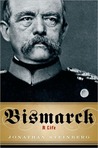
Review of Bismarck by Jonathan Steinberg

Bismarck:A LifeBismarck:A Life by Jonathan Steinberg
My rating: 3 of 5 stars

I enjoyed the book, although it was, in my opinion, light on the the great achievements of Bismarck in foreign policy. Bismarck was a truly monumental historical figure who dominated his era, both domestically and internationally. Steinberg, while writing a strong book in many respects, betrays his anti-Bismarck bias throughout. Steinberg acknowledges Bismarck as a genius, but takes great pains to point out some of the “character flaws” of the great man. Such flaws include losing friends (always the fault of Bismarck), being less than honest as he made the substantial changes to Prussia that resulted in a unified German state that became, and remains, a colossus ,having no real ideological or governing philosophy, (Bismarck did what was good for Bismarck),and the most serious charge, that a straight line existed between Bismarck and Hitler. Without question it must be granted that the edifice of government set up by Bismarck had strong deficiencies that contributed to the German disasters of the 20th century. But most certainly Bismarck’s statesmanship was not practiced by the venal, and quite frankly ignorant, Kaiser Wilhelm II, who dismissed Bismarck and promulgated policies that Bismarck spent his entire foreign policy career seeking to avoid. The German foreign policy, post Bismarck and pre-World War One, cannot be entirely blamed on the “edifice of government” in Prussia and Germany, but should be seen as the result of the Kaiser and other Bismarck opponents throwing off the shackles of Bismarck’s policies that they felt constrained Germany from achieving its dominant role in Europe. Rather than blaming Bismarck I look at it, at least in part, as the ankle-biters of government finally taking down the Iron Chancellor and getting a chance to put forward alternative strategies for Germany. Those policies led to the First World War, and the massive errors made after that war brought us Hitlerism.The Wikipedia entry for Wilhelm II notes: “Upon his enforced retirement and until his dying day, Bismarck was to become a bitter critic of Wilhelm’s policies, but without the support of the supreme arbiter of all political appointments (the Emperor) there was little chance of Bismarck exerting a decisive influence on policy.” Henry Kissinger, in his review of the Steinberg book, repudiated the “direct line from Bismarck to Hitler” theory: “The second caveat concerns the direct line Steinberg draws from Bismarck to Hitler. Bismarck was a rationalist, Hitler a romantic nihilist. Bismarck’s essence was his sense of limits and equilibrium; Hitler’s was the absence of measure and rejection of restraint. The idea of conquering Europe would never have come to Bismarck; it was always part of Hitler’s vision.”

Bismarck was indeed a “rationalist” unconstrained by ideology in determining the best way forward for Germany. That “rationalism” led him to accept restraint, and to attempt to preserve, rather than destroy, the European equilibrium. The original practitioner of “realpolitik’ explained his thoughts in a letter sent to an old friend, appalled that Bismarck would contemplate accommodation with Napoleon III:

“What the principle is that I am supposed to have sacrificed, I cannot correctly formulate from what you write … France only interests me as it affects the situation of my Fatherland, and we can only make our policy with the France that exists … Sympathies and antipathies with regard to foreign powers and persons I cannot reconcile with my concept of duty in the foreign service of my country, neither in myself nor in others. There is in them the germ of disloyalty to the lord or the land which one serves … As long as each of us believes that a part of the chess board is closed to us by our own choice or that we have an arm tied where others can use both arms to our disadvantage, they will make use of our kindness without fear and without thanks.”

With Bismarck there was not going to be any foreclosure of options due to ideological straightjackets imposed by those who wished to play chess with part of the board covered.

Bismarck was a true giant of history. Like many practitioners of government and diplomacy he was far from perfect, and as you read Steinberg’s biography you will get a good flavor for those deficiencies. The Kissinger review, in the New York Times Book Review, is worth a look if you are interested in Bismarck and this book.

View all my reviews

The book review by Henry Kissinger.

Posted in Books | Tagged , , | Leave a comment