Review of Nixon and Mao: The Week That Changed the World by Margaret MacMillan

Nixon and Mao: The Week That Changed the WorldNixon and Mao: The Week That Changed the World by Margaret MacMillan
My rating: 5 of 5 stars

Margaret Macmillan brings us an entertaining and very well written book that details the Nixon opening to China, and how the visit in and of itself changed the world in substantive ways that we are still feeling today. The book title implies a focus on the actual Nixon-Mao meeting, but it brings us so much more than that. The Nixon-Mao meeting ended up being a bit of a substantive disappointment for Nixon. Mao, even in poor health, was simply too cagey to allow the conversation to get into specifics. He outsourced all of the detail work to Premier Zhou en-Lai, and did so, in part, for domestic political reasons. Although not covered in this book Mao would, at a later time, use the Nixon trip as one of several battering rams against Zhou.

Macmillan brings us the back story to the opening, covering the Nixon views on China as he took office after winning the 1968 election. The selection of Henry Kissinger as National Security Advisor brought Nixon together with an individual that is renowned for foreign policy brilliance, but is also renowned for being as much of a publicity seeker as Nixon. While the impetus for the opening came from Nixon it was Kissinger who executed the strategy through negotiations with Premier Zhou en-Lai. The detail work was handled by those two immense personalities, with that interaction providing much of the basis for the summit ending Shanghai Communique.

The book brings us some historical perspective on China, with a strong look at the events leading to the Chinese Communist Party winning the civil war with the Nationalist forces of Chiang Kai-shek, and the follow up to that victory leading to decades of diplomatic isolation between China and the U.S., including the hot war on the Korean peninsula. Without some understanding of that history the significance of the Nixon trip would be a little harder to understand.

For me the star of the show has always been Zhou, who would have to be considered one of the major figures of the 20th century. Zhou was still working one of the greatest high wire acts in political history, navigating through the horrid excesses of the Cultural Revolution, when this diplomatic break through was engineered. Kissinger, in his memoirs, called Zhou one of the most impressive men he had ever met.

“Foreigners who met him generally found him delightful and deeply civilized. Dag Hammarskjöld, the Swedish diplomat who had been the U.N.’s second secretary-general, thought he had “the most superior brain I have so far met in the field of foreign politics.”17 Henry Kissinger, usually quite critical, was completely entranced. “He moved gracefully,” said Kissinger of their first meeting, “and with dignity, filling a room not by his physical dominance (as did Mao or de Gaulle) but by his air of controlled tension, steely discipline, and self-control, as if he were a coiled spring.” Kissinger, who was to have many hours of hard negotiations with Chou, found him “one of the two or three most impressive men I have ever met”—and a worthy adversary. “He was a figure out of history. He was equally at home in philosophy, reminiscence, historical analysis, tactical probes, humorous repartee.” Kindness, compassion, moderation—these were qualities both Chinese and foreigners saw in Chou.”

MacMillan, Margaret. Nixon and Mao: The Week That Changed the World (Kindle Locations 802-804). Random House Publishing Group. Kindle Edition. MacMillan, Margaret. Nixon and Mao: The Week That Changed the World (Kindle Locations 796-802). Random House Publishing Group. Kindle Edition.

The author brings us the complicated goals and objectives of each side, and a fair evaluation of how successful each was in achieving those goals. The clear “bear” in the room was the U.S.S.R., with both sides looking to strike a new equilibrium in world diplomacy by creating a check on Soviet influence and expansion via the new found friendship and joint antipathy towards nations that strove for “hegemony.” Nixon’s “triangulation,” was effective in creating some fear in the Soviet leadership, and without a doubt brought some short term political gains with the Soviets. Nixon was hoping for Chinese help with the intractable North Vietnamese, but on that score he came away disappointed. Zhou was not to be moved on that, but the Chinese, despite not giving Nixon the “help” he sought, took plenty of heat from the North Vietnamese for hosting Nixon while the United States was bombing their country. Zhou made clear that Nixon would leave empty handed on that issue:

“Chou, as he had with Kissinger, refused to commit himself to helping the United States. China, he repeated, when he and Nixon returned to the subject of Indochina
two days later, must support its friends, even—and this was a prescient observation on Chou’s part—if the peoples of Indochina embarked on wars among themselves after the Americans left. Whatever occurred would not be the fault of China, which only wanted peace and tranquillity in the region. If North Vietnam was expanding into Cambodia and Laos, he said, ignoring the long history of Vietnamese expansion into its neighbors’ territory, this was only because of its need to counter the United States.”

“We can only go so far,” he added. “We cannot meddle into their affairs.” China would not negotiate on behalf of the peoples of Indochina. Nixon was forced to recognize that, as with the Soviet Union, linkage did not always work: “What the Prime Minister is telling us is that he cannot help us in Vietnam.” Chou underlined the message on February 28 as Nixon was preparing to leave China: “We have no right to negotiate for them. This I have said repeatedly. This is our very serious stand.”

MacMillan, Margaret. Nixon and Mao: The Week That Changed the World (Kindle Locations 4704-4708). Random House Publishing Group. Kindle Edition.

The big elephant in the room was the status of Taiwan, an issue that could have derailed the effort. On this matter both sides had serious political issues to solve, with limited room to maneuver. On the American side Richard Nixon’s long political history had helped to create, over the years, a poisonous atmosphere for any American diplomatic effort to deal with the issue of China, and Indo-China, in a pragmatic way. The “who lost China” attacks on the U.S. State Department and the scourge that was McCarthyism drove our best talent out of the State Department, and Nixon was a big part of that effort. He was considered to be a staunch ally of Taiwan, and I think it fair to say that any effort, before 1968, to normalize relations with “Communist China” would have been met with a vociferous attack by the GOP. President Kennedy had discussions with his foreign policy team about China, and came to the conclusion that it was a subject best left for a second term, with the potential backlash from the “China lobby” not worth the political lift. (John F. Kennedy: A Biography by Michael O’Brien)

“On the right, Senator McCarthy and his supporters, who included a young Richard Nixon, made much of the fact that many American diplomats in China had predicted the collapse of the Guomindang, evidence enough for conspiracy theorists that such men had actively worked for the Communist victory. The diplomats were summoned to congressional hearings, where their motives and loyalty were freely impugned.
The impact on the State Department and on the capacity of the United States to understand what was going on in Asia was huge. Seasoned and knowledgeable experts were driven out or resigned in disgust. Those who survived were kept away from anything to do with Asia; one of the department’s leading China specialists ended up as ambassador in Iceland. The department as a whole was shell-shocked and became increasingly timid in offering unpalatable advice to its political masters. A young man who started out as a junior diplomat in Hong Kong in the late 1950s remembered older colleagues who were careful about what they sent back to Washington. “I don’t think it meant not reporting facts,” he said; “it’s just that one was cautious.” On the other hand, the experience of being in Hong Kong tended to make the American China watchers more pragmatic than their superiors back in Washington. The lack of relations between two such big countries seemed absurd, an anomaly that they assumed must be temporary. “Well, you know,” said an American diplomat, “what the hell, China’s there, we’re going to have to recognize it. I mean, it was a fact of life. It wasn’t through admiration, it was just, well, let’s get on with it.”

MacMillan, Margaret. Nixon and Mao: The Week That Changed the World (Kindle Locations 1937-1940). Random House Publishing Group. Kindle Edition.

But Nixon was not about to let his past posturing on this issue prevent progress once he deemed it necessary. While the Shanghai Communique finessed the issue of Taiwan the U.S. concessions were clear, and Kissinger privately promised more to come in a Nixon second teem. (Even Nixon remained somewhat fearful of attacks from the right on this issue.) Despite that fear Nixon’s ruthless embrace of realpolitik, and his willingness to be less than honest with prior allies, drove him forward.

“Nevertheless, in his first years as president, even while he was re-thinking his China policy, Nixon continued to reassure Chiang of his support. “I will never sell you down the river,” he told Chiang’s son in the spring of 1970. As the secret channel to Beijing began to produce results, Nixon had to face doing just that. In April 1971, as they waited anxiously for Chou’s reply to one of Nixon’s messages, Nixon told Kissinger, “Well, Henry, the thing is the story change is going to take place, it has to take place, it better take place when they got a friend here rather than when they’ve got an enemy here.” Kissinger agreed: “No, it’s a tragedy that it has to happen to Chiang at the end of his life, but we have to be cold about it.” In the end, said Nixon, “We have to do what’s best for us.” As Kissinger prepared to leave for his secret trip to China, Nixon gave him some last instructions: “he wished him not to indicate a willingness to abandon much of our support for Taiwan until it was necessary to do so.”

MacMillan, Margaret. Nixon and Mao: The Week That Changed the World (Kindle Locations 4457-4461). Random House Publishing Group. Kindle Edition.

Yet the Chinese Communists had made it amply clear that without American concessions on Taiwan, they were not prepared to move forward to put Sino-American relations on a more normal footing. Moreover, as Chou, a master at diplomacy himself, well knew, negotiations proceed by a combination of clear statements, hints, and suggestions. Kissinger, when it was necessary, gave firm commitments to the Chinese, but he also hinted at more to come once Nixon had been reelected as president in the fall of1972. The United States, he said categorically, did not support the idea of two Chinas or of a mainland China and a Taiwan. The United States accepted the Chinese claim that Taiwan was a part of China, although here he expressed himself cautiously, saying that the United States would like to see a solution of the issue “within the framework of one China.” As he said to Chou, ‘There’s no possibility in the next one and a half years for us to recognize the PRC as the sole government of China in a formal way.’ Once Nixon had made a successful visit to China, Kissinger promised, and once he had been reelected for a second term, the United States would be able to move ahead rapidly to establish full and normal diplomatic relations with the People’s Republic of China. ‘Other political leaders,” he told Chou in what was a familiar theme, ‘might use more honeyed words, but would be destroyed by what is called the China lobby in the U.S. if they ever tried to move even partially in the direction which I have described to you.’ ”

MacMillan, Margaret. Nixon and Mao: The Week That Changed the World (Kindle Locations 4489-4495). Random House Publishing Group. Kindle Edition.

The Chinese side, having the same desire for progress, took the long view on Taiwan, accepting a split view with the Americans on Taiwan, but pocketing the idea that Taiwan was part of China, and the creation of the “One China” policy, which remains U.S. policy to this day.

“Not all the concessions, by any means, came from the American side. The Chinese
accepted that the United States could not turn away from Taiwan overnight. Mao was particularly pleased, however, when Kissinger, on his first visit, promised that at least some of the American troops would be pulled out. The United States, Mao exclaimed to Chou, was evolving. Like an ape moving toward becoming a human being, its tail—its forces in Taiwan, in this case—was growing shorter. Armed with Mao’s approval, Chou talked in a friendly and positive way about the gradual lowering of tension over Taiwan and the normalization of relations between China and the United States. Although American troops were clearly going to remain in Taiwan for some time, he conceded that normalization of relations could proceed in parallel rather than, as the Chinese had first insisted, with the troop withdrawal as a precondition. In a chat that autumn of 1971 with Jack Service, a former American diplomat whom he had known during the Second World War, Chou made it clear he understood that American policy on Taiwan would have to evolve over time.”

MacMillan, Margaret. Nixon and Mao: The Week That Changed the World (Kindle Locations 4514-4515). Random House Publishing Group. Kindle Edition.

There is no question that Nixon and Mao painted the broad strokes on the canvas, but Kissinger and Zhou made this effort work. The Shanghai Communique was and is a testament to the essential brilliance and commitment to success that both had. This break-through was as much their achievement as it was their bosses. Kissinger, still alive, remains a subject of bitter controversy for some of the things he did while working for Nixon, but his work here, in my view, was first rate. Secretary of State William Rodgers was essentially ignored by Nixon and Kissinger on this initiative as well as generally. Kissinger expressed some regret over his treatment of Rodgers in his memoirs, and that dynamic is also covered here. With China now newly assertive, and becoming an economic behemoth the history of U.S.-China relations has never been more important. Did Nixon and Kissinger make the right move? There is no doubt that both believed they did, but MacMillan offers us a tidbit from Kissinger:

“In a discussion a few months later at the National Security Council, Kissinger wondered about the consequences of bringing China out of its isolation, “whether we really want China to be a world power like the Soviet Union, competing with us, rather than their present role which is limited to aiding certain insurgencies.”

MacMillan, Margaret. Nixon and Mao: The Week That Changed the World (Kindle Locations 1053-1055). Random House Publishing Group. Kindle Edition.

The idea that China could be permanently “isolated” is of course ludicrous, but how we interact with them economically and militarily remains the subject of major debate in the United States. This book helps us to understand how that debate started.

View all my reviews

Some very interesting China reading!

The first volume of Kissinger’s memoirs.

China 1945: Mao’s Revolution and America’s Fateful Choice

The Nixon Memoirs.

Kissinger, On China

Margaret MacMillan discusses the book at the Nixon Library.

Posted in Books | Tagged , , , , , , , , | Leave a comment

Tedeschi Trucks Band at Orpheum November 30, 2017

Had an opportunity to see the Tedeschi Trucks Band at the Orpheum in Boston this past Thursday, and as always they were terrific. Very happy to hear “Anyday” from the Derek and the Dominos great album “Layla and Other Assorted Love Songs” which originally had Duane Allman playing some mean guitar. They also covered the Allman Brothers “Ain’t Wastin Time No More'” a homage to the great Duane Allman. Lots of great original tunes as well. Check them out next time they are in Town. You won’t be sorry.

Posted in Music | Tagged | Leave a comment

The Seabrook Draft CIP and Five Year Analysis of Prior Capital Spending

I am today posting the new Seabrook CIP Plan, as well as a newly developed five year analysis of Seabrook Capital Spending that I have developed. The analysis has a long series of support tabs that show yearly spending by category. The capital spending program program in Seabrook was the sole reason for the increase in Town side spending from 2016 to 2017, as the operating budgets have been essentially level funded, absent contractually mandated increases. These items have been presented to all of our policy making Boards.

Seabrook 2018 CIP Draft

Seabrook CIP Spending Five Year Review

CIP Report Tab A Roads

CIP Report Tab B Vehicles

CIP Report Tab C Equipment

CIP Report Tab D Library

CIP Report Tab E Buildings

CIP Report Tab F Historic

CIP Report Tab G Pier

CIP Report Tab H Parks

CIP Report Tab I Cemetery

CIP Report Tab J Infrastructure

CIP Report Tab K Well Maintain

CIP Report Tab L Water Explore

CIP Report Tab M Rail Trail

CIP Report Tab N Seniors

CIP Report Tab O GIS

Posted in Capital Improvement Plan, Seabrook | Tagged , , | Leave a comment

The Seabrook Annual Christmas Tree Lighting

A big thank you to the Seabrook Lions Club, who once again sponsored the annual Tree Lighting, a wonderful community event enjoyed by all. Thanks to the Trinity United Church for the use of the Parish Hall, to Chief Edwards and the Seabrook Fire Department, and to Chief Gallagher, who was out with Deputy Walker on traffic detail. A very big thank you to our man Stan for making sure the lights went on when we flicked that switch, and to the Seabrook DPW for all of their help. Bill Niland of the Chop Shop Pub ran the “train” over to transport people to the Parish Hall, and I hitched a ride, and it was great. Thank you Bill!

Posted in Seabrook | Leave a comment

A Review of Professor Timothy Snyder’s “On Tyranny”

On Tyranny: Twenty Lessons from the Twentieth CenturyOn Tyranny: Twenty Lessons from the Twentieth Century by Timothy Snyder
My rating: 4 of 5 stars

A short read from Professor Snyder, who tells us that “history does not repeat, but it does instruct.” Professor Snyder gives us some historical perspective on how tyranny arose in the 20th century, and how we as citizens can learn from, and try to avoid the traps that history has shown lead others down the road to horrific outcomes.

The book makes some points that may seem obvious, but need to be contemplated. I took out a couple that I consider important. Professor Snyder’s reference to the “politics of inevitability” stuck with me because, like many Americans, I have always considered the future of the United States to be a democratic one, with our system of government destined to remain a constitutional republic. Never really gave it much thought beyond the struggles that occur within the four corners of our current system. Professor Snyder refers to this as “a self-induced intellectual coma.” If that coma makes us less vigilant to the threats to the very core of our political system then the Professor believes we need to come out of that coma. I agree. The idea that our institutions can survive just because they are there today is not true, especially in light of the assault they are under today.

The second critical point for me is “Believe in Truth.” Professor Snyder tells us “To abandon facts is to abandon freedom. If nothing is true, then no one can criticize power, because there is no basis upon which to do so. If nothing is true, then all is spectacle. The biggest wallet pays for the most blinding lights.” If I have been shocked by one thing about 2016 and beyond it is that “truth” does not mean what I have always understood it to mean. Truth is a partisan thing now, with empirical data being laughed off by partisans, who cling to the “truth” of the day being propagated by their tribe. Discussion, as far as I am concerned, cannot proceed without recognizing that verifiable facts do exist. If our political discourse cannot get us to accept that then we truly are in the danger zone as a country. As the Professor points out “Post-truth is pre-fascism.”

I would recommend the book, and hope we as citizens remain vigilant against threats to our democracy.

View all my reviews

The Strobe Talbott look at “Hitler and Stalin: Parallel Lives” as well as “On Tyranny”

Posted in Books | Tagged , , | Leave a comment

The Seabrook Board of Selectmen award the Boston Post Cane.

The Seabrook Board of Selectmen awarded Florence Nemphos the Boston Post Cane at a recent meeting. At 100 she is still a crack Bingo player, and Florence was delighted to receive the Cane and recognition from the Board of Selectmen. Our thanks to former Selectman Edward Hess, who read a recognition from Senator Hassan at the event. Congratulations Florence!

Posted in Seabrook | Tagged , | Leave a comment

Seabrook Fire Hosts Touch a Truck

The Seabrook Fire Department held the annual Touch a Truck event at the Fire Station last week, and it was a great success. It was a fun family event that had lots of kids attending and looking over, and touching, some of the new equipment. It featured the new Ladder/Platform Truck, which is an amazing piece of equipment. Our thanks to Papa Gino’s for the generous donation of pizza for this event. Our thanks to the Board of Selectmen, who were all on hand to help with the event. Thanks to Chief Edwards, and Deputy Perkins, for all of their work!

Posted in Seabrook | Tagged , , , | Leave a comment

Seabrook United Takes on Opioid Abuse

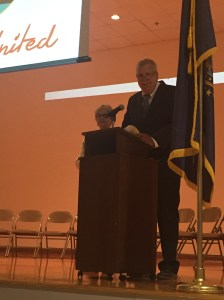
On September 21, 2017 the Seabrook Police Department held a wide ranging program dealing with opioid misuse, with speakers from across the spectrum of approaches to this scourge impacting Seabrook, New Hampshire, and our nation. I am very appreciative of the efforts of Police Lieutenant Kevin Gelineau, who put the program together. Thanks to Police Chief Michael Gallagher, Fire Chief William Edwards, U.S. Senator Maggie Hassan, the Director of the N.H. Police Forensic Laboratory Tim Pifer, Lt. Joseph Ebert of the N.H. State Police, Special Agent Jon Delena of the U.S. Drug Enforcement Agency, Doctor Cheryl Wilkie of the Farnum Center, Marty Boldin from the Office of Governor Chris Sununu, Kim Haney of Granite Pathways, Elizabeth Miller of Safe Harbor Recovery, and Olivia Dupell of the Seacoast Public Health Network. We had a special screening of the powerful film “Just the One Time” and we are so grateful that Jim and Jeanne Moser, who made the film about the loss of their son Adam were on hand to discuss the film, and the important lessons we can all take from their experience. (That film is below) Our sincere thanks to Deputy Commissioner of Public Safety in New Hampshire Robert Quinn, who gave so much of his time to make this night a success. The remarks by Senator Hassan are also below, and I will place additional video from the event in the days to come.

As we attack the misuse of opioids it is vital to remember that it is a complex societal issue, and that different approaches need to be made simultaneously to combat the problem. There are no easy solutions, and there is not a “one size fits all approach” that will bring victory.

Posted in Seabrook | Tagged , , , , , , | Leave a comment

Seabrook Fire Alarm Operators Begin Work

The Seabrook Fire Department’s new Fire Alarm Operators have begun full time duties this week. They are Taryna Cody of Seabrook, Kassandra Lee of Amesbury, James Gettman of Seabrook, and Zach Annis of Exeter.

These four new employees are functioning in our Dispatch Center 24 hours a day, 7 days a week, answering calls for from the public for the many services provided by the Seabrook Fire Department. This is the first time in our Department’s history that we’ve been able to offer complete 24 hour per day dispatch coverage, guaranteeing that someone will be available to answer all incoming calls from the public, and helping Seabrook Fire and EMS to ensure the quickest possible responses to those calls.
We would like to thank the Town Manager, William Manzi for his hard work in this endeavor. We would especially like to thank the Seabrook Board of Selectmen, Theresa Kyle, Ella Brown, and Aboul Khan for their support and their unanimous vote to authorize the hiring of these vital positions.

The Board authorized these four positions from the ambulance revolving fund, enabling Seabrook to fill a critical, and unmet public safety need while affording Seabrook taxpayers some relief. The ambulance revolving fund is financed through revenues raised by our ambulance service.
“We really appreciate the Board taking the time to hear our department’s needs and for working to close the gap in those needs. It’s great we are able to do this and not burden the tax payers with it.” Chief Bill Edwards

Posted in Seabrook | Tagged , | Leave a comment

Review of Tim Weiner’s “Legacy of Ashes”

Legacy of Ashes: The History of the CIALegacy of Ashes: The History of the CIA by Tim Weiner
My rating: 4 of 5 stars

Tim Weiner has put together a well researched history of the CIA that will be discouraging for those that think “the Agency” has a long and successful record of espionage and covert operations. Weiner tells the story of failure after failure, disaster after disaster. The book is really well researched, highlighting the very beginnings of the agency, tracing its growth, and bringing us some of the major figures of the CIA. Wild Bill Donovan, Allen Dulles, James Jesus Angleton, Richard Helms, Bob Gates, George H.W. Bush, John McCone, Bill Casey, and a host of characters that developed the Agency and ran it from its inception.

The book is very negative about the CIA, and many reviewers have cited that negativity as a criticism. No question on the negativity, but the record speaks for itself. Weiner reviews many failures, and the successes he highlights have the Agency exhibiting a moral decadence, and a willingness to act as a foreign policy rogue elephant, defying Presidents and Congress. He also shows us where the Agency tried very hard to please Presidents, even when Presidential demands were illegal, immoral, not achievable, and contrary to the long term interests of the country.

Despite the length of the book there was not a lot of time to look at some of the notable operations in great depth. Angelton’s lifelong search for a CIA mole as head of counter-intelligence, his disastrous handling of the Russian defectors Anatoliy Golitsyn and Yuri Nosenko, the tapping of the Russian below ground communication lines in Berlin in 1954, the operation that helped depose the Iranian government (installing the Shah and creating enmity that still exists today,) and the multitude of CIA Cuban operations, including the Bay of Pigs and the efforts to kill Castro. There is enough material to have supplied multiple volumes if the author had wanted to go down that road.

There is plenty to take out of the book, and not many who come off looking good. The Kennedy brothers are shown in a very negative light, with the author putting forward the strong insinuation that JFK was assassinated as a result of the attempts on Castro’s life by U.S. intelligence. He offers no conclusive proof, but makes a pretty strong argument. A Richard Helms observation from the book:

“Helms thought political assassination in peacetime was a moral aberration. But there were practical considerations as well. “If you become involved in the business of eliminating foreign leaders, and it is considered by governments more frequently than one likes to admit, there is always the question of who comes next,” he observed. “If you kill someone else’s leaders, why shouldn’t they kill yours?”

Weiner, Tim. Legacy of Ashes: The History of the CIA (Kindle Locations 3316-3319). Knopf Doubleday Publishing Group. Kindle Edition.

One person who manages to look good through this book is Kennedy CIA Director John McCone, who is shown as fairly prescient on a number of critical policy matters, including Vietnam and the potential for Soviet offensive weapons being placed into Cuba. McCone took over the agency after JFK cashiered Alan Dulles over the Bay of Pigs failure. The book shows him as understanding, and articulating, the real issues facing the U.S. in Vietnam at a very early stage, and warning JFK on the potential for Soviet offensive weaponry being placed into Cuba before they were detected.

“The director saw a greater danger ahead. He predicted that the Soviet Union was going to give Castro nuclear weapons—medium-range ballistic missiles capable of striking the United States. He had been worrying about that possibility for more than four months. He had no intelligence, nothing to go on save gut instinct. McCone was the only one who saw the threat clearly. “If I were Khrushchev,” he said, “I’d put offensive missiles in Cuba. Then I’d bang my shoe on the desk and say to the United States, ‘How do you like looking down the end of a gun barrel for a change? Now, let’s talk about Berlin and any other subject that I choose.’” No one seems to have believed him. “The experts unanimously and adamantly agreed that this was beyond the realm of possibility,” notes an agency history of McCone’s years. ‘He stood absolutely alone.’”


Weiner, Tim. Legacy of Ashes: The History of the CIA (Kindle Locations 3372-3387). Knopf Doubleday Publishing Group. Kindle Edition. 


On Vietnam McCone gave good counsel, but was ignored, eventually quitting in 1965.

“On April 2, 1965, John McCone quit for the last time, effective as soon as Lyndon Johnson selected a successor. He delivered a fateful prediction for the president: “With the passage of each day and each week, we can expect increasing pressure to stop the bombing,” he said. “This will come from various elements of the American public, from the press, the United Nations and world opinion. Therefore time will run against us in this operation and I think the North Vietnamese are counting on this.” One of his best analysts, Harold Ford, told him: “We are becoming progressively divorced from reality in Vietnam” and “proceeding with far more courage than wisdom.” McCone now understood that. He told McNamara that the nation was about to “drift into a combat situation where victory would be dubious.” His final warning to the President was blunt as it could be: “We will find ourselves mired down in combat in the jungle in a military effort that we cannot win, and from which we will have extreme difficulty extracting ourselves.”

Weiner, Tim. Legacy of Ashes: The History of the CIA (Kindle Locations 4371-4379). Knopf Doubleday Publishing Group. Kindle Edition.

Any book on the CIA must deal with the politicization of intelligence and how intel has been “shaped” to meet the existing policy preferences of Presidents, and others. This did not start with the ridiculous efforts of the CIA on Iraq under George W. Bush and George Tenet, but had begun many years before. Honest CIA estimates on Vietnam were “scrubbed” by the military, and CIA analysts received the message, loud and clear. The first example below shows Maxwell Taylor scrubbing a CIA report on Vietnam that had some honest analysis in it. The second example shows George H.W. Bush, as CIA Director, letting an “alternate” analysis on Soviet capabilities get out of hand, and drive policy and ideas in Washington. That alternate analysis has been proven, over time, to have been false.

“Four days later, Lyndon Johnson lashed out. Dumb bombs, cluster bombs, and napalm bombs fell on Vietnam. The White House sent an urgent message to Saigon seeking the CIA’s best estimate of the situation. George W. Allen, the most experienced Vietnam intelligence analyst at the Saigon station, said the enemy would not be deterred by bombs. It was growing stronger. Its will was unbroken. But Ambassador Maxwell Taylor went over the report line by line, methodically deleting each pessimistic paragraph before sending it on to the president. The CIA’s men in Saigon took note that bad news was not welcome. The corruption of intelligence at the hands of political generals, civilian commanders, and the agency itself continued. There would not be a truly influential report from the CIA to the president on the subject of the war for three more years.”

Weiner, Tim. Legacy of Ashes: The History of the CIA (Kindle Locations 4350-4356). Knopf Doubleday Publishing Group. Kindle Edition.

“By the end of 1976, Bush was in bad odor with some of his former fans at the agency. He had made a baldly political decision to let a team of neoconservative ideologues—“howling right-wingers,” Dick Lehman called them—rewrite the CIA’s estimates of Soviet military forces. William J. Casey, the most vociferous member of the President’s Foreign Intelligence Advisory Board, had been talking with some of his friends and associates in the intelligence community. They were convinced that the CIA was dangerously underestimating Soviet nuclear strength. Casey and his fellow members of the advisory board pressed President Ford to let an outside group write their own Soviet estimate. The team, whose members were deeply disenchanted with détente and handpicked by the Republican right, included General Daniel O. Graham, America’s leading advocate of missile defense, and Paul Wolfowitz, a disillusioned arms-control negotiator and a future deputy secretary of defense. In May 1976, Bush approved “Team B” with a cheery scribble: “Let her fly!! O.K. G.B.” The debate was highly technical, but it boiled down to a single question: what is Moscow up to? Team B portrayed a Soviet Union in the midst of a tremendous military buildup—when in fact it was cutting military spending. They dramatically overstated the accuracy of Soviet intercontinental ballistic missiles. They doubled the number of Backfire bombers the Soviet Union was building. They repeatedly warned of dangers that never materialized, threats that did not exist, technologies that were never created—and, most terrifying of all, the specter of a secret Soviet strategy to fight and win a nuclear war. Then, in December 1976, they selectively shared their findings with sympathetic reporters and opinion columnists. “The B Team was out of control,” Lehman said, “and they were leaking all over the place.” The uproar Team B created went on for years, fueled a huge increase in Pentagon weapons spending, and led directly to the rise of Ronald Reagan to the top of the list of front-runners for the 1980 Republican nomination. After the cold war was over, the agency put Team B’s findings to the test. Every one of them was wrong. It was the bomber gap and the missile gap all over again. “I feel like I have been had,” Bush told Ford, Kissinger, and Rumsfeld at the last National Security Council meeting of the outgoing administration. Intelligence analysis had become corrupted—another tool wielded for political advantage—and it would never recover its integrity. The CIA’s estimates had been blatantly politicized since 1969, when President Nixon forced the agency to change its views on the Soviets’ abilities to launch a nuclear first strike. “I look upon that as almost a turning point from which everything went down,” Abbot Smith, who ran the agency’s Office of National Estimates under Nixon, said in a CIA oral history interview.

The Nixon administration was really the first one in which intelligence was just another form of politics. And that was bound to be disastrous, and I think it was disastrous.” John Huizenga, who succeeded Smith in 1971, put it even more bluntly to the CIA’s historians, and his thoughts rang true in decades to come, into the twenty-first century: In retrospect, you see, I really do not believe that an intelligence organization in this government is able to deliver an honest analytical product without facing the risk of political contention. By and large, I think the tendency to treat intelligence politically increased over this whole period. And it’s mainly over issues like Southeast Asia and the growth of Soviet strategic forces that were extremely divisive politically. I think it’s probably naïve in retrospect to have believed what most of us believed at one time…that you could deliver an honest analytical product and have it taken at face value…. I think that intelligence has had relatively little impact on the policies that we’ve made over the years. Relatively none. In certain particular circumstances, perhaps insights and facts that were provided had an effect on what we did. But only in a very narrow range of circumstances. By and large, the intelligence effort did not alter the premises with which political leadership came to office. They brought their baggage and they more or less carried it along. Ideally, what had been supposed was that…serious intelligence analysis could…assist the policy side to reexamine premises, render policymaking more sophisticated, closer to the reality of the world. Those were the large ambitions which I think were never realized. “

Weiner, Tim. Legacy of Ashes: The History of the CIA (Kindle Locations 6232-6238). Knopf Doubleday Publishing Group. Kindle Edition.

Weiner is especially down on the CIA “covert operations” arm, assigning to it much of the blame for the overall failures of the Agency. Can an organization like the CIA be successful in a democracy? Do American politicians, going back to JFK, only hear what they want to hear, shutting out everything that does not comport with the preconceived ideology and biases brought into office? This book covers a lot of ground, and is sourced very well. Despite the overall negative tenor towards the Agency this book is well worth a read if the real history of American intelligence gathering, and covert operations, is something you are interested in.

View all my reviews

Posted in Books | Tagged , , | Leave a comment